TRAVEL 101
How to Sleep on a Plane: The Seat, the Science, and the Long Flight Tips That Actually Work
Where to sit, why your head keeps jolting you awake, and how to land closer to human — a realistic guide to sleeping in economy.
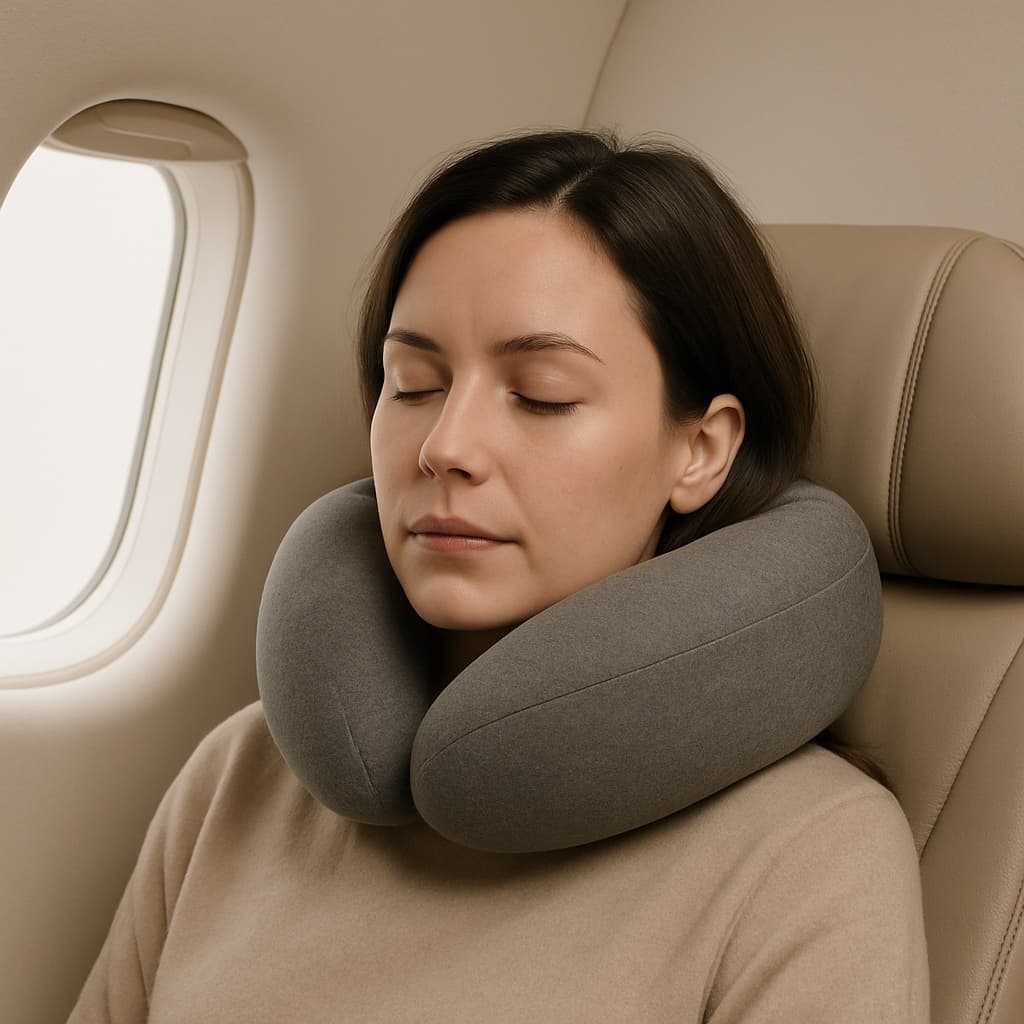
Everyone who has flown economy knows the cycle: you finally drift off, your head drops, and the jolt of your own falling skull snaps you awake. Repeat for nine hours, land feeling like laundry. Sleeping on a plane is genuinely hard — but it's hard for specific, fixable reasons, and most people fix none of them.
This guide covers how to sleep on a plane in the order the decisions actually happen: which seat to book and which to flee, the physics behind the head-bob, cheap light and noise control, timing your sleep to the destination clock instead of the meal cart, what helps versus what quietly sabotages you, and the landing protocol that decides whether day one is salvaged or lost.
Seat Strategy: Window Wins, Last Row Never
The window seat is the sleep seat, full stop. It gives you a wall to lean against — the only stable surface in economy — plus control of the shade, and nobody climbs over you to reach the lavatory. The aisle trades all of that for easy bathroom access and an elbow in the path of every drink cart; the middle seat offers nothing and takes everything. If sleep is the priority, book the window, ideally forward of the wing where engine noise is lower.
Two zones to avoid: the last row, which often has limited or no recline and sits beside the galley and lavatories — a carnival of light, noise, and foot traffic all night — and anything adjacent to a galley generally. The exit row is a genuine trade-off: glorious legroom, but the tray table lives in a fixed armrest that narrows the seat, some exit-row seats don't recline, and your bag can't stay at your feet for takeoff. Legroom helps sleep less than lean-room does; choose accordingly.
The Head-Bob Problem: Why You Keep Jolting Awake
Here's the physics nobody explains. An adult head weighs roughly 10 to 11 pounds, and while you're awake your neck muscles balance it constantly without your noticing. Falling asleep requires those muscles to release — that's not optional, it's what sleep is — and the moment they do, sitting upright, the head falls. Your brain registers the drop, fires an alarm, and you jolt awake. That loop is the single biggest reason plane sleep fails, and no amount of tiredness beats it.
The fix is support that brackets the head — holds it at the sides and under the chin so that when your neck muscles let go, the head has nowhere to fall. That's the standard a travel pillow has to meet, and it's why the flat drugstore U-pillow that pushes your head forward fails so reliably. The rest of your body needs the same deal: hours of pressure on the tailbone and sit bones keeps your nervous system quietly on alert, which is where a travel cushion like the Sondur earns its seat — its air-cell design takes the pressure off so your body can actually settle instead of squirming every twenty minutes.
Light and Noise: The Two Cheapest Upgrades
Light is the enemy of sleep hormones, and a cabin is full of it — reading lights, galley spill, seatmate screens, and a sunrise that arrives three hours early when you're flying east. A contoured eye mask that blocks light without pressing on your eyelids costs little and works on every flight you'll ever take. Between the mask and the window shade you control, you can manufacture night on demand.
For noise, you have two tools. Noise-cancelling headphones erase the engine drone beautifully but are awkward to sleep in against a wall. Earplugs win for actual sleep — low-profile, no battery, nothing pressing into your head when you lean. We review Loop earplugs for exactly this use: they drop the cabin roar and the crying-baby spikes to a background murmur while staying comfortable for hours. Mask plus earplugs is under fifty dollars and does more for plane sleep than any seat upgrade short of business class.
Sleep on the Destination's Clock, Not the Cabin's
The most useful of all long flight tips costs nothing: set your watch to the destination time zone the moment you board, and live on it. If it's night at your destination, that's your cue to sleep — even if the crew is serving dinner an hour in. Decline the meal, or ask them not to wake you; the calories are not worth the jet lag. If it's daytime at your destination, stay awake with the screen and the window shade up, however tempting the nap.
The principle is that the time-zone shift starts on the plane, not after landing. Every hour of sleep you bank on destination-night is an hour your body clock has already moved before you clear customs. Cut caffeine at least six hours before your planned plane-bedtime, do your usual wind-down in miniature — teeth brushed, screens dimmed — and you're giving your brain the cues it associates with actual sleep instead of asking it to improvise.
What Helps vs What Hurts at 35,000 Feet
Skip the alcohol. A nightcap feels like it helps because it speeds up falling asleep — then it fragments the second half of the night, exactly the stretch you need most, and it dehydrates you in air that's already desert-dry. Hydration goes the other way: drink water steadily, because dry cabin air pulls moisture out of you for hours and mild dehydration makes everything about the flight feel worse. Go easy on screens close to your planned sleep window, same as at home.
Dress for the flight you're on: loose layers you can add and shed, because cabin temperature swings from tropical at boarding to icy at cruise, plus warm socks. Prop your feet slightly on your under-seat bag — a few inches of elevation eases the leg pooling that makes long sits ache. And buckle your seatbelt over your blanket, so turbulence checks don't require a crew member to wake you and confirm you're strapped in.
The Red-Eye Setup, the Landing Protocol, and the Honest Limits
Some of this is decided at booking. When you can, pick a red-eye that overlaps your normal sleep hours — your body will half-cooperate instead of fully resisting. One etiquette note that keeps the peace: recline slowly, glance back first, and bring your seat up for meal service. You're allowed to recline on an overnight flight; you're just not allowed to launch your seatback like a catapult.
On landing, daylight is the lever. Get outside as soon as you can and stay up until a normal local bedtime — sunlight on arrival day resets your clock faster than anything you can buy. If you're truly wrecked, cap any nap at twenty to thirty minutes. Our guide to fix your sleep schedule covers the full reset if the trip knocks you sideways. And set expectations honestly: economy sleep is damage control, not bedroom sleep. Four broken hours instead of zero is a genuine win — the goal is landing functional, and everything above gets you there.
Read our Sondur Travel Cushion review
The foldable air-cell cushion that takes long-haul pressure off your tailbone — and packs down small enough to earn its place in a carry-on.
Read our Sondur Travel Cushion reviewFrequently asked questions
What is the best way to sleep on a plane in economy?
Book a window seat away from the galleys, use a travel pillow that brackets your head at the sides and chin, block light and noise with an eye mask and earplugs, sleep on the destination's clock rather than the meal schedule, and skip alcohol. None of it makes economy a bed — but stacked together, those five moves are the difference between four hours of sleep and none.
Which seat is best for sleeping on a plane?
A window seat forward of the wing: you get a wall to lean on, control of the shade, less engine noise, and nobody climbing over you. Avoid the last row — limited recline next to the galley and lavatories — and know the exit row trades sleep comfort (fixed, narrower armrests, sometimes no recline) for legroom.
Why do I keep jolting awake on planes?
Your head weighs around 10 to 11 pounds, and falling asleep requires your neck muscles to release. Sitting upright, the head falls the moment they do, and your brain fires a wake-up alarm. Support that holds the head at the sides and under the chin breaks the loop by giving it nowhere to fall.
Should you sleep on a plane to avoid jet lag?
Sleep when it's nighttime at your destination, stay awake when it isn't — even if that means declining a meal or fighting through a tempting nap. Starting the time-zone shift on the plane, then getting daylight on arrival and holding out until local bedtime, is the fastest honest route through jet lag.
Does alcohol help you sleep on a flight?
No. It makes you fall asleep faster, then fragments the second half of your sleep — the part you need — and dehydrates you in already-dry cabin air. Water and an eye mask outperform the nightcap every time.
Are neck pillows worth it for flying?
The right kind, yes. A pillow only works if it brackets the head — support at the sides and under the chin so your neck muscles can fully release. Flat, squishy U-pillows that push your head forward fail that test, which is why so many people own one and still can't sleep.
TopCrate is reader-supported. When you buy through links on our site we may earn an affiliate commission, at no extra cost to you. Content is for general information and isn't a substitute for professional advice.