ORAL CARE 101
How to Remove Coffee Stains from Teeth (and Keep Drinking Coffee)
Why coffee stains in the first place, the free habits that prevent most of it, and the honest ladder of fixes — from whitening toothpaste to peroxide kits to the hygienist's chair.
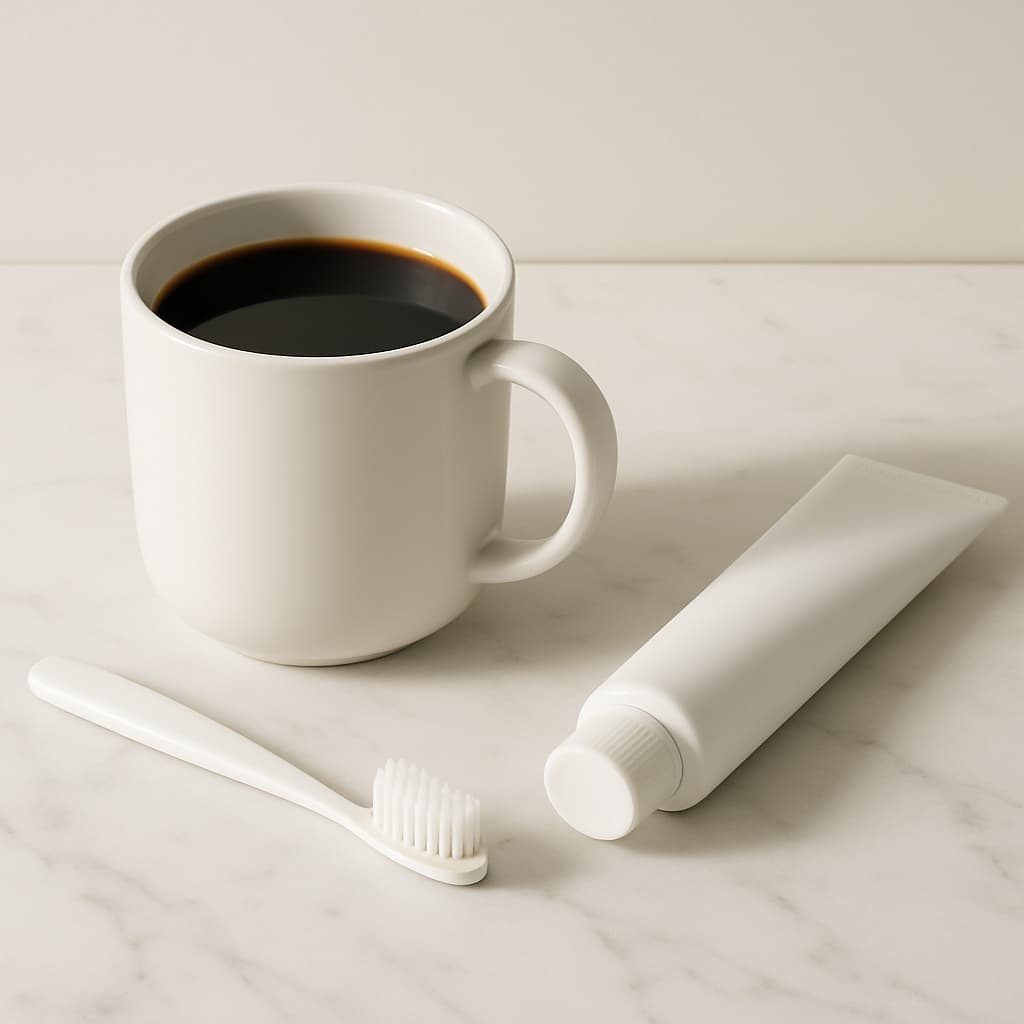
Coffee's deal has always been upfront: it hands you the morning and slowly collects your smile's brightness in exchange. The good news is that the terms are negotiable. Coffee stain is one of the most fixable kinds of tooth discoloration there is — and none of the fixes require giving up coffee.
This guide covers why coffee stains teeth in the first place, the prevention habits that cost nothing and work, the brushing-timing mistake almost everyone makes, the honest ladder of removal — daily toothpaste, then peroxide, then a professional polish — and the popular home remedies you should never scrub your enamel with.
Why Coffee Stains Teeth in the First Place
Within minutes of brushing, your teeth acquire a thin protein film called the pellicle — a normal, protective layer that has one unfortunate hobby: grabbing pigment. Coffee delivers both halves of the staining equation at once. Chromogens are its deeply pigmented compounds, and tannins are the plant compounds that help chromogens bind to that film and to the enamel itself. Enamel looks glassy but is microscopically porous, so pigment that lingers on the surface gradually settles in, which is how a fresh surface stain becomes a set-in one.
The variable you control is contact time. A cup finished in ten minutes gives the pigment one short window; the same cup nursed across a three-hour morning of meetings bathes your teeth in tannins all morning long. Two people can drink identical amounts of coffee and end up with very different smiles — the sipper always loses. That single fact drives most of the prevention below.
Prevention That Actually Works (and Costs Nothing)
First: drink your coffee, don't nurse it. Shortening contact time is the single most effective free move you can make, and it requires zero willpower beyond finishing the cup while it's hot. Second: swish or rinse with plain water when you're done — it clears lingering pigment before it binds, and nobody at the meeting will notice. Third: drink iced coffee through a straw, which routes the stain-makers past your front teeth entirely. (Hot coffee through a straw is a scalding hazard and a joyless experience; don't bother.)
What about milk? Honestly: it helps a little. Milk proteins bind up some of the tannins, and diluting the brew means somewhat less pigment per sip — but a lighter-colored coffee is not a stain-free coffee, and a daily latte will still tint your teeth over time. Take milk as a modest assist, not a permission slip.
The Brushing Rule: Wait 30 Minutes, Rinse Immediately
Here's the counterintuitive part: the worst time to brush your teeth is right after coffee. Coffee is acidic, and acid temporarily softens the outer surface of your enamel. Brush during that window and you're scrubbing enamel at its most vulnerable — abrasion on top of acid. Dentists' standing advice is to wait about 30 minutes after coffee or any acidic drink, which gives your saliva time to neutralize the acid and let the enamel surface re-harden.
What you should do immediately is rinse with water — it clears both pigment and acid without touching the softened surface. If you're a brush-after-breakfast person, the practical routine is simple: coffee first, water rinse, then brush half an hour later. Or flip it entirely and brush before coffee — a clean, freshly brushed surface gives stain less plaque to cling to in the first place.
Daily Maintenance: A Whitening Toothpaste That Pulls Its Weight
For stain that's still on the surface — which is most coffee stain, most of the time — the workhorse is a daily whitening toothpaste. These work through gentle, regulated abrasives that polish fresh pigment off before it can settle, and the better ones add a little peroxide for good measure. Used daily, one quietly wins the war of attrition: each day's coffee film gets removed the same night it arrives. Our pick is Crest Scope — an inexpensive, everywhere-available formula that pairs stain-polishing with a breath angle, and the one we recommend as the default maintenance layer for coffee drinkers.
The key word is gentle. A toothpaste's abrasives are formulated and tested to polish stain without grinding enamel, which is exactly what improvised scrubs can't promise — more on that below. A mild polish every day beats an aggressive one every Sunday, for your stain and your enamel both.
Set-In Coffee Stains Need Peroxide, Not Polish
Once stain has settled into the enamel's pores, no toothpaste can polish it away — surface abrasion can't reach it. This is the honest dividing line in whitening: polishing removes stain sitting on the tooth, while peroxide bleaching breaks apart the pigment that's soaked in. For set-in coffee stain you need the second kind. Whitening strips are the accessible entry point and typically lift a shade or two; an LED tray kit like Auraglow steps up from there, holding a stronger peroxide gel against every tooth at once for more even, faster results. Our guide on how to whiten teeth at home compares the options in full.
Two honest footnotes before you buy. Whitening is cosmetic — it changes how your teeth look, nothing more — and peroxide does nothing for crowns, veneers, or fillings, which keep their manufactured shade while natural teeth lighten around them. And a temporary zing of sensitivity during a course is common and fades; sensitivity that persists, or any actual tooth pain, is a question for a dentist rather than a stronger gel.
The Cheapest Big Win — and What Not to Do
Before you spend anything on whitening products, consider the unglamorous option: a professional cleaning. A hygienist's scaling and polish removes surface stain shockingly well — teeth routinely come out visibly brighter, because much of what people read as 'yellow teeth' is removable coffee and tea film. If a routine cleaning is covered by your dental plan, it may be the cheapest dramatic improvement available, and it's the right first move before judging whether you need whitening at all.
Now the blacklist. Daily baking-soda scrubbing: baking soda is a real abrasive with none of a toothpaste's formulation control, and daily use trades stain for enamel wear. Lemon juice: actively destructive — it's straight acid, it erodes enamel, and enamel does not grow back; no cosmetic result is worth that. Charcoal powders: abrasive, unproven for whitening, and capable of dulling enamel's finish over time. The winning routine is boring on purpose: finish your coffee rather than nursing it, rinse with water after every cup, use a straw for iced, brush with a whitening toothpaste daily (30 minutes clear of the coffee), run a peroxide top-up a few times a year, and keep your cleanings. Then order the coffee with a clear conscience.
Read our Auraglow review
The LED tray kit we recommend when coffee stains have set in past what toothpaste can polish away.
Read our Auraglow reviewFrequently asked questions
Does coffee permanently stain teeth?
Mostly, no. Fresh coffee stain sits on the surface and polishes off with whitening toothpaste or a hygienist's cleaning; stain that has settled into the enamel responds to peroxide whitening. Stain left untreated for years gets harder to shift, and yellowing from thinning enamel with age isn't coffee's doing at all — a dentist can tell you which kind you're looking at.
How do I remove coffee stains from my teeth fast?
For surface stain, a professional cleaning is the fastest single fix — one appointment, visibly brighter teeth. For set-in stain, a peroxide kit or whitening strips typically show a noticeable difference within one to two weeks of daily use. Toothpaste alone is a slow-and-steady maintenance play, not a fast one.
Should I brush my teeth right after drinking coffee?
No — wait about 30 minutes. Coffee's acidity temporarily softens the enamel surface, and brushing during that window abrades it. Rinse with plain water immediately instead, then brush once your saliva has neutralized the acid. Brushing before your coffee is also a fine strategy.
Does adding milk to coffee prevent teeth stains?
It helps modestly. Milk proteins bind some of the tannins that make pigment stick, and dilution means less pigment per sip — but a latte still stains, just more slowly than black coffee. Rinsing with water afterward and not nursing the cup do more than milk does.
Does baking soda remove coffee stains from teeth?
It can polish surface stain, but as a daily habit it's a bad trade — raw baking soda is an unregulated abrasive, and aggressive scrubbing wears enamel that doesn't grow back. A whitening toothpaste with formulated abrasives does the same job with guardrails. And skip lemon juice and charcoal entirely.
Will using a straw stop coffee from staining my teeth?
For iced coffee, genuinely yes — it carries the liquid past your front teeth. For hot coffee it's impractical and a burn risk, so rely on the other levers instead: drink it rather than sipping it all morning, rinse with water afterward, and keep up daily whitening toothpaste.
TopCrate is reader-supported. When you buy through links on our site we may earn an affiliate commission, at no extra cost to you. Content is for general information and isn't a substitute for professional advice.