LAUNDRY
How to Get Pet Hair Off Clothes in Laundry (Without Lint-Rolling Every Shirt)
Wet fur laminates itself to fabric during the wash, and the dryer bakes it in — here's why your machine keeps failing and the fix that works inside the drum.
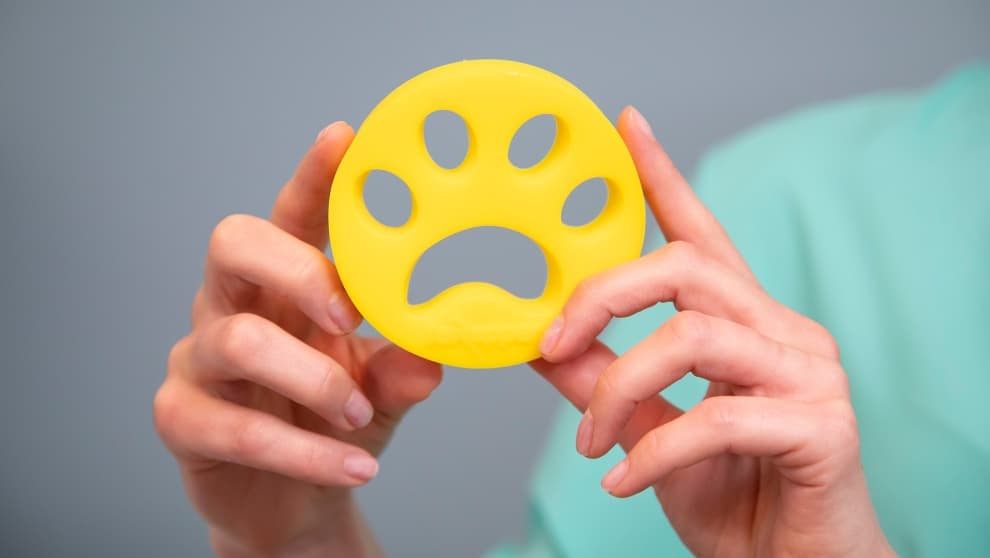
If you own a dog or a cat, you already know the trick that nobody warned you about: clothes can come out of the washing machine furrier than they went in. A wash-and-dry cycle that should have solved the problem instead redistributes hair across the whole load, welds it into the weave, and dumps a fresh coat of static onto everything for good measure. So you lint-roll a black shirt on your way out the door, and then again in the car.
The good news is that the wet-fur physics that make laundry so bad for pet hair are also fixable inside the same machines you're already running. This guide covers what actually works — inside the washer, inside the dryer, and in the ten seconds before the load goes in — plus the classic hacks that either help a little (dryer sheets, sometimes) or make things worse (fabric softener, always).
Why the washer makes pet hair worse, not better
Dry fur is easy to knock off fabric — a lint roller, a piece of tape, even a good shake will do it. Wet fur is a different animal: water flattens the strands, surface tension presses them into the weave, and the spin cycle essentially laminates them into the fabric under high pressure. The dryer then piles static on top, which re-attracts any hair that had come loose, plus every stray strand already floating around the drum from the last three loads.
The result is the load you know: black clothes that look grey, a lint trap that looks empty, and a couch throw that seems to gain fur every time you wash it. The fix is not more washing — it's giving the hair somewhere to go besides the fabric during the cycle itself.
Step one: brush and shake before the load goes in
Ten seconds outside the washer beats ten minutes of lint-rolling later. Give heavily-furred items a firm shake outdoors or over a trash can, and hit couch throws and dog beds with a stiff bristle brush or a lint roller first — anything you can knock off before the water hits is hair the machine now doesn't have to fight. For clothes, a slightly damp rubber glove run across the surface pulls off surprising amounts; the same happens if you toss items in the dryer alone (no heat) for a five-minute pre-tumble and empty the lint trap before the actual wash.
The other free upgrade is separating the worst offenders. Washing a pet blanket in the same load as your work shirts is a hair-transfer machine — nature's Venn diagram of exactly the fabrics you don't want to mingle. Give the pet stuff its own cycle when you can; the shirts stay cleaner and the blanket washes better without a mound of clothes crowding the drum.
Do dryer sheets and fabric softener actually help?
Dryer sheets are the popular home hack, and they're partially right for the right reason. A dryer sheet's job is to reduce static in the dryer, which cuts down the electrical grip hair has on fabric and lets a bit more of it end up in the lint trap. The catch is that they only work in the dryer, they only address the static half of the problem, and they leave a coating on fabrics that dulls performance if you're using any hair-capture tool in the wash.
Fabric softener in the washer is the opposite: it feels like it should help — softer fibers, less clinginess — and it actively hurts. The oily conditioning film it deposits gives dislodged hair a stickier surface to re-bond to, and it also gunks up the drum and any silicone or rubber components that keep hair off clothes. Skip it entirely when you're fighting a hair problem; wool dryer balls, in the dryer, are the useful substitute.
The one thing that actually strips hair inside the drum
The fix that outperforms every ritual on the list is to put something in the load that's tackier than the fabric — so the physics work for you instead of against you. That's exactly what a tacky-silicone disc like the FurZapper does. Toss one in the washer, tumble alongside the clothes, and every collision transfers fur from the fabric to the disc; when the wash drains, most of the captured hair rinses away with the water. Toss another one in the dryer and the same trick moves what's left off the clothes and into the lint trap.
The tell that it's working is your lint screen: the first few loads produce a startling amount, because hair that was clinging to the inside of clothes is finally being freed and captured. It's reusable indefinitely — when the surface stops feeling tacky, wash it with dish soap and warm water and the grip comes back — and there's nothing to refill. For a household with multiple pets or a double-coated shedder (labs, huskies, shepherds), running two discs per machine is the setup that ends the problem.
Clean the machine, or the machine will fight you
Even the best in-drum tool loses to a machine that's been quietly holding onto its own fur reserves. Pet hair collects in the door gasket of front-loaders, in the drain pump filter, and in the drum-lift baffles, and every load pulls a little of it back into rotation. Wipe the gasket out with a damp cloth after every pet-heavy load, and clean the pump filter every couple of months — many washers hide it behind a small door at the bottom front, and the fur ball that comes out is genuinely something.
The dryer needs the same discipline in a different place: empty the lint trap after every load — full stop — and vacuum out the housing behind it every month or two. A hair-clogged screen kills airflow, makes the dryer run longer and hotter, and re-deposits fine fur on the load it's supposed to be finishing. For a full deep-clean pass on both machines, the how to clean washing machine walkthrough is the checklist to run once a season.
What to lint-roll for after the load — and what to stop bothering with
A well-tuned system doesn't erase hair entirely; it turns lint-rolling from a chore into a spot-touch-up. The realistic outcome is that daily wear stops needing a roller — black jeans, work polos, the kids' school clothes come out of the dryer wearable — while a job-interview blazer or a black wool coat may still want a ten-second pass before it leaves the house. That's a normal endpoint, not a failure.
What's not worth doing anymore: rewashing a whole load because it looked furry, running a rinse-only cycle 'just to get the hair out' (it doesn't, and the added water just wets the fur back down), and dumping in a scoop of borax or vinegar because a Pinterest post said so — neither has a mechanism for pulling hair off fabric. Save the effort for pre-brushing, in-drum capture and gasket maintenance, and let the machines do the rest.
Read our FurZapper review
The tacky silicone disc that rides along in your wash and dryer, pulling pet hair off your clothes and into the lint trap where it belongs. Reusable indefinitely, no refills.
Read our FurZapper reviewFrequently asked questions
How do I get pet hair off clothes in the laundry?
Do three things and the problem largely ends: shake or brush loose hair off before the load goes in, add a tacky-silicone hair catcher (like a FurZapper) to both the washer and dryer so hair transfers off fabric during the cycle, and empty the lint trap after every load. Skip fabric softener while you're fighting hair — it makes clothes stickier, not less.
Do dryer sheets remove pet hair?
They help a little, by cutting static so hair lets go of fabric and heads for the lint trap. But they only work in the dryer, they only address the static half of the problem, and they leave a coating on fabrics. A tacky disc that captures hair in both the wash and the dryer beats dryer sheets alone.
Why does my washing machine leave more pet hair than it removes?
Wet fur is far grippier than dry fur — the wash flattens strands and presses them into the weave, and the spin cycle essentially laminates them in. Hair also builds up in the door gasket and pump filter and re-enters new loads. Give something tackier than fabric to migrate to, and clean the gasket and filter regularly.
Does vinegar or baking soda get pet hair out of clothes?
No. Vinegar rinses can slightly reduce static in the dryer, but neither has a mechanism for pulling hair off fabric during the wash. Save them for softening water or deodorizing towels; use a mechanical capture tool for the fur itself.
What's the best way to wash a pet blanket without ruining every other load?
Wash it by itself, on its own cycle. Shake or vacuum it first, add one or two hair-capture discs to the drum, skip fabric softener, and do a wipe-down of the door gasket after. Then run a hot empty cycle before your next regular load if the drum still looks furry.
How often should I clean the lint trap and pump filter when I have pets?
Empty the lint trap after every single load — no exceptions in a pet household. Clean the washer's drain pump filter every one to two months (it's usually behind a small door at the front bottom), and wipe out the front-loader door gasket after every pet-heavy wash.
TopCrate is reader-supported. When you buy through links on our site we may earn an affiliate commission, at no extra cost to you. Content is for general information and isn't a substitute for professional advice.