ORAL CARE 101
How Long Does Teeth Whitening Last? Honest Timelines by Method
Whitening removes the stains you've accumulated — it doesn't stain-proof your enamel. Here's how long each method really lasts, what fades results fastest, and the maintenance routine that stretches months into a year.
Nobody tells you the most important thing about teeth whitening until after you've paid for it: the results are rented, not owned. Whitening lifts the stains your habits have already deposited — it does nothing to stop those same habits from depositing new ones. Which means the honest answer to 'how long does it last' depends less on the product and more on what's in your mug.
This guide covers the real timelines, method by method — from whitening toothpaste to strips to LED kits to the dentist's chair — what fades results fastest, the maintenance playbook that stretches months into a year, why teeth drift yellow again no matter what you do, and the situations where whitening isn't the right tool at all. If you're still choosing a method, our guide on how to whiten teeth at home covers the options; this one covers the calendar.
The Honest Answer: Whitening Removes Stains, It Doesn't Prevent Them
Teeth whitening is a cosmetic process, and it works in one direction. Peroxide-based whiteners break apart the pigmented compounds that have accumulated in and on your enamel over years of coffee, tea, and everything else — effectively resetting your teeth closer to their natural shade. What no whitener does is seal, coat, or stain-proof the enamel afterward. The moment your last session ends, the staining clock starts again from zero.
That's why every duration figure you'll read comes with a range wide enough to drive a truck through. The same LED kit that keeps one person bright for a year fades in three months on a three-espresso-a-day smoker. The timelines below are honest averages for average habits — treat them as a starting point, then adjust for your own mug count.
How Long Teeth Whitening Lasts by Method
Whitening toothpaste isn't really a whitening event at all — it's maintenance. Its gentle abrasives (sometimes with a little peroxide) polish away surface stains as they form, so it works only as long as you keep using it and won't shift your underlying shade much. Whitening strips do genuinely bleach, typically a shade or two, and the results hold for several months — roughly three to six — before fading becomes noticeable.
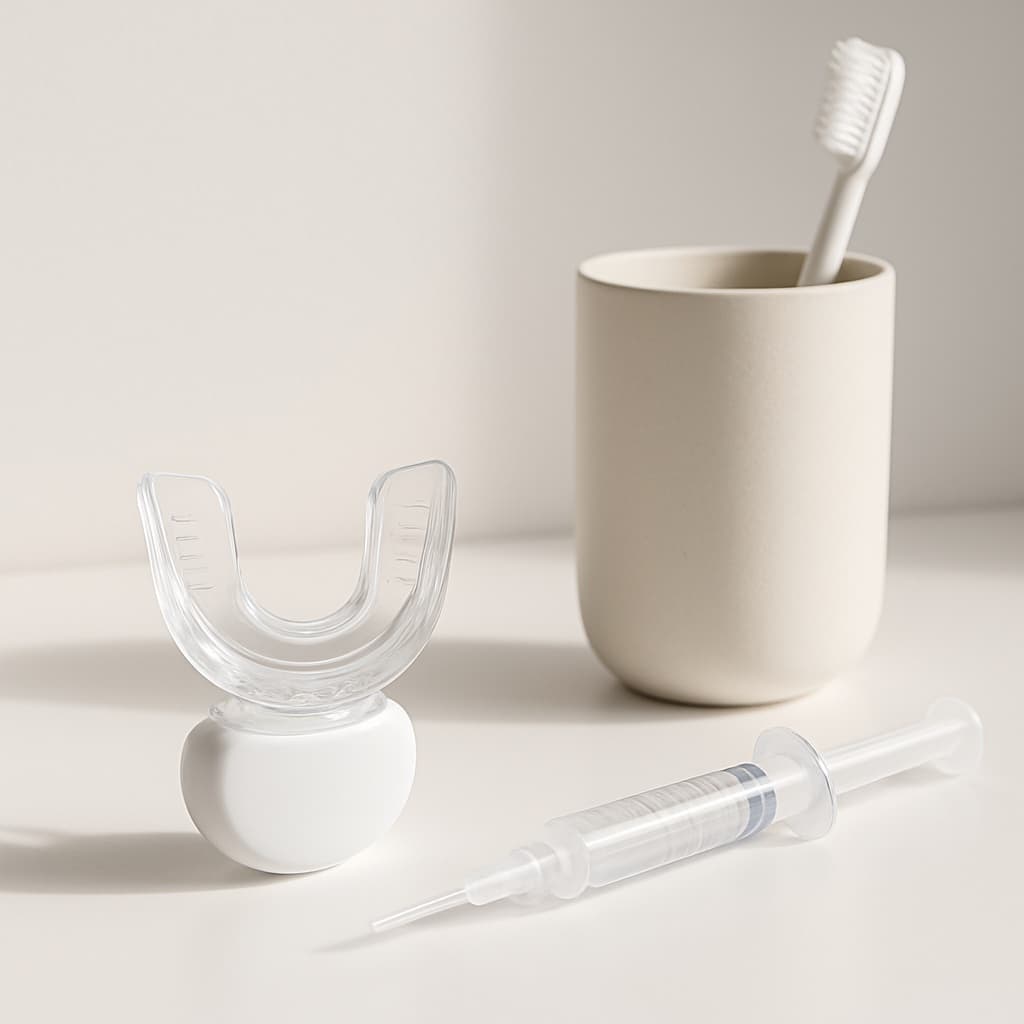
LED tray kits like Auraglow sit a step up: a stronger peroxide gel held against every tooth at once, with results that commonly last around six months to a year when you do occasional top-up sessions. Professional in-office whitening is the strongest of all, and the longest-lived — one to three years is the standard range. Every one of those numbers bends toward the short end for heavy coffee drinkers and smokers, and toward the long end for people who follow the maintenance playbook below.
What Fades Whitening Results Fastest
The enemies have names. Chromogens are intensely pigmented compounds that latch onto enamel, and tannins are plant compounds that help them stick — coffee, black tea, and red wine deliver both at once, which is why they top every re-staining list. Tea drinkers, brace yourselves: black tea is often harder on tooth color than coffee, because it's richer in tannins. Smoking is the fastest fader of all — tar and nicotine restain teeth quicker than anything you can drink.
The supporting cast includes cola, dark berries, tomato and soy sauces, and balsamic — a decent rule of thumb is that anything capable of staining a white shirt is capable of staining a white smile. Frequency and contact time matter more than the occasional indulgence: a glass of red with dinner is a rounding error, while a mug of tea nursed across an entire morning is a daily staining session.
The Maintenance Playbook That Stretches Results
Four habits do most of the work. First, brush with a whitening toothpaste daily — it intercepts new surface stains before they settle, which is exactly the job it's good at. Second, schedule short top-up sessions with your strips or kit every few months, before your teeth look dull rather than after; a day or two of touch-up beats another full course, and you should always stay within the product's directions on frequency.
Third, drink iced coffee, iced tea, and cola through a straw — it routes the stain-makers past your front teeth entirely. Fourth, rinse or swish with plain water right after coffee or wine; it costs nothing and clears the worst of the pigment before it can bind. Coffee is the number one culprit for most people, and our guide on how to remove coffee stains from teeth covers that battle in full detail.
Why Teeth Yellow Again Anyway
Two clocks run on your tooth color, and whitening only rewinds one of them. The stain clock — pigment accumulating on and in the enamel — is the one peroxide fixes. The age clock is different: enamel gradually thins over the decades, and the dentin underneath it is naturally yellow. As enamel thins, more of that dentin shows through, and no amount of surface whitening can meaningfully change dentin's color.
This is worth knowing before you blame the product. Whitening returns your teeth toward their brightest natural shade — it doesn't issue you a new one off a paint chip. Older teeth still whiten, and usually noticeably, but the baseline they return to shifts warmer with age. That's biology, not a defective kit, and honest expectations are the difference between being pleased with a real result and chasing one that doesn't exist.
Sensitivity, Restorations, and When Whitening Isn't the Answer
A temporary zing during a whitening course is common with peroxide and usually fades within a day or two of finishing. To manage it: shorten your sessions, space them further apart, use a desensitizing toothpaste with potassium nitrate in the weeks around your course, or step down to a gentler formula. But know the line — whitening is a cosmetic product for healthy teeth. Sensitivity that persists after you stop, gum irritation that doesn't settle, or pain in a specific tooth is a dental question, and it belongs at a dentist, not in another round of gel.
Two more honest caveats. Crowns, veneers, and fillings don't bleach — they keep the shade they were made in while your natural teeth lighten around them, so whitening with visible dental work risks a mismatch; if you have restorations up front, talk to your dentist about sequencing before you start. And some discoloration isn't a whitening job at all: a single dark tooth (often from an old injury or root canal) and gray-toned discoloration respond poorly to at-home peroxide. Those call for a dentist first — the fix exists, it just isn't in a box.
Read our Auraglow review
The LED tray kit we point whiteners to first — our full verdict on results, timelines, and the sensitivity question.
Read our Auraglow reviewFrequently asked questions
How long does teeth whitening last?
It depends on the method and your habits. Whitening toothpaste is ongoing maintenance only; strips typically hold for several months; LED tray kits like Auraglow commonly last six months to a year with occasional top-ups; professional in-office whitening lasts one to three years. Coffee, tea, red wine, and smoking shorten every one of those ranges.
How often can you whiten your teeth?
Follow your product's directions — that's the honest ceiling. In practice most people do a full course a few times a year with short top-up sessions in between, and overdoing it buys sensitivity rather than extra whiteness. If you feel like you need to whiten constantly, the fix is usually habits, not more peroxide — and sensitivity that persists belongs at a dentist.
Is teeth whitening permanent?
No. Whitening is cosmetic — it removes the stain you've accumulated, and the same drinks and habits immediately begin depositing new stain. With daily whitening toothpaste, water rinses after coffee, and periodic top-ups, you can stretch results considerably, but every method fades eventually without maintenance.
Does teeth whitening work on crowns, veneers, or fillings?
No. Restorations are made of materials that don't respond to bleaching — they hold the shade they were manufactured in while your natural teeth lighten. That creates a visible mismatch risk if you have dental work in your smile line, so talk to your dentist about the order of operations before whitening.
Why did my teeth turn yellow again after whitening?
Two reasons. New stain: chromogens and tannins from coffee, tea, wine, and smoke start re-accumulating the day you stop. And age: enamel thins over time, letting more of the naturally yellow dentin underneath show through — something surface whitening can't change. The first is fixable with maintenance; the second is normal biology.
Can yellow teeth actually become white again?
Usually, yes — yellowing from accumulated stain responds well to peroxide whitening, and that's the most common kind. Gray-toned discoloration and a single dark tooth are different stories that respond poorly to at-home products; those are dentist-first situations, not reasons to buy a stronger kit.
TopCrate is reader-supported. When you buy through links on our site we may earn an affiliate commission, at no extra cost to you. Content is for general information and isn't a substitute for professional advice.