RECOVERY
EMS vs TENS: What's the Actual Difference for Home Muscle Relief?
They both stick pads on your skin, both use gentle electrical pulses, and both live next to each other on Amazon. But EMS and TENS solve different problems in different ways — and buying the wrong one is why the pad in your bathroom drawer stopped getting used.
You want the thing that helps your sore shoulder. You Google it, and half the products are called EMS and half are called TENS, and the marketing pages for both promise the same thing: stick this pad on, feel better. Then you dig one level deeper and it turns out EMS units and TENS units are, in fact, doing different jobs — one is talking to your muscles, the other is talking to your nerves — and picking the wrong one is why so many of these devices end up in the drawer after two weeks.
This guide covers the actual mechanical difference between EMS and TENS in plain language, when each one is genuinely the right tool, when you want a combo unit and when you don't, and the buying pitfalls that turn a $50 device into a paperweight. It's the piece we wish someone had shown us before we bought the first pad-and-wire kit and stared at eight modes with no idea which one to press.
The one-sentence difference — the rest is detail
EMS talks to your muscles; TENS talks to your nerves. That's the whole map. EMS — electrical muscle stimulation — sends pulses at a frequency and intensity that make the muscle itself contract and release, the same way it would if your brain told it to. The muscle actually works: you can see it twitch under the pad. Physical therapists use EMS to keep a muscle firing after surgery, to help re-wake a weak muscle after an injury, and — the reason most people care — to move blood and lymph through a knotted, tight muscle so it releases. TENS — transcutaneous electrical nerve stimulation — is a different frequency and target: it sends pulses that stimulate the sensory nerves running under the skin, which either overload the pain signal traveling to the brain (the 'gate control' theory) or trigger the release of the body's own endorphins. TENS doesn't make the muscle move. It changes the pain volume.
That difference maps directly onto what each is good for. Knotted trapezius from the desk, tight calves after a run, a sore lower-back muscle group you want to loosen — that's EMS work. Nerve-driven pain (sciatica, neuropathy, arthritis), chronic pain conditions where the goal is 'turn the volume down while I do the rest of my life,' post-surgical soreness — that's TENS work. And yes, a lot of everyday muscle soreness benefits from both, which is why combo units exist and why picking one is nuanced.
What the pulses actually feel like — and why that matters for consistency
The feel is genuinely different, and it's the biggest reason people who buy one wish they'd bought the other. TENS at a good working intensity feels like a fast, buzzing tingle across the skin — sometimes described as pins and needles or a warm hum. The muscle underneath doesn't move. You turn the dial up until it's noticeable but not painful, and you can wear it for 30 minutes at a stretch while you work or watch TV. It's compatible with doing something else at the same time.
EMS at working intensity is unmistakable: the muscle contracts. On a low setting it's a firm pulse; on a higher setting the muscle grips visibly, holds for a second, releases, and repeats. It feels like a strong involuntary workout of that specific muscle. Not painful, but not something you can ignore either — and that's the point. The contract-and-release cycle is what pumps blood through knotted tissue, works out the metabolic gunk from a hard workout, and forces a lazy muscle to fire when it doesn't want to. Sessions are usually shorter (15-20 minutes), and you're aware of the pad the whole time. If you buy an EMS unit expecting TENS's set-it-and-forget-it wearability, you'll be surprised. If you buy a TENS expecting to feel the muscle work, you'll wonder if it's broken.
The honest match: which one for your specific problem
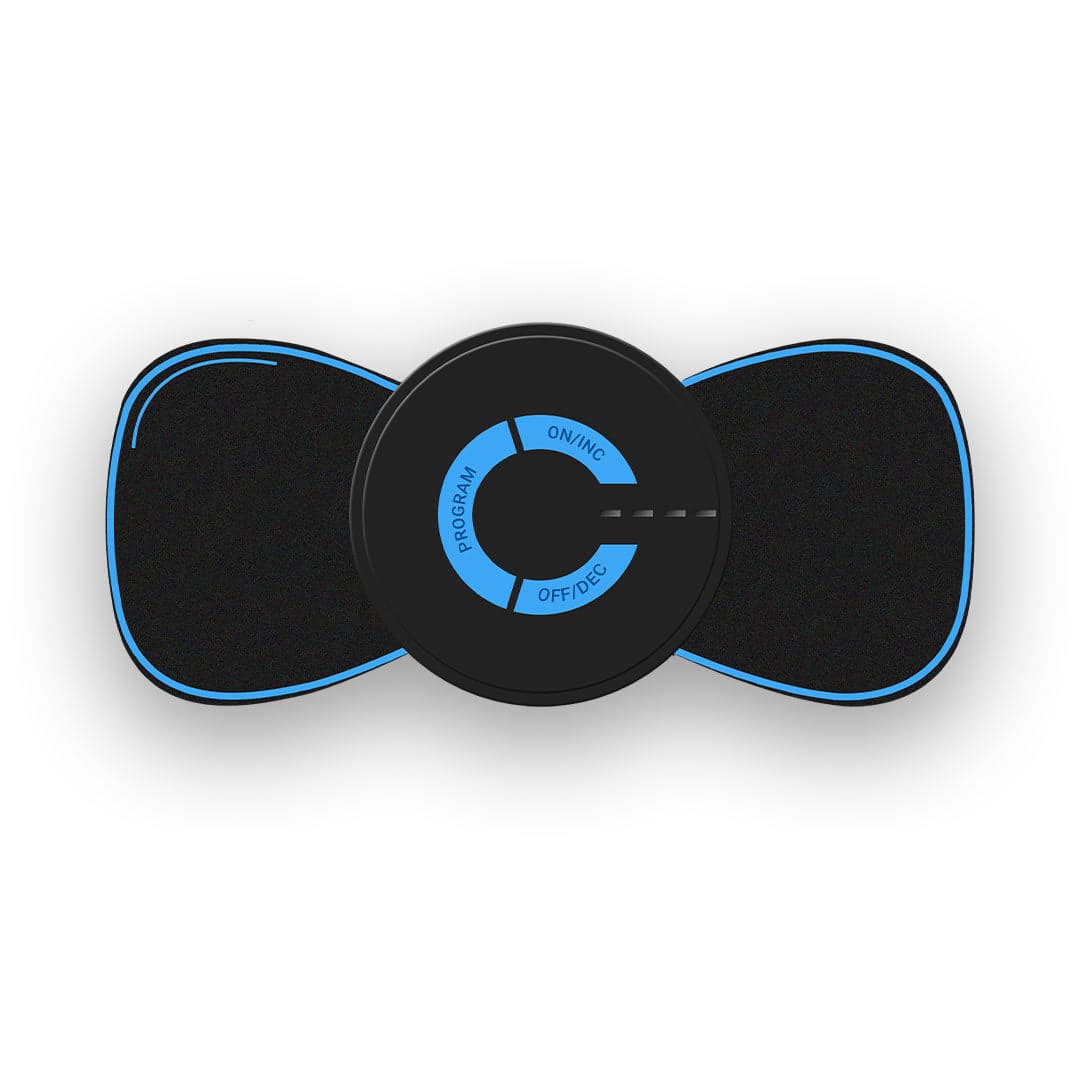
For everyday muscular soreness and knots — shoulder from the laptop, lower back from the drive, calves from the walk, the general 'I lift things and my body is tight' pattern — EMS is the tool. The muscle-contraction mechanism moves circulation through the exact tissue that's tight, and the sensation is satisfying in the same way a deep massage is. A pocket-sized EMS pad like the Nooro body massager is the fifty-dollar entry to this: a stick-anywhere gel-pad unit that goes on the sore muscle wherever it lives — back today, calf tomorrow, shoulder Wednesday — and delivers the pulses. Portable EMS is the go-to for the desk workers, gym-goers, and generally healthy adults whose 'pain problem' is really an 'accumulated muscular tension' problem.
For chronic or nerve-source pain — the ache that isn't a knot, the arthritis flare-up, the neuropathy tingling, the persistent post-injury discomfort that a massage doesn't touch — TENS is the tool. You're not trying to make the muscle work; you're trying to turn the pain volume down while you go about your day. A good TENS unit at a moderate setting for 30 minutes can meaningfully change chronic-pain days for people it works for (roughly half of chronic pain sufferers respond well; the other half less so, and that's the reality). It's also the safer starting point for anyone with actual injury or medical pain — TENS isn't asking the muscle to do anything, so it's the lower-consequence option when you're not sure what you're dealing with.
For everything else — the actual mixed reality of most people's bodies — a combo unit or a stack of two devices is the honest answer. Sore muscles get EMS, pain flares get TENS. The Nooro body pad handles the EMS side portably; a cheap $30 dual-mode TENS/EMS unit with pads-on-wires from Amazon handles the TENS side when it's needed. And for the pain that neither electrical modality is the right tool for — the drug-free wearable middle ground — a passive patch like the Kailo pain patch sits over the sore spot, delivers no current, and stays on under clothing for the day. It doesn't compete with EMS or TENS; it fills a different slot in the same drawer.
The safety envelope: what electrical stimulation shouldn't cross
Both EMS and TENS are extremely safe when used as directed on typical adult muscle and pain complaints, but the categorical don't-do rules are worth memorizing before you slap a pad on. Never place pads over the heart (a small pulse in the wrong place is a bad idea). Never on the front of the neck (the electrical field can affect the vagus nerve and blood pressure). Never during pregnancy without a doctor's OK. Never on broken skin, active infections, or over metal implants near the surface. And critically — anyone with a pacemaker, implanted defibrillator, or other implanted electronics should not use either without their doctor signing off, because the electrical current can interfere with the implant. Same for people with epilepsy, and anyone recovering from surgery still under a doctor's care.
Inside those rules, the risk of ordinary home use is essentially zero. Pad placement is the practical variable: put the pads on the belly of the muscle you're trying to work (for EMS) or over the area of pain (for TENS), never over a joint or bone. Start with the intensity dial low and increase until you feel a firm, comfortable sensation — never something sharp. Sessions are 15-30 minutes; longer isn't better. Skin will get slightly red where the pad was; that's the normal circulation response and fades within an hour. If it doesn't, or if the skin actively hurts, you had the intensity too high.
Buying pitfalls that turn a $50 unit into a paperweight
The first pitfall is wired pads. Old-school TENS/EMS units come with a control box, wires, and sticky pads at the end of the wires. They work well and they're cheap, but they're also why so many of these devices die in a drawer: setting up the wires, wiping down the pads, finding the control box, and doing it before your muscle un-tightens is a friction stack most people don't complete on a busy weeknight. Wireless button-shaped pads — the whole design of the Nooro body unit — are the specific fix for that failure mode. You peel, stick, press power. No wires, no box, no ceremony. That's the difference between a device you use nightly and one you use twice.
The second pitfall is fake bargain units. Marketplace listings for $12 'TENS units' or $20 'EMS massagers' from unknown brands are, in a genuine percentage of cases, unregulated electronics without the temperature and current controls that make legitimate units safe. If it's coming from a brand nobody has heard of and the listing has more emojis than technical specs, you're not saving money — you're buying a fire hazard that also doesn't work. The $30-80 range from a real brand is where actual value lives, and if you can, buy from the brand direct rather than a marketplace reseller where lookalikes get mixed in.
The third pitfall is expecting the pad to fix things it can't. Both EMS and TENS are wellness tools, not medical treatments. They help ordinary muscle tension and low-grade pain; they don't cure back conditions, they don't fix nerve damage, they don't rehab a torn muscle without a physical therapist involved. If your pain has been getting worse over weeks, wakes you up at night, radiates in a specific nerve pattern, or came from a specific injury, no pad is the answer. See someone with an actual license. But for the muscular tension of ordinary adult life, the pads earn their keep — and picking the right one for what your body is actually doing turns a drawer paperweight into the nightly reset you didn't know you needed. See our broader drug-free pain relief guide for how these tools stack with the rest of the non-pill layer.
Read our Nooro body massager review
The wireless EMS pad that sticks on any sore muscle — shoulder, back, calf, wherever the knot moved to today. Real electrical muscle stimulation (not surface buzz), fifty-dollar entry price, and no wires-and-box friction that keeps other pads in the drawer.
Read our Nooro body massager reviewFrequently asked questions
What's the difference between EMS and TENS in one sentence?
EMS makes your muscle contract (it talks to the muscle directly); TENS blocks or reduces pain signals traveling along the nerves (it talks to the nerves, not the muscle). EMS is what you want for muscle knots, tightness, and general muscular soreness — the pulses pump blood through the tissue and force the muscle to work through a contract-and-release cycle. TENS is what you want for chronic pain, nerve-driven pain, and turning the volume down on ongoing discomfort while you do the rest of your day. Portable EMS pads like the Nooro body massager fit the muscle-relief use case; TENS units with sticky pads on wires fit the pain-management one.
Which is better for a knotted shoulder from working at a desk?
EMS. The knot is a muscle problem — a tight band of muscle fiber that isn't releasing — and EMS pulses make the muscle contract and release repeatedly, which is exactly what pumps blood through it and helps it let go. TENS on the same knot would feel like a buzz over the skin but wouldn't move the muscle itself. A portable EMS pad you stick right on the trapezius (the muscle from the base of the neck out to the shoulder) for 15 minutes is the standard fix, and the wireless format matters — a pad you can wear while you keep working is the one you'll actually use nightly.
Which is better for chronic pain like arthritis or sciatica?
TENS, generally. The mechanism (interrupting or reducing pain signals traveling along the nerves) is aimed at exactly the pain-management job that chronic pain conditions need. It's also the less-committal modality — TENS at a moderate setting for 30 minutes is easy to layer into a workday. Not everyone responds equally (research suggests roughly half of chronic pain sufferers get meaningful relief), but for the people it works for, it's a low-cost, drug-free option worth trying. For pain that TENS doesn't touch, a passive drug-free wearable like the Kailo pain patch is the middle-ground option that goes under clothing and stays on all day.
Do I need both an EMS and a TENS unit, or is a combo device fine?
For most people, one modality is what you actually need — the honest answer depends on your body. Desk workers, gym-goers, and generally healthy adults whose pain is really tight-muscle-and-knots territory: EMS solo is enough. Chronic pain patients whose issue is nerve-source or arthritis: TENS solo is enough. If you genuinely need both — recovering from an injury with both muscle tightness and pain flares — a combo device or a stack of two cheap dedicated units is fine. Don't buy both if you don't need both; the second device will end up in the drawer.
Is EMS or TENS safe to use every day?
Yes, within the standard cautions. Neither is habit-forming or addictive, neither depletes anything in your body, and the current levels are well below anything that damages tissue when the device is used as directed. Standard rules apply: never over the heart, front of the neck, on broken skin, over metal implants, during pregnancy, or with a pacemaker/implanted defibrillator without a doctor's clearance. Sessions are 15-30 minutes at a time, at an intensity that's firm but not sharp. Slight skin redness under the pad afterward is normal and fades within an hour.
Why does my EMS pad make my muscle jump but the TENS one doesn't?
That's the tell — they're doing different jobs. EMS runs at a lower pulse frequency (typically 20-100 Hz) that's slow enough for the muscle fiber to contract in response, so you literally see and feel the muscle work. TENS runs at a much higher frequency (typically 80-150 Hz for pain relief, sometimes even higher) that's too fast for the muscle to twitch to — the current reaches the sensory nerves and either blocks pain signals or triggers endorphins, but the muscle stays relaxed. Neither one is broken. They're two different tools.
Are the cheap $15 marketplace EMS units safe?
Often not, and this is a category where the discount is a red flag. Real EMS and TENS units have regulated current, temperature limits, and safety cut-outs; the $15 clones frequently don't, and there are documented cases of unregulated ones burning the skin at the pad site or delivering inconsistent current. The $30-80 range from a brand with actual reviews and specs is where the honest floor is. If you're going to spend money on a wellness device you'll use on your own body, spend it where the safety engineering is real rather than aspirational.
TopCrate is reader-supported. When you buy through links on our site we may earn an affiliate commission, at no extra cost to you. Content is for general information and isn't a substitute for professional advice.