CLEANING 101
Do Laundry Detergent Sheets Work? The Honest Answer on the Jug-Free Swap
Laundry detergent sheets handle everyday loads fine, trail liquids on tough stains, and win almost everywhere else — here's the full honest picture, including the eco fine print.
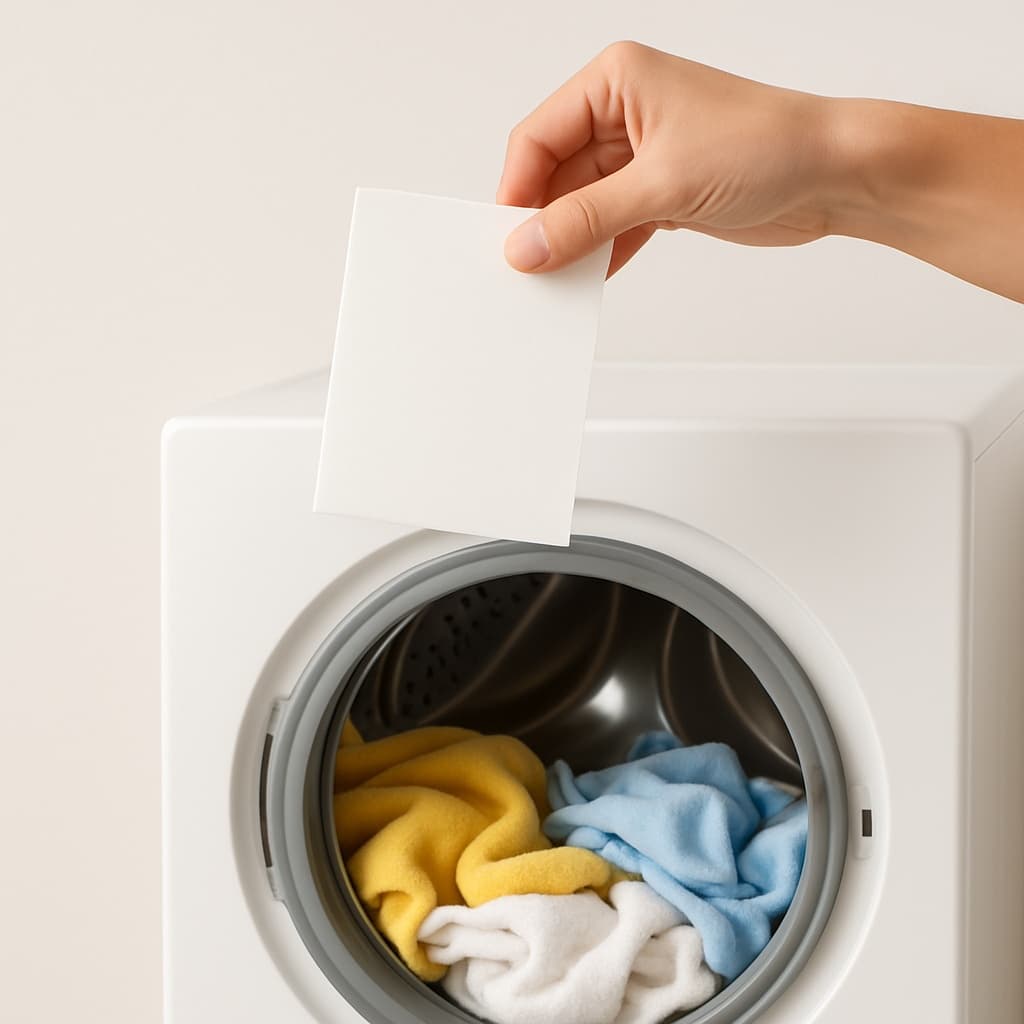
Laundry detergent sheets make a seductive pitch: all the cleaning of a 10-pound plastic jug, compressed into something that looks like a dryer sheet and weighs about as much. No drips, no measuring, no jug in the landfill. The obvious question is whether something that thin can actually clean clothes — and the honest answer is more interesting than either the fans or the skeptics let on.
Here's the full picture: what detergent sheets actually are, what independent testing says about their cleaning power — stated plainly, because it's the whole question — where they genuinely beat liquid, the eco claims with the fine print left in, what they cost per load, how to use them right, and who should actually switch.
What Laundry Detergent Sheets Actually Are
A detergent sheet is concentrated detergent — surfactants and cleaning agents — carried in a thin film of polyvinyl alcohol (PVA), the same dissolvable material that wraps dishwasher and laundry pods. Drop the strip in the drum, and the film dissolves in the wash water, releasing a pre-measured dose of detergent. That's the entire trick: the water your detergent used to ship in has been removed, and the plastic jug that held the water goes with it.
The format took off for reasons that have little to do with stain science. A year of sheets fits in a shoebox where jugs claim a cabinet shelf, there's nothing to spill, and every load gets exactly one dose. The question that matters — the one the marketing glides past — is whether the cleaning survives the compression.
Do Detergent Sheets Really Clean? The Honest Answer
Here it is plainly: for lightly soiled everyday laundry — the shirts, sheets, and towels that make up most loads — detergent sheets clean fine. Clothes come out fresh, and most households would never notice a difference. But on tough stains, independent testing has been consistent and unflattering: when Consumer Reports ran detergent sheets through its stain panel — body oil, blood, chocolate, grass, salad dressing — the sheets as a group trailed the top liquid detergents by a wide margin on greasy and set-in stains.
That gap is the whole story, so don't let anyone shrink it. A sheet carries less total cleaning firepower than a premium liquid, and it shows exactly where firepower matters: work clothes, kids' knees, cooking-oil splatter. The practical translation is that sheets are an everyday detergent, not a stain-fighting one — pair them with a stain pretreater, or keep a bottle of good liquid on the shelf for the ugly loads, and the weakness mostly disappears.
Where Laundry Sheets Genuinely Win
Everywhere except the stain panel, honestly. There's no plastic jug to buy, store, or throw away. A month of loads weighs a few ounces, which is why sheets have quietly become the default for travelers, laundromat users, and anyone hauling laundry up apartment stairs. Nothing drips, nothing glugs, and nothing leaks in a suitcase. Our reviewed pick in the category, Miracle Sheets, ships in a slim plastic-free box that fits in a drawer — the storage contrast with a jug collection is almost comical.
The sleeper benefit is dosing. Most people massively overdose liquid detergent — the cap lines are ambiguous by design — and the excess doesn't rinse out. It builds up in fabric as the residue film that makes laundry stripping necessary, feeds mildew in the machine, and wastes money one glug at a time. A sheet is a fixed dose. You physically cannot overdose, which for a lot of households quietly fixes problems they'd been blaming on their washer.
The Eco Claims, With the Fine Print Left In
The clear win first: replacing plastic jugs with a paper box is real, and the shipping math is real too — you're no longer trucking water around the country, so the freight footprint per load drops. If your goal is less plastic in your recycling bin and lighter shipping, sheets deliver exactly what they promise.
The fine print is the film itself. PVA dissolves completely in water — you'll never see it again — but dissolving is not the same as biodegrading, and whether PVA fully breaks down in real-world wastewater treatment is genuinely debated. One peer-reviewed 2021 estimate concluded that a majority of the PVA entering US treatment plants passes through incompletely degraded; that study was funded by a competing detergent company, and industry-backed research disputes it. Honest position: sheets are a clear plastic-jug win and a probable net improvement, but 'plastic-free' as a settled scientific claim is stronger than the evidence currently supports.
Cost Per Load, and How to Use Detergent Sheets Right
On price, no spin: sheets typically cost more per load than bulk liquid, and meaningfully more than bargain jugs bought on sale. You're paying for the format — the weight savings, the dosing, the missing jug — not getting a discount. If cost per load is your primary metric, a big jug of good liquid still wins and probably always will.
Using them is almost insultingly simple: toss the sheet in the drum before the clothes, not the dispenser drawer, so water hits it directly. In very cold water, give it that head start or tear it up — the film dissolves more slowly as temperature drops. Tear a sheet in half for small loads, use two for large or dirty ones. And if loads come out musty, that's rarely the detergent's fault: clean your washing machine first, because a gunked-up drum undoes any detergent you put in it.
Who Should Switch to Laundry Detergent Sheets — and Who Shouldn't
Switch if you travel, use a laundromat, live small, chronically overdose liquid, or want less plastic in your life and can hold the eco claims with appropriately open eyes. For everyday loads — which is most loads — sheets clean fine, and the convenience gains are large and permanent. This is the honest core of the category: the format is the product, and the format is genuinely good.
Don't switch — or don't switch completely — if your laundry works for a living. Households with trade work clothes, athletes, or small children generating heroic stains should either pretreat religiously or keep a quality liquid for the tough loads and let sheets handle the rest. That two-detergent setup sounds fussy but takes one shelf inch, and it plays each format to its strength instead of asking a featherweight strip to fight grease it was never going to beat.
Read our Miracle Laundry Detergent Sheets review
Our full review of the jug-free detergent sheets — what they clean well, and what to know before you switch.
Read our Miracle Laundry Detergent Sheets reviewFrequently asked questions
Do laundry sheets actually clean?
Yes, for everyday, lightly soiled loads — shirts, sheets, towels — they clean fine, and most households won't notice a difference. Independent testing, including Consumer Reports' stain panels, found sheets trail top liquid detergents significantly on tough greasy and set-in stains, so pretreat stains or keep a liquid for the hard loads.
Are laundry detergent sheets bad for your washer?
No — they're safe for standard and HE machines. The sheet dissolves completely, and because the dose is pre-measured, sheets actually leave less residue in the machine than the overdosed liquid most people pour. Just put the sheet in the drum, not the dispenser drawer, so it dissolves fully.
Do laundry detergent sheets work in cold water?
Yes, but the film dissolves more slowly as water gets colder. Place the sheet in the drum before loading clothes so water reaches it directly, or tear it into pieces for very cold cycles. If you ever find a partially dissolved sheet, cold water plus an overpacked drum is almost always the reason.
Are laundry detergent sheets really eco-friendly?
Partly settled, partly debated. Eliminating the plastic jug and shipping without water are real wins. But the PVA film, while it dissolves completely, may not fully biodegrade in real-world wastewater treatment — the research is contested on both sides. A clear improvement over jugs, but not a settled 'plastic-free' story.
Are laundry sheets cheaper than liquid detergent?
Usually not — sheets typically cost more per load than bulk liquid, especially bargain jugs on sale. You're paying for convenience, portability, and pre-measured dosing rather than saving money. The exception is chronic overdosers, who can come out roughly even because a sheet makes overdosing impossible.
How many laundry detergent sheets do you use per load?
One sheet for a normal load, half a sheet for small loads, and two for large or heavily soiled loads. The pre-measured dose is the point — resist the liquid-detergent instinct to add extra for insurance.
TopCrate is reader-supported. When you buy through links on our site we may earn an affiliate commission, at no extra cost to you. Content is for general information and isn't a substitute for professional advice.