COMPARISON
Chill Pill vs CalmiGo: Tactile Grounding Palm Device vs Guided-Breathing Handheld — Which Anxiety Tool Is Right for You? (2026)
Chill Pill and CalmiGo are the two most-searched handheld anxiety tools in 2026, and they take opposite approaches to the same "calm me down right now" problem. One is a $30 silent, pocket-sized tactile grounding device you stroke with your thumb. The other is a $179 handheld guided-breathing device with lights and aromatherapy scent plates. Here's how they compare on mechanism, portability, cost and evidence — and which one fits your anxiety pattern.
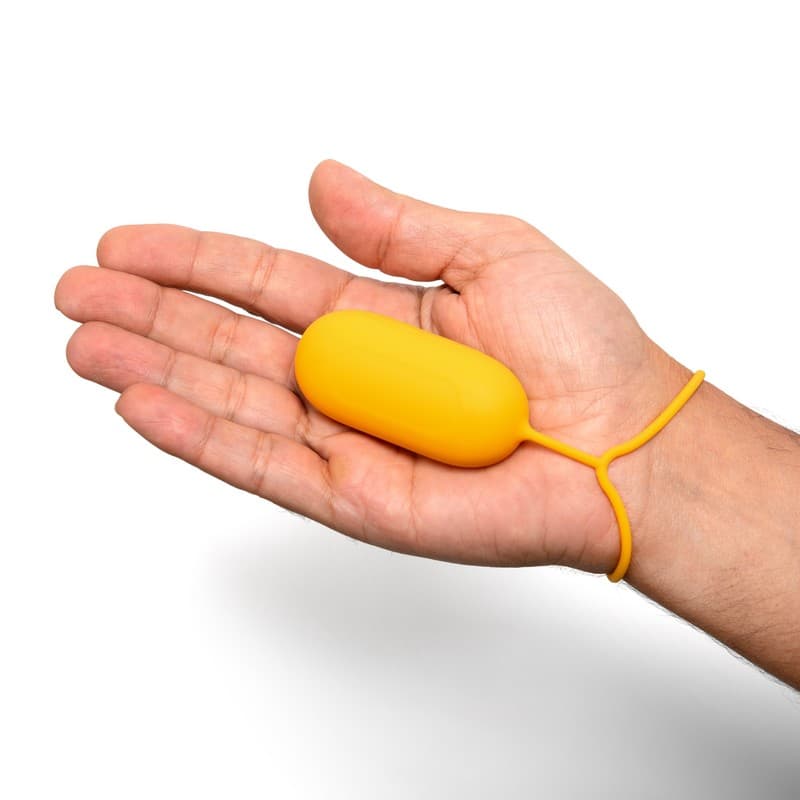
Chill Pill and CalmiGo are the two most-searched handheld anxiety tools in 2026, and they compete for the same buyer: someone whose anxiety spikes in daily life — before a meeting, in traffic, in bed at 1 a.m. with a racing mind — who wants a drug-free, discreet, in-the-moment tool that works right now rather than a therapy appointment three weeks from now or an app that requires opening a phone. What they aren't is the same product. Chill Pill is a $29.99 palm-sized tactile grounding device from the brand of the same name, sold through its own direct funnel at getchillpill.io — a soft silicone shell with a finger loop and a cool, smooth metal face you stroke slowly with your thumb. CalmiGo is a $179 handheld guided-breathing device from the Israeli-founded CalmiGo team — about the size of an asthma inhaler, with three blinking lights that pace your exhales, an optional vibration cue when the exhale completes, and snap-on aromatherapy scent plates (lavender, bergamot, peppermint).
So the right choice depends on the specific mechanism you want working on your nervous system and the context you'll actually use the tool in. If your anxiety is the "my hands won't settle, my mind won't stop looping" kind, and you want a silent, pocket-sized object you can use at a desk, in a meeting, on a commute or in bed without anyone noticing, Chill Pill is engineered for exactly that use case at a sixth of CalmiGo's price. If your anxiety is the "I can feel a panic spike coming on and I need my breath to slow" kind, and you're willing to pay six times more for a clinically-validated device the US Veterans Administration is distributing and the IRS has approved as a tax-deductible health expense, CalmiGo is the honest pick with the stronger evidence base. This guide covers how each one actually works, who makes them, the real cost math, the evidence pedigree, and which one wins for different anxiety patterns.
A disclosure from us: TopCrate is a paid affiliate for Chill Pill and earns a commission when readers buy through our links. It doesn't change the verdict on this page, and it doesn't push Chill Pill into use cases it isn't the right tool for — the honest comparison below keeps CalmiGo in play for the specific anxiety pattern it does better, especially the acute panic-spike and the clinically-indicated-tool-for-a-medical-reason use cases. Our full Chill Pill review covers the tactile-grounding experience in depth.
Chill Pill vs CalmiGo at a glance
What each one is: Chill Pill is a palm-sized tactile grounding device from the Chill Pill brand — a soft silicone shell with a finger loop that keeps the device secure in your hand and a cool, smooth metal face on one side that you stroke slowly with your thumb in a repetitive motion. There's no light, no sound, no app, no battery and nothing to charge. It is a mechanically-passive object optimized for silent tactile focus. CalmiGo is a handheld guided-breathing device roughly the size of a Ventolin inhaler, with three blinking indicator lights on its side that pace your exhales (you breathe out as the lights sequence down, then inhale when the third light comes on), an optional vibration cue to signal when your exhale is complete, snap-on "scent plates" that add lavender, peppermint or bergamot aroma, and an onboard learning mechanism that tracks your breathing pattern over a 3-minute session and gradually slows your exhales to a longer target.
Price: Chill Pill is $29.99 on the brand's direct funnel at getchillpill.io, a one-time hardware buy with no refills, no batteries, no subscription and nothing to replace. CalmiGo is priced at $179.00 direct from the brand (with occasional $30-off promotions bringing it to $149), plus optional ongoing scent-plate refills at $16 for 14 servings (roughly $1.14 per aromatherapy session) if you use the aromatherapy feature. The six-to-one upfront price gap is the single biggest fact driving the comparison, and the honest value framing depends on whether CalmiGo's additional features and evidence base justify that gap for your specific use case.
Mechanism: Chill Pill works through tactile grounding — the same mechanism as a worry stone, a fidget stone or the "name five things you can touch" technique used in CBT. Giving your hands and attention a steady, external, physical focus crowds out looping anxious thoughts and pulls the nervous system out of the stress-response spiral. The cool metal face adds a mild thermal-sensory anchor that intensifies the grounding effect. CalmiGo works through prolonged-exhale breath pacing — the same mechanism as 4-7-8 breathing, box breathing, resonant breathing and most clinical breath interventions used for acute anxiety. Stretching the exhale longer than the inhale activates the vagus nerve and engages the parasympathetic rest-and-digest brake, which lowers heart rate and reduces sympathetic arousal. Both mechanisms are legitimate and well-studied; they just target different nervous-system access points.
Discretion and context: Chill Pill wins decisively on discretion. It is silent (no lights, no beeps, no vibration), pocket-sized, and reads as a stress ball or a small toy if someone glances at your hand. You can use it in a meeting, at a desk, on a commute, in a classroom or in bed without anyone noticing. CalmiGo is semi-discreet — it is small and quiet during use, but the three blinking lights, the raise-to-mouth gesture, and the aromatherapy scent make it clear you are using an anxiety device. It is well-suited to private settings (at home, in your car, in a bathroom at work) but harder to use seamlessly in public without drawing attention.
Evidence pedigree: CalmiGo wins decisively. The brand has been studied in a Columbia University emergency-department clinical trial (NCT03884712 on ClinicalTrials.gov) specifically on anxiety and panic-attack symptoms, the US Veterans Administration has purchased devices for distribution to veterans with service-connected mental-health conditions, and the IRS has approved CalmiGo as a tax-deductible health-related expense. Chill Pill does not carry this pedigree — it is a general wellness-category grounding tool with user reviews rather than clinical trials and a direct-to-consumer brand without institutional distribution. The honest take: CalmiGo is the one with the institutional-medicine footprint; Chill Pill is a legitimate wellness tool at a fraction of the price without that pedigree.
Guarantee and warranty: Chill Pill ships with a stated money-back guarantee on standard-price orders through its own direct funnel. CalmiGo ships with a stated return window and manufacturer warranty on standard-price orders. Neither is unusual for the direct-to-consumer anxiety-device category.
Tactile grounding vs guided breathing: how the two mechanisms actually differ
This is the pivotal piece of the comparison, and most buyer-focused writeups cover it badly. Chill Pill and CalmiGo are not targeting the same anxiety intervention point. Chill Pill works on tactile sensory grounding — the mechanism behind worry stones, fidget tools, and the clinical "5-4-3-2-1" grounding technique CBT therapists teach for acute anxiety spikes. The brain can't fully process looping anxious thoughts and steady, external, novel sensory input simultaneously, so giving your attention something concrete to track (the cool temperature of metal, the smoothness of the surface, the rhythm of the stroking motion) crowds out the thought spiral. The effect is immediate — most users feel some settling within thirty seconds — and the mechanism is session-less; you can use it for ten seconds or ten minutes depending on what the moment needs.
CalmiGo works on prolonged-exhale breath pacing — the mechanism behind 4-7-8 breathing, box breathing, resonant breathing, and most clinical breath-work interventions. Stretching the exhale longer than the inhale (the inhale-exhale ratio matters more than the absolute rate) activates the vagus nerve, which engages the parasympathetic rest-and-digest branch and mechanically lowers heart rate while reducing sympathetic arousal. The effect builds over a 3-minute session as the breath pacing takes hold and the nervous system follows the longer exhale toward a down-regulated state. The device's onboard learning mechanism gradually extends your target exhale length over the session, so the pacing becomes more effective as you continue.
The practical implication of the mechanism difference: if your anxiety presents as racing thoughts, fidget-wanting hands and inability to settle at a desk or in bed, tactile grounding is the correct intervention point — Chill Pill is engineered for it. If your anxiety presents as a tightening chest, shallow breath and the acute spike of a panic feeling coming on, breath pacing is the correct intervention point — CalmiGo is engineered for it, with the three-light pacer helping you not lose the thread when you're too amped to count. Many people have both patterns at different times, and the honest answer in those cases is that both tools have a role, not that one "wins."
What Chill Pill actually is
Chill Pill is a palm-sized tactile grounding device from the Chill Pill brand, sold through its own direct funnel at getchillpill.io. The device is a soft silicone shell with a finger loop that keeps it secure in your hand (so it doesn't slip out when your hands are sweaty or when you're using it in bed), and a cool, smooth, machined metal face on one side that you stroke slowly with your thumb in a repetitive motion. There's no light, no sound, no vibration, no app, no battery and nothing to charge or replace. It is a mechanically-passive object optimized for silent, hands-only, no-screen tactile focus.
The design is engineered around discretion and in-the-moment use. The silicone shell is comfortable to hold for long sessions without hand fatigue, the finger loop prevents the common fidget-tool problem of the device slipping away mid-use (particularly in bed, where a dropped fidget object is a sleep-killer rather than a sleep-aid), and the metal face's thermal properties — it stays cool to the touch longer than skin-contact plastic would — add a mild sensory novelty that intensifies the grounding effect. The usual use session is thirty seconds to a few minutes, repeated as needed throughout the day whenever a spike hits; some users keep one on the nightstand and reach for it at 1 a.m. when a racing mind won't settle. Our full Chill Pill review scores it as a legitimately useful grounding tool for the specific audience it's built for.
The trade-offs are worth naming plainly. Chill Pill is a wellness-category tool rather than a clinically-validated anxiety device — it is designed to help with everyday stress spikes, restless hands and racing-mind moments, not to treat an anxiety disorder, panic disorder or any medical condition. It won't work for an acute panic attack where the primary intervention point is breath — a tactile tool helps less when your breathing has already dysregulated, and the right tool in that moment is a breath pacer. And how much it helps is genuinely personal: the response-curve to any sensory grounding tool varies, and Chill Pill works best for buyers whose anxiety pattern responds to physical focus (as a worry stone does) rather than those whose pattern needs a breath intervention.
What CalmiGo actually is
CalmiGo is a handheld guided-breathing anxiety device from CalmiGo (originally founded in Israel, now distributed globally). The device is roughly the size of a Ventolin inhaler and has three blinking indicator lights running down one side that pace your exhales — you breathe out as the lights sequence down one at a time, then inhale when the third light comes on, and repeat the cycle for a recommended three minutes per session. The device has an onboard learning mechanism that tracks your breathing pattern over the session and gradually extends your target exhale length as the pacing takes hold, so later cycles in the session are longer and more effective than the opening ones. An optional vibration cue signals when your exhale is complete, so you can use the device with your eyes closed. Snap-on "scent plates" (lavender, peppermint, bergamot) add an aromatherapy dimension that pairs the breath pacing with the olfactory-limbic calming pathway familiar from essential-oil research.
The design is engineered around clinical credibility and multi-sensory anxiety intervention. The device has been studied in a Columbia University emergency-department clinical trial (NCT03884712) on anxiety and panic-attack symptoms, the US Veterans Administration has purchased CalmiGo devices for distribution to veterans with service-connected mental-health conditions, and the IRS has approved CalmiGo as a tax-deductible health expense — all of which are institutional footprints a general wellness device doesn't have. CalmiGo has shipped more than 20,000 units through its own site, Amazon and third-party distribution, and the brand's positioning is explicitly medical-adjacent rather than wellness-category (the materials talk about panic-attack symptom management, not just "general calming").
The trade-offs are the mirror image of Chill Pill's. CalmiGo is $179 — six times Chill Pill's price. The three-light pacer plus the raise-to-mouth breathing gesture plus the aromatherapy scent make the device obvious to anyone who looks at you, so public-setting use is harder. The scent-plate refills are an ongoing cost ($16 for 14 servings) if you use the aromatherapy feature. And the 3-minute session format is a committed intervention rather than a quick thirty-second grounding; the acute-spike user who wants a settle-me-in-30-seconds tool for a tense meeting may find the session length more than the moment calls for.
Session flow: what each one actually feels like in use
Chill Pill's 30-second-to-few-minute session: slip the loop over your fingers so the device stays secure in your hand, rest the device in your palm with the metal face up, and run your thumb slowly across the cool, smooth metal face in a repetitive motion. Focus on the thermal sensation and the smoothness of the surface. Let your attention settle on the physical tracking rather than the thought you were trying to escape. Thirty seconds to a few minutes is usually enough to break a spike; you can keep going as long as the moment calls for or put the device back in your pocket when the anxiety settles. There's no fixed session length, no timer, no app, no completion signal — the "end" is you deciding you feel steadier.
CalmiGo's 3-minute session: raise the device to your mouth so the mouthpiece sits comfortably at your lips. Breathe in through your nose (or around the mouthpiece — the device doesn't restrict your inhale), then exhale slowly through the mouthpiece as the three lights sequence down one at a time. When the third light comes on, inhale again and repeat the cycle. The onboard learning tracks your exhale length and gradually extends your target as the session progresses, so later cycles are longer than the opening ones. The optional vibration cue signals when your exhale is complete, letting you use the device with your eyes closed if you want. After three minutes the device signals session end; you can run a second session if the moment calls for it.
The practical difference in daily use is bigger than the time count suggests. Chill Pill's flow is session-less and in-the-moment: you reach for it when the spike hits, use it for as long as the moment calls for, and put it back in your pocket. It fits into the texture of a workday rather than taking you out of the workday. CalmiGo's flow is a committed intervention: you make a decision to run a session, you run the full three minutes, and then you resume what you were doing. For an acute panic spike, that committed-intervention flow is the right one — the breath pacing needs the three minutes to engage the parasympathetic brake fully — and the device makes it hard to skip or rush. For a low-grade background stress or a fidget-wanting-hands moment, the committed-intervention flow is overkill and Chill Pill's thirty-second use case is the better fit.
Evidence and institutional footprint
This is where CalmiGo genuinely wins, and honest reporting on this page says so. CalmiGo has been studied in a Columbia University-run clinical trial (NCT03884712 on ClinicalTrials.gov) specifically on acute anxiety and panic-attack symptoms in an emergency-department setting — a credible academic-medicine study design rather than a brand-sponsored user survey. The US Veterans Administration purchases CalmiGo devices and distributes them free to veterans with service-connected mental-health conditions, which is a government-health-system endorsement a direct-to-consumer wellness device doesn't typically earn. The IRS has approved CalmiGo as a tax-deductible health-related expense, meaning buyers can claim the $179 against HSA/FSA accounts. None of this amounts to FDA approval of the device as a medical treatment, and CalmiGo is careful not to overstate the regulatory posture — but the institutional footprint is real and well above the direct-to-consumer-anxiety-tool baseline.
Chill Pill's evidence base is user-reviews and the general tactile-grounding literature — the same evidence base worry stones, fidget cubes, grounding stones and CBT-grounding-technique interventions sit on. That literature is real and tactile grounding is a well-established CBT technique for acute anxiety, but it isn't device-specific the way CalmiGo's clinical trial is. The honest framing: Chill Pill is a legitimately useful tool for everyday stress and anxiety spikes, with a mechanism grounded in established psychology, but it doesn't carry a clinical-trial footprint, a VA distribution contract or an IRS tax-deductibility ruling behind it. That institutional gap is part of why Chill Pill costs a sixth of what CalmiGo costs, and part of why the right pick depends on how much you weight institutional evidence relative to the direct user response you get.
A third-party perspective: Consumer Health Digest and Illuminate Labs have both published independent reviews of CalmiGo generally supportive of the device's effect on acute anxiety, with Illuminate Labs specifically noting the clinical-trial pedigree as a credibility advantage. For Chill Pill, the independent-review footprint is smaller and the writeups focus more on everyday-use reports than on clinical mechanism. Both brands have real, positive consumer-review patterns on their own direct funnels and on Amazon; neither has a serious scam-complaint pattern.
Cost math and value framing
The honest cost comparison: Chill Pill is $29.99 one-time with no refills, no batteries, no subscription and nothing to replace — the lifetime cost is $29.99 full stop. CalmiGo is $179.00 base plus optional scent-plate refills at $16 for 14 servings if you use the aromatherapy function (roughly $20-$40 per year at daily use). At first-year total cost, that's $29.99 for Chill Pill vs roughly $200 for CalmiGo. At five-year total cost, that's still $29.99 for Chill Pill vs roughly $280-$370 for CalmiGo including refills. CalmiGo is roughly seven to ten times more expensive over the device life.
That price gap is justified for the specific use case where CalmiGo's clinical pedigree matters: a buyer with diagnosed panic attacks, an active anxiety disorder, PTSD, or a service-connected mental-health condition where the IRS tax-deductibility is a factor; a buyer whose anxiety presents as acute breath-dysregulation rather than mental looping; or a buyer who specifically wants a device backed by a Columbia trial and VA distribution. For that reader, CalmiGo's $179 is a legitimate medical expense in a context where the therapy-and-medication alternatives are much more expensive and more effortful.
The $29.99 is justified for the broader audience: a buyer whose anxiety is everyday stress and racing-mind spikes rather than diagnosed panic disorder; a buyer who wants a discreet, in-the-moment tool for meetings, commutes and bedtime; a buyer who already has a therapist and/or breathing app and wants a physical fidget-grounding tool to complement them; or a buyer who wants the lowest-commitment way to try whether a physical anxiety tool helps their specific pattern. That is a much larger audience than the clinical use case, and for that audience the Chill Pill price-to-feature ratio is excellent.
Where Chill Pill wins
Discretion. The silent, no-light, no-vibration, no-raise-to-mouth design is genuinely invisible in public settings. Meetings, classrooms, courtrooms, interviews, dates, commutes, bedtime next to a sleeping partner — in any of these settings, Chill Pill works without a single observer noticing. CalmiGo's three blinking lights and raise-to-mouth gesture are hard to use seamlessly in these contexts. For the buyer whose anxiety spikes often in public, the discretion gap alone makes Chill Pill the right pick.
In-the-moment, session-less use. The thirty-second to few-minute grounding flow fits into the texture of a day rather than requiring you to carve out three uninterrupted minutes for a committed intervention. For low-grade background stress, a fidget-wanting-hands moment, or a quick settle before answering an email you're dreading, Chill Pill is engineered for exactly that. CalmiGo's 3-minute session format is overkill for these cases and takes you out of what you were doing in a way the Chill Pill doesn't.
Price-to-feature ratio for the broader audience. For the majority of buyers whose anxiety is everyday stress and racing-mind spikes rather than diagnosed panic disorder, $29.99 is the right commitment level. The six-to-one price advantage over CalmiGo lets you buy Chill Pill as an experiment: if it helps your specific pattern, you're reading the right review; if it doesn't, you've spent the price of a decent dinner finding out. That low-commitment entry point is honestly the right first step for most anxiety-tool buyers, and if the tactile-grounding mechanism isn't enough for your pattern, CalmiGo is always available as the next step up.
Zero ongoing cost and no electronic failure modes. Chill Pill has no battery to die, no app to crash, no scent plate to run out of, no firmware to update. It is a mechanically-passive object that will work exactly the same way the day you buy it and in five years. For a tool that needs to be dependably available at the exact moment anxiety spikes, the no-electronics design is a genuine advantage over any battery-powered device.
Where CalmiGo wins
Clinical pedigree and medical-adjacent use cases. The Columbia University emergency-department clinical trial on anxiety and panic-attack symptoms, the US Veterans Administration distribution contract, and the IRS tax-deductibility ruling are institutional endorsements that put CalmiGo in a different evidence category from Chill Pill. For a buyer with diagnosed panic disorder, acute anxiety episodes serious enough to send someone to an ER, PTSD, or a service-connected mental-health condition, that pedigree is the single most important feature and is worth the price gap.
Breath-pacing mechanism for acute spikes. If your anxiety pattern presents primarily as a tightening chest, shallow breath and an incoming panic feeling, breath pacing is the correct intervention point — not tactile grounding. CalmiGo's three-light pacer plus optional vibration cue plus onboard learning mechanism is engineered to make the breath pacing work when you're too amped to count on your own, which is exactly the moment a self-paced breathing exercise fails. For the user whose anxiety is primarily breath-dysregulation, CalmiGo's mechanism fit matters more than its price.
Multi-sensory intervention. The combination of visual pacer, optional vibration, prolonged-exhale breath pacing and aromatherapy scent gives CalmiGo more concurrent sensory channels than Chill Pill's single-channel tactile approach. For a buyer whose anxiety pattern doesn't respond fully to a single-channel intervention — tactile isn't enough on its own, breath isn't enough on its own — CalmiGo's multi-channel approach is a legitimate design advantage. The aromatherapy scent-plate feature in particular pairs the breath pacing with the olfactory-limbic calming pathway familiar from essential-oil research, and the combination can be more effective than either alone.
HSA/FSA eligibility. If you have a health savings account or flexible spending account, CalmiGo is purchasable with pre-tax dollars under the IRS tax-deductibility ruling. For buyers in high tax brackets, that's a meaningful effective-price reduction that Chill Pill doesn't offer. If you've been looking for an anxiety-related product your HSA will cover, CalmiGo is explicitly engineered for that use case.
Which one to buy for your anxiety pattern
Buy Chill Pill if: your anxiety is everyday stress, racing thoughts, fidget-wanting hands or a racing mind at bedtime, rather than diagnosed panic disorder; you want a discreet, in-the-moment, no-electronics tool you can use silently in meetings, commutes, classrooms or beside a sleeping partner; you want the lowest-commitment way to test whether a physical anxiety tool helps your specific pattern; or you already have a breathing app or a therapist and want a complementary tactile-grounding tool at $30. Our full Chill Pill review covers the daily-use experience in depth.
Buy CalmiGo if: you have diagnosed panic disorder, an active anxiety disorder, PTSD, or a service-connected mental-health condition where you want a device with institutional-medicine pedigree behind it; your anxiety presents primarily as breath-dysregulation (tightening chest, shallow breath, incoming panic feeling) where breath pacing is the correct intervention point; you want to use an HSA or FSA to purchase an anxiety-related device with pre-tax dollars; or you want the multi-sensory approach (visual pacer, breath pacing, aromatherapy, optional vibration) and are willing to pay the six-to-one price gap for the added mechanism features. Order direct from CalmiGo for the one-year warranty.
Consider owning both if your anxiety has multiple patterns. The in-the-moment, discreet, under-the-table tactile grounding of Chill Pill ($29.99) plus the committed-session, acute-spike breath pacing of CalmiGo ($179) are not duplicative — they target different moments in a day and different anxiety mechanisms. The combined cost of around $210 is still less than a month of therapy copays for many patients, and the two tools cover a wider range of anxiety patterns than either does alone. That's the honest recommendation for buyers whose anxiety is multi-faceted and who want the right tool available for each pattern.
Our verdict
Chill Pill and CalmiGo aren't really the same product — they are different mechanisms solving different parts of the broader anxiety problem at opposite ends of the price-and-pedigree spectrum. Chill Pill is the discreet, in-the-moment, no-electronics tactile grounding tool engineered for everyday stress, racing-mind spikes and fidget-wanting hands at $29.99 — the right pick for the broader audience whose anxiety is daily-life stress rather than diagnosed disorder, and the right low-commitment first step for most anxiety-tool buyers. CalmiGo is the clinically-pedigreed, multi-sensory, committed-session breath-pacing tool engineered for acute anxiety and panic-attack symptoms at $179 — the right pick for the specific audience with diagnosed panic disorder, PTSD, service-connected mental-health conditions, or an HSA/FSA they want to use for an anxiety device.
If you have to pick one, pick on your anxiety pattern and context, not on which brand is "better" — because at the thing each is optimized for, each is honestly the right pick. If you want discreet in-the-moment grounding that fits into daily life, buy Chill Pill. If you want clinically-pedigreed breath-pacing for acute spikes, buy CalmiGo. If your anxiety has multiple patterns and you want the right tool for each moment, owning both is a legitimate option that keeps the per-tool cost low on the one hand and the mechanism-fit high on the other. Our full Chill Pill review covers the tactile-grounding tool in depth, including the specific patterns it fits best and the two or three it doesn't.
Read our full Chill Pill review
Our verdict on the $29.99 drug-free, silent, pocket-sized tactile grounding device from Chill Pill — what the thumb-stroke-on-cool-metal routine actually feels like, when it works well and when it doesn't, and whether it's the right tool for the specific anxiety pattern you're trying to manage.
Read our full Chill Pill review →Frequently asked questions
What's the main difference between Chill Pill and CalmiGo?
Chill Pill is a $29.99 palm-sized tactile grounding device — a soft silicone shell with a finger loop and a cool metal face you stroke slowly with your thumb — that works through sensory grounding (the same mechanism as a worry stone), silent, no electronics. CalmiGo is a $179 handheld guided-breathing device roughly the size of an inhaler, with three blinking lights that pace your exhales, optional vibration, and aromatherapy scent plates, that works through prolonged-exhale breath pacing (the same mechanism as 4-7-8 breathing). Both are drug-free anxiety tools; the choice is about which mechanism fits your anxiety pattern — tactile for racing-mind spikes, breath pacing for acute panic feelings — and about the six-to-one price gap.
Which one has better evidence — Chill Pill or CalmiGo?
CalmiGo decisively. CalmiGo has been studied in a Columbia University emergency-department clinical trial (NCT03884712 on ClinicalTrials.gov) on anxiety and panic-attack symptoms, the US Veterans Administration purchases CalmiGo devices for distribution to veterans with service-connected mental-health conditions, and the IRS has approved CalmiGo as a tax-deductible health expense. None of this amounts to FDA approval of CalmiGo as a medical treatment, but the institutional-medicine footprint is well above the direct-to-consumer anxiety-tool baseline. Chill Pill's evidence base is the general tactile-grounding and worry-stone literature plus consumer reviews — a legitimate psychology foundation but without the device-specific clinical trial, VA distribution or IRS ruling behind it.
Is CalmiGo worth 6x the price of Chill Pill?
Depends entirely on your anxiety pattern and medical context. If you have diagnosed panic disorder, PTSD or a service-connected mental-health condition, or if your anxiety presents primarily as breath-dysregulation (tightening chest, shallow breath, incoming panic feeling), or if you want to purchase an anxiety device with HSA/FSA pre-tax dollars, CalmiGo's $179 price is legitimately justified by the clinical pedigree and the mechanism fit. For the broader audience whose anxiety is everyday stress and racing-mind spikes rather than diagnosed disorder, Chill Pill at $29.99 is the right value pick and the lowest-commitment way to test whether a physical anxiety tool helps your specific pattern. Many buyers end up with both for different anxiety moments.
Can I use Chill Pill or CalmiGo in a meeting or at work?
Chill Pill: yes, decisively. It is silent, pocket-sized, has no lights, no vibration and no raise-to-mouth gesture; it reads as a stress ball or small toy if someone glances at your hand. You can use it under the table in a meeting, at your desk, on a commute or in a classroom without anyone noticing. CalmiGo: harder. The three blinking lights, the raise-to-mouth breathing gesture, and the aromatherapy scent make the device obvious to anyone looking at you. It's better suited to private settings (home, car, bathroom at work, a quiet corner before a meeting) than to seamless in-public use. If discretion in public settings matters, Chill Pill wins.
Does CalmiGo need batteries or an app?
CalmiGo has a built-in rechargeable battery that powers the three indicator lights, the vibration cue and the onboard breathing-tracking learning mechanism. The brand describes a typical charge as lasting many sessions, with USB charging. There is no required smartphone app — the device is self-contained and works without a paired phone, which is a design advantage over app-based breathing coaches. The optional snap-on scent plates (lavender, peppermint, bergamot) are a consumable that need to be refilled roughly every 14 sessions if you use the aromatherapy feature; the device works without them.
Are either of these a replacement for therapy or medication?
No, and neither brand pitches it that way. Both Chill Pill and CalmiGo are drug-free wellness tools for in-the-moment anxiety and stress management, not treatments for anxiety disorders or any medical condition. They are complementary to a therapy or medication plan rather than substitutes for one — a therapist's CBT program is the main intervention and these devices are tools that help in the moment between sessions. If your anxiety is severe, persistent, interferes with daily life, includes thoughts of self-harm or needs a clinical workup, the right call is a mental-health professional, not an anxiety device. CalmiGo's institutional footprint (Columbia trial, VA distribution, IRS ruling) is medical-adjacent in a way Chill Pill's isn't, but neither device is a medical treatment.
TopCrate is reader-supported. When you buy through links on our site we may earn an affiliate commission, at no extra cost to you. Content is for general information and isn't a substitute for professional advice.