TRENDING ON AMAZON
Zojirushi Neuro Fuzzy Rice Cooker Review: Is It Worth It?
The rice cooker that quietly makes perfect rice, every time — fuzzy logic adjusts temperature and time so you never scorch or undercook.
Quick answer: Yes — the Zojirushi Neuro Fuzzy rice cooker is genuinely worth the premium, and it's the appliance you buy once and use for a decade. Fuzzy logic sensors deliver perfect white rice, tender brown rice and properly sticky sushi rice every time, and the extended keep-warm holds it fresh for hours. For anyone who eats rice weekly, it's cents per meal over its lifetime — a no-brainer buy.
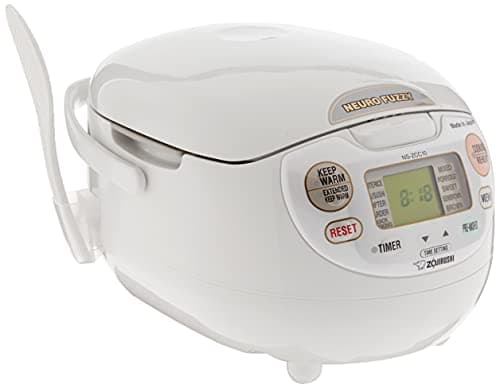
Product image from the Amazon listing.
Our verdict
Yes — the Zojirushi Neuro Fuzzy rice cooker is genuinely worth the premium, and it's the appliance you buy once and use for a decade. Fuzzy logic sensors deliver perfect white rice, tender brown rice and properly sticky sushi rice every time, and the extended keep-warm holds it fresh for hours. For anyone who eats rice weekly, it's cents per meal over its lifetime — a no-brainer buy.
The short version
For anyone who eats rice regularly, the Zojirushi Neuro Fuzzy is the one to buy and never replace. Its fuzzy logic sensors adjust heat and time throughout the cook, so white rice comes out fluffy, brown rice cooks perfectly, and sushi rice is exactly what you want. It also keeps rice warm for hours without drying it out, which is quietly the feature you use most.
Pros & cons
Pros
- Rice comes out perfectly every time — no burning, no gummy layer
- Dedicated modes for white, brown, sushi, mixed and porridge
- Extended keep-warm keeps rice fresh and non-dry for hours
- Retractable cord, easy-to-clean nonstick inner pan
- Beeps and plays a little melody when done
- Built to last many years
Cons
- Premium price for a rice cooker
- Takes up permanent counter space
- Longer cook times than a basic on/off cooker
Why people love it
Rinse and measure
Rinse the rice, add water to the labeled line in the inner pan, and drop it in.
Pick your mode
Select white, brown, sushi, porridge or mixed — the cooker adjusts heat and time automatically.
Fuzzy logic finishes it
Sensors monitor moisture and temperature and dial in a perfect finish, then switch to keep-warm.
Who it's for
- Households that eat rice most nights
- Sushi lovers
- Meal preppers
- Anyone who has burned rice on the stove one too many times
Is the Zojirushi Neuro Fuzzy worth the price?
A rice cooker feels like a category where you shouldn't spend real money, and for occasional white-rice-once-a-month users, it isn't. But for anyone who eats rice weekly, the Neuro Fuzzy earns its price back in two specific ways. First, it removes rice as a source of stress — no scorched bottom layer, no gummy top, no worrying about the ratio. You measure, press start, and walk away. Second, its keep-warm is the feature you didn't know you needed. It holds rice at perfect texture for hours, so dinner works around your schedule instead of the other way around.
The other quiet upside is durability. Zojirushi cookers routinely last a decade or more of daily use, and Japanese households often keep the same one for 15+ years. Amortize the price over that lifespan and it's a couple of cents a day. Where the price genuinely stings: households that cook rice once a month, or people committed to stovetop rice as a craft. For everyone in between, it's the one small appliance that becomes indispensable within a week.
How to cook perfect rice (white, brown, sushi) in a Zojirushi
Great rice starts before the cooker turns on. For white rice, rinse until the water runs mostly clear — usually 3 to 5 changes — to wash off surface starch and prevent gumminess. Measure rice using the plastic cup included, since it's a specific volume, then add water to the matching line in the inner pan (never guess by eye). Select white rice — regular or sushi depending on how sticky you want it — and press start. That's it. Fuzzy logic handles the rest.
For brown rice, use the brown mode: it soaks the grains longer before heating so they cook through evenly without a chewy shell and mushy interior. Sushi rice benefits from the sushi mode and a splash of vinegar-sugar-salt mix stirred in after cooking. Mixed grains — quinoa, farro, wild rice — do well on the mixed setting with slightly more water. And crucially, always let cooked rice rest with the lid closed for 10-15 minutes after the melody plays; that's when the last of the steam distributes and the texture finalizes. Fluff with the paddle from the bottom, don't stir.
Zojirushi Neuro Fuzzy vs Instant Pot vs Aroma: rice cooker showdown
An Instant Pot Duo can cook rice — many people rely on it. It's fast, especially for large batches, and it does a competent job with white and brown rice. But an Instant Pot is a pressure cooker first and a rice cooker second. The texture leans slightly wetter, keep-warm doesn't preserve rice as gracefully over long periods, and there are no dedicated modes for sushi or porridge. If you already own one and rarely eat rice, it's enough. If rice is a staple, a dedicated cooker is noticeably better — and in that case the smart weeknight kitchen owns both: Instant Pot for the pressure-cooked protein and sides, Zojirushi for the rice that carries them.
The Aroma (and other budget cookers under $50) are perfectly fine for basic white rice and small households, and they're a great starter. Where they fall short is versatility and longevity: brown rice comes out unevenly, keep-warm dries out fast, and the units often need replacement in 2-3 years. The Zojirushi's advantage is that it does everything well and does it for a decade. It's the difference between 'good enough' and 'the appliance you never think about because it just works.' For rice-heavy households, that's worth the difference.
See Zojirushi Rice Cooker on Amazon
Check the latest price, photos and buyer reviews on Amazon.
Check Price on Amazon →Sold and shipped by AmazonFrequently asked questions
Is a Zojirushi really that much better than a basic rice cooker?
For everyday white rice, a $30 cooker gets you close. Where the Zojirushi shines is variety and consistency: brown rice, sushi rice, porridge and mixed grains all come out excellent, and its extended keep-warm holds rice fresh for hours without a crust.
What's 'fuzzy logic'?
It's a heat-and-time control system that adapts throughout the cook based on temperature and moisture sensors — instead of a fixed timer, it fine-tunes the finish to match your rice and water amount.
Is the inner pan dishwasher safe?
Zojirushi recommends hand-washing the nonstick inner pan to protect the coating. It's easy — soap, sponge, done.
How long does it take to cook a batch of white rice?
White rice usually takes about 50 minutes on the fuzzy logic setting. Faster modes exist but the slower cook is why the rice is better — the extra time is doing work.
Zojirushi Neuro Fuzzy vs Induction Heating (IH) vs a basic cooker: which do I need?
The Neuro Fuzzy is the sweet spot for 95% of homes. A basic on/off cooker is fine for plain white rice but struggles with brown rice, sushi rice or long keep-warm. Zojirushi's Induction Heating (IH) models cost more and offer even more precise heat for premium white and brown rice — best for rice enthusiasts. Start with the Neuro Fuzzy unless you specifically care about the last few percent of texture.
Does it work well for brown rice, quinoa and other grains?
Yes. The brown rice mode extends soak and cook time so grains come out tender without being mushy. Quinoa, farro and mixed grains work on the mixed setting. The porridge mode makes congee and oatmeal beautifully.
Is the Zojirushi rice cooker worth it in 2026?
For anyone who eats rice weekly, yes — this is the appliance you buy once and use daily for a decade. The Neuro Fuzzy's fuzzy logic sensors adjust heat and time throughout the cook, so white rice comes out fluffy every time, brown rice is tender without being mushy, sushi rice is properly sticky, and the extended keep-warm holds finished rice at perfect texture for hours without a crust. Amortized over 8-10 years of daily use (Zojirushi cookers routinely last that long in Japanese and Korean households), it's cents per meal for the best rice you'll cook at home. Skip it only if you eat rice once a month — a $30 basic cooker is fine for occasional use — or if you already own a great Induction Heating model and are looking to save space.
What is fuzzy rice — and why is the Zojirushi called Neuro Fuzzy?
'Fuzzy logic' is the control system inside the cooker, not a description of the rice itself. Traditional rice cookers use a fixed on/off timer: heat until the water boils off, click to keep-warm, done. Zojirushi's Neuro Fuzzy uses temperature and moisture sensors that constantly monitor the pot and dial in heat and time on the fly — soaking longer for brown rice, gentler heat for the final steaming phase, and cooling adjustments if you added slightly too much water. 'Neuro' refers to the fuzzy-logic algorithm's neural-network-style decision-making. The practical result: rice that comes out consistently right regardless of small measuring errors, and the reason Zojirushi has been the gold standard for 30+ years.
As an Amazon Associate, TopCrate earns from qualifying purchases at no extra cost to you. Product image, price, availability and ratings are shown on Amazon and are subject to change.