TRENDING ON AMAZON
YETI Tundra 45 Hard Cooler Review: Is It Worth It?
The rotomolded, 5-day-ice, bear-resistant hard cooler that turned YETI into a household name — indestructible, IGBC-certified, and the specific cooler that outlasts every soft cooler you'll ever own.
Quick answer: Yes — the YETI Tundra 45 is worth it if you need a legitimately multi-day ice cooler, camp in bear country, or want a buy-it-for-life piece of gear that will still be working in 20 years. Rotomolded construction, 5-day+ ice retention with proper prep, IGBC bear certification, and a 5-year warranty add up to a cooler that earns its premium over cheaper options. If you're a weekend camper or tailgater on a budget, the RTIC 45 is the smart-money alternative at 65% of the price. For the users who genuinely need what the YETI offers — extended trips, bear country, hard use — this is the specific cooler that defined the premium category and still leads it.
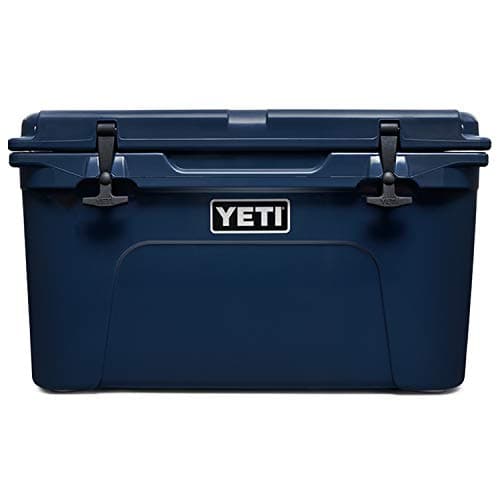
Product image from the Amazon listing.
Our verdict
Yes — the YETI Tundra 45 is worth it if you need a legitimately multi-day ice cooler, camp in bear country, or want a buy-it-for-life piece of gear that will still be working in 20 years. Rotomolded construction, 5-day+ ice retention with proper prep, IGBC bear certification, and a 5-year warranty add up to a cooler that earns its premium over cheaper options. If you're a weekend camper or tailgater on a budget, the RTIC 45 is the smart-money alternative at 65% of the price. For the users who genuinely need what the YETI offers — extended trips, bear country, hard use — this is the specific cooler that defined the premium category and still leads it.
The short version
The YETI Tundra 45 is the specific cooler that made 'premium cooler' a category. It's rotomolded — a single-piece plastic body with three-inch PermaFrost insulation walls — so there are no seams for cold to leak through, and the bear-resistant IGBC certification means it's approved for use in national parks and grizzly country. Real-world ice retention is 4-6 days in reasonable conditions (pre-chilled, block ice, kept in shade), which no soft cooler and few hard coolers can match. It holds 26 cans plus ice at a 2:1 ice-to-drink ratio, weighs a hefty 23 lbs empty, and comes with a 5-year warranty. Yes, it costs $325+ when RTIC's equivalent is $239 — but the YETI is bear-resistant, holds ice measurably longer in comparative testing, and is genuinely indestructible in a way that means you'll still be using it in a decade.
Pros & cons
Pros
- Rotomolded single-piece body — no seams to fail
- 5-day+ ice retention with proper prep
- IGBC bear-resistant certified for national park use
- Holds up to 26 cans + ice
- 5-year warranty
- Indestructible — genuinely a buy-it-for-life cooler
Cons
- Premium price vs RTIC and Coleman equivalents
- 23 lbs empty is heavy before you add ice and food
- 32-quart usable interior is smaller than the '45' name suggests
Why people love it
Rotomolded single-piece body
Molten plastic is spun in a single-piece mold to form a seamless shell, then filled with 3-inch PermaFrost polyurethane insulation. Result: no seams for cold to leak through, and structural strength that survives being sat on, stood on, or dropped from a truck bed.
Pre-chill and pack right for 5-day ice
Real 5-day ice retention requires prep: chill the cooler with a sacrificial bag of ice the day before, use block ice (or a mix of block and cube), maintain a 2:1 ice-to-content ratio, and keep the cooler in shade — direct summer sun cuts retention in half.
IGBC-certified for grizzly country
With proper padlock installation the Tundra is approved by the Interagency Grizzly Bear Committee for use in national parks that require certified bear-resistant food storage. This is the specific reason the Tundra is the default cooler at Yellowstone and Glacier.
Who it's for
- Multi-day camping and river trips
- Tailgaters and BBQ hosts who want reliable cold
- Anyone camping in grizzly country
- Long-haul road trips and boat days
YETI vs RTIC vs Coleman: which premium cooler is actually worth buying?
The premium cooler category has three real players: YETI at $325+ for the Tundra 45, RTIC at $239 for the RTIC 45 QT, and Coleman with the Xtreme 5-Day at $60 for a traditional-construction 50-quart. The gap between YETI/RTIC and Coleman is real and significant — the rotomolded construction and 3-inch insulation in YETI/RTIC deliver dramatically longer ice retention (5-7 days vs 2-3 days) and vastly better durability. The gap between YETI and RTIC is smaller but real: in controlled testing YETI runs about 5 degrees cooler throughout the test window, retains ~18% ice at 96 hours vs RTIC's fully-melted-at-96-hours, and the YETI is IGBC bear-certified where RTIC isn't. In real-world six-month head-to-head testing, though, the RTIC 45 QT matched the YETI in every practical test: ice retention (both got 4-5 days with proper prep), durability (both survived rough handling), and seal integrity.
So which one? Practical decision framework: If you camp in grizzly country or national parks that require bear-resistant coolers (Yellowstone, Glacier, Denali, much of the Rockies) → YETI, because RTIC isn't IGBC-certified and you'll be fined otherwise. If you're a serious multi-day camper who values the 5-year warranty and buy-it-for-life durability → YETI earns the premium. If you're a weekend camper, tailgater or fishing-trip user who wants excellent cooler performance at a much lower price → RTIC 45 QT is the smart-money pick. If you're an occasional user who doesn't need 5+ day ice retention and cares mostly about price → Coleman Xtreme 5-Day is fine at $60. Most buyers over-buy the cooler category — for a weekend camper, RTIC gives you 95% of YETI's performance at 65% of the price.
How to pack a YETI for maximum ice retention (the technique matters as much as the cooler)
The single biggest predictor of how long ice lasts is packing technique, not cooler brand. The correct multi-day ice packing routine: (1) Pre-chill the empty cooler the day before with a bag of $3 gas-station ice. Let it sit overnight with the ice inside, then dump the melted water and pre-chilled cooler in the morning. This step roughly doubles ice retention. (2) Layer block ice on the bottom. Blocks melt up to 3x slower than cubes because of the surface-area-to-volume ratio. Buy block ice from a Home Depot, ice supplier, or freeze water in 8x8 cake pans overnight. (3) Pack pre-cold food and drinks. Warming a cold cooler with room-temperature groceries wastes ice massively. Refrigerate everything the night before. (4) Fill remaining space with cube ice, packed tightly. Air pockets are enemies of ice retention. (5) On top, one more layer of cube ice, then a reflective foil blanket or a towel to further insulate the top.
At the campsite: (a) Keep the cooler in shade always — direct summer sun cuts retention by 50%. Under a tarp, in a shaded truck bed with a light-colored cover, or in the tent vestibule works. (b) Open the lid as briefly as possible. Every long open = warm air in, cold air out. (c) In high heat, wet the outside of the cooler with cool water occasionally; evaporation adds cooling. (d) Never drain melted water until you have to — the cold water below the floating ice actually helps retention. Do all this and 5-7 day ice retention is genuinely possible in the YETI Tundra; without it, you're getting 3-4 days like any other rotomolded cooler. This packing routine works equally well in an RTIC, a YETI or any premium cooler — the technique matters more than the badge.
Choosing the right YETI Tundra size for your actual use case
YETI's Tundra line spans from 26 quart to 350 quart, and picking the right size is more important than picking YETI vs RTIC. For a solo weekend camper or a day-out fishing trip: the Tundra 35 (28 cans + ice) is enough. For couples on a 2-3 day camping trip or a small family day-out: the Tundra 45 (26 cans + ice) is the sweet-spot default and the size most Amazon reviews are for. For family camping (4+ people) on 3-5 day trips: the Tundra 65 (39 cans + ice) is the correct upgrade — enough space for real food storage plus drinks. For extended trips, boat use or serious tailgating: the Tundra 105 or Tundra Haul (both 82-quart capacity; the Haul adds wheels).
Common sizing mistakes: (1) Sizing based on the number in the model name — the '45' actually holds about 32 quarts of usable interior once you account for insulation walls; the '65' holds about 51 quarts. Adjust expectations accordingly. (2) Sizing up 'just in case' — a bigger cooler that's not full loses ice faster than a fully-packed smaller cooler, so buying too big actually hurts ice retention. (3) Sizing based on drinks alone — real camping requires food storage too, and food takes more volume than beverages. For weekend camping with real food: 2 quarts of cooler per person per day is a decent rule of thumb. For beverages only: 1 quart per person per day. Match the cooler size to actual use, and the Tundra will earn its price by lasting a decade. Pair it with a lighter YETI Roadie 24 for grocery runs and the drinks-only day cooler, and you've got a full YETI stack that covers everything from a day at the park to a week in the backcountry.
See YETI Tundra 45 on Amazon
Check the latest price, photos and buyer reviews on Amazon.
Check Price on Amazon →Sold and shipped by AmazonFrequently asked questions
Is the YETI Tundra 45 actually worth 3x an RTIC 45?
Depends what you want from it. In controlled testing YETI holds ice about 5 degrees cooler throughout the test and retains ~18% of its ice at 96 hours vs an RTIC that's fully melted. The YETI is also IGBC bear-certified, has a 5-year warranty vs RTIC's 1-year, and the rotomolded body is genuinely tougher. The RTIC gives you noticeably more usable interior (~41 quarts vs YETI's ~32 for the same 45 label) and matches YETI on the metrics that matter most for weekend camping. Practical rule: for weekend campers and tailgaters, the RTIC is the smart-money pick and does 95% of the job. For multi-day trips, bear country, boat use, or serial use where the 5-year warranty pays back, the YETI earns the premium. Neither is the wrong choice; they're just optimized differently.
How long does ice actually last in the Tundra 45?
Real-world 4-6 days if you prep properly, 2-3 days if you don't. The proper prep: chill the empty cooler the day before with a bag of cheap ice you dump when packing (this is called 'pre-chilling' and roughly doubles retention time). Use block ice for the base layer and cube ice on top; block melts more slowly. Maintain a 2:1 ice-to-content ratio by volume — half your cooler should be ice for a real multi-day trip. Keep the cooler in shade, never in direct sunlight or in a hot car. Open the lid as briefly as possible. Do all this and 5+ days is realistic; skip the prep and you'll get 2-3 days like any other cooler. The Tundra's rotomolded body and 3-inch insulation are the enabler, but ice retention is still 50% about how you use it.
YETI Tundra 45 vs Tundra 35 vs Tundra Haul: which size?
Sizing is the biggest decision, not the model number itself. The Tundra 35 (28 cans + ice) fits solo trips and small day-out use; the 45 (26 cans + ice, slightly different shape than the 35) is the do-everything size for couples and small families; the 65 (39 cans) is the multi-day family camping size; the 105 (55 cans) is boat and extended-trip territory; the Tundra Haul is the same 82-quart capacity as the 105 but on wheels — much easier to move but adds weight and a slightly bigger footprint. For most buyers weighing Amazon reviews: the 45 is the smart default. Bigger if you camp with more than two people or want block ice space; smaller if you'll mostly do day trips and don't want to store a large cooler year-round.
Is the YETI genuinely bear-resistant, and does that matter for me?
Yes, IGBC-certified with proper padlocks (holes in the lid and body align to hold padlocks that a bear can't defeat). This matters for anyone camping in national parks that require certified bear-resistant food storage (Yellowstone, Grand Teton, Glacier, Denali, and much of Alaska and Montana backcountry — they will fine you or eject you for uncertified coolers in bear country). If you camp in bear country, this alone justifies the YETI premium — no RTIC is currently IGBC-certified. If you're solo or camping as a couple in grizzly country and don't need the full 45-quart capacity, the IGBC certified YETI Roadie 24 holds the same certification in a lighter, wine-bottle-tall personal size. If you camp in non-bear regions, this is a moot feature and the RTIC does the job for less.
How do I actually get 5+ days of ice? What's the trick?
Five separate things stacked together: (1) Pre-chill the cooler the day before with a sacrificial bag of ice, dump when packing. (2) Use block ice (buy from an ice supplier or freeze water in cake pans overnight) plus cube ice on top; block ice melts up to 3x slower. (3) Maintain a 2:1 or better ice-to-content volume ratio. (4) Pack food and drinks pre-cold — putting warm groceries in a cold cooler melts your ice fast. (5) Keep the cooler in shade always, ideally under a tarp, wet the outside occasionally in high heat for evaporative cooling. Do these and 5-7 days is genuinely possible; skip them and you're getting 2-3 days regardless of the cooler brand. The rotomolded body and 3-inch insulation are what let this work — cheaper coolers can't hold 5-day ice even with perfect prep.
Can I use dry ice in a YETI Tundra?
Yes — the Tundra is dry-ice compatible with important safety notes. Wrap the dry ice in newspaper or a towel before placing it in the cooler (direct contact can cause thermal shock over long exposure). Never seal the drain plug — dry ice off-gasses CO2 and needs a way to vent (the Tundra's drain plug is designed to allow gas venting). Never transport dry ice in a sealed vehicle; open a window and use it in a bed of a truck or a well-ventilated space. Dry ice paired with regular ice can extend Tundra cooling to 7-10 days but is overkill for most users. For 4-6 day trips, regular block ice with cube ice on top is the practical setup and safer for casual use.
As an Amazon Associate, TopCrate earns from qualifying purchases at no extra cost to you. IGBC bear-resistance certification requires proper padlock installation. Product image, price, availability and ratings are shown on Amazon and are subject to change.