TRENDING ON AMAZON
Weber Original Kettle 22" Charcoal Grill Review: Is It Worth It?
The round black grill in every American backyard — 70 years of proof it's the charcoal grill that just works.
Quick answer: Yes — the Weber Original Kettle is worth it, and it's the outdoor grill you buy once and use for decades. It sears, smokes, roasts and bakes on a budget every gas grill envies. If you love cooking outside, this is the one to buy.
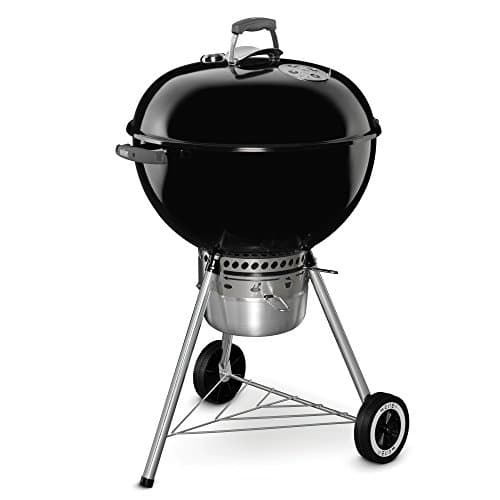
Product image from the Amazon listing.
Our verdict
Yes — the Weber Original Kettle is worth it, and it's the outdoor grill you buy once and use for decades. It sears, smokes, roasts and bakes on a budget every gas grill envies. If you love cooking outside, this is the one to buy.
The short version
The Weber Original Kettle has been the reference charcoal grill for seven decades for one reason: it does everything a backyard cook needs and it lasts. Sear steaks over direct heat, low-and-slow smoke ribs indirect, roast a whole chicken, grill pizzas — all in one $130-ish grill you'll still be using in 20 years. Cheap Weber knockoffs look similar but rust through in two seasons; the real thing quietly outlives them all.
Pros & cons
Pros
- Genuinely does it all — sear, smoke, roast, bake
- Enameled steel body lasts decades outdoors
- Two-zone cooking is easy with the coal layout
- One-Touch cleaning system pushes ash into a catcher
- Every accessory in the world fits it
- Assembles in about 30 minutes
Cons
- Charcoal takes 15-20 minutes to light
- Only holds one large meal's worth of food
- Less convenient than gas for weeknight cooking
Why people love it
Light charcoal in a chimney
Fill a chimney starter with charcoal, light the newspaper or fire starter underneath, and let it burn 15-20 minutes until the coals are ashed over.
Arrange for direct or indirect
Pour coals across the whole grate for direct high-heat searing, or push them to one side for two-zone cooking — hot side for sear, cool side for slow roast or smoke.
Vent control is the throttle
The top and bottom dampers let more or less air through — open for high heat, closed for low. Master the vents and you can hold anything from 225°F for smoking to 700°F for pizza.
Who it's for
- Anyone starting outdoor cooking
- Home cooks who want real charcoal flavor
- People with small patios and yards
- Cooks who want one grill they'll never replace
Is a Weber Kettle worth it, or should you buy gas?
The charcoal-vs-gas debate is really a lifestyle question. Gas grills are appliances: you turn them on, cook a burger in ten minutes, wipe them down and go inside. They're perfect for people who want to grill on weeknights without a project. Weber makes excellent gas grills too, but they cost 4-6x a kettle and don't give you the same flavor. Nothing you cook on gas tastes quite like something cooked over real charcoal and wood smoke.
The Weber Kettle is for people who like the ritual and the flavor. Lighting the chimney, watching the coals ash over, arranging them for two-zone cooking, adjusting the vents to hold temperature — it's a small hobby that produces genuinely better food. If you're the person who wants to cook a real Texas brisket or pizzas at 700°F in your backyard, the kettle is the tool. If grilling is 'quickly char some chicken breasts,' get a gas grill. Many households own both: gas for weeknights, kettle for weekends when you're actually cooking.
Weber Kettle vs Kamado, offset smoker and pellet grill
The Weber Kettle competes not just with gas but with pricier charcoal setups. A Kamado grill (Big Green Egg, Kamado Joe) is a ceramic egg that holds heat exceptionally well — it's a better smoker than a Kettle and a legitimate 700°F+ pizza oven, but it costs 5-10x the Kettle and weighs 200 pounds. Offset smokers are dedicated low-and-slow machines that hold big meats for a full day but can't sear or grill quickly. Pellet grills (Traeger, Weber SmokeFire) auto-feed wood pellets and hold temperature like an oven, but they don't produce real charcoal char and the flavor is milder.
The Weber Kettle wins on versatility per dollar. It's the only grill under $200 that can genuinely sear a steak, smoke ribs, roast a chicken, bake pizza and do a proper two-zone cook. It's not the best at any single one of those things versus a dedicated tool, but it's the second-best at every one — which is exactly what a home cook wants from a single grill. Owners routinely say if they were forced to keep only one outdoor cooker, the kettle would be it.
How to set up a Weber Kettle for two-zone cooking
Two-zone is the technique that unlocks the Kettle's full range and it's simpler than it sounds. Light a chimney of charcoal, dump it onto one half of the bottom grate, leaving the other half empty. Put the food grate on. Now you have a hot side (directly over coals) and a cool side (over empty grate). Sear steaks, chicken skin or veg on the hot side to get color, then move to the cool side and close the lid to finish cooking through without burning. Meat comes out with a proper crust and a perfectly cooked interior — the technique restaurants use.
For long smokes, use the 'Snake' or 'Minion' method: arrange unlit charcoal in a C-shape or ring around the bottom grate, light just one end, and add smoking wood along the path. As coals burn, they slowly ignite the next ones in line, giving you 6-10 hours of steady 225-250°F heat without touching the grill. This turns a Kettle into a real smoker. Combine two-zone cooking with vent control and you've mastered charcoal — everything else is variations on the same theme.
See Weber Kettle on Amazon
Check the latest price, photos and buyer reviews on Amazon.
Check Price on Amazon →Sold and shipped by AmazonFrequently asked questions
Are Weber charcoal grills worth it?
Yes — the Weber Original Kettle is one of the few grills that's genuinely worth buying at any price point, and it's the reason Weber has stayed the reference brand in charcoal for seven decades. What you're paying for: a porcelain-enameled steel body that doesn't rust the way painted grills do (lasts 20+ years outdoors), a lid design that holds temperature stable enough to smoke ribs at 250°F for six hours, an outsole that fits every accessory on the aftermarket, and Weber's replacement-parts inventory going back decades. At around $130-160 street price, the Original Kettle costs less than a mid-tier gas grill and delivers more versatility (sear, smoke, roast, bake) and better flavor. The step-up Master-Touch adds a hinged grate for another $50, which is worth it if you smoke often. Only skip the Weber Kettle if you know you specifically want gas-grill convenience over real charcoal cooking — otherwise it's the buy-once outdoor grill.
Weber Kettle 22" or 26" — which size?
22" is the standard and the one most people should buy. It cooks a whole chicken plus sides, or ribs for a family, and it's the size every accessory is made to fit. Get the 26" only if you regularly cook for large groups or want to grill a whole spatchcocked turkey.
Is a Weber Kettle better than a gas grill?
Different tools. Gas grills are more convenient — turn a knob, cook in 5 minutes. But charcoal grills produce real smoke flavor, hit higher searing temperatures, and can smoke low-and-slow all day (which gas can't). Many people own both. If you can only own one and you actually enjoy cooking, the Weber Kettle delivers more flavor and more versatility.
How long does a Weber Kettle last?
Decades. It's the reason Weber is the reference brand — the porcelain-enameled steel body doesn't rust the way painted grills do, and the design has been stable so long that replacement parts (grates, wheels, ash catchers) are still available for 20+ year old kettles. Store it covered in wet climates and it'll outlive most kitchens.
Can I smoke ribs, brisket and pulled pork on it?
Yes — the Weber Kettle is a surprisingly capable smoker. Set up 'Snake Method' or 'Minion Method' charcoal arrangements (a slow-burning line of unlit coals lit at one end) and it'll hold 225-250°F for 6-10 hours on a single load. Add wood chunks for smoke. Whole briskets take practice, but ribs and pork butts are very approachable.
Does it come with a cover, chimney starter, or lighter cubes?
No — you get the grill itself, ash catcher and thermometer. Buy a chimney starter (essential — makes lighting easy without lighter fluid), a good cover, a pair of tongs, and a meat thermometer alongside it. Total setup with essentials is still cheaper than a mid-range gas grill. For the ~30-minute Weber Kettle assembly, a palm-sized driver like the Kelvin 17 multi-tool covers the bit sizes, has a bubble level for the lid, and an LED work light for the underside without dragging out a full toolbox. Once the grill is set up on the patio, the other overlooked accessory is a cordless one-handed cleanup tool for the ash-and-crumb mess a charcoal cook always leaves around the base — a compact cordless blower like the TornadoPro handheld blower clears cold ash off pavers, brushed-off drip-pan grit and stray charcoal dust in about ten seconds without dragging a hose out, and it's quieter than a shop-vac so you can tidy up the patio right after guests leave without waking the block.
Weber Kettle vs Weber Master-Touch vs Performer: what's the upgrade?
The Original Kettle is the base model and covers 95% of needs. Master-Touch adds a hinged grate (drop coals in without moving food) and a Gourmet BBQ System grate (accessories drop in). Performer adds a work table, LED handle light and propane ignition for lighting the coals. Original is the best-value pick; Master-Touch is worth the small premium if you smoke often.
What is a Weber Kettle grill, and why is it still the most popular charcoal grill?
The Weber Kettle grill is the round, black, dome-lidded charcoal grill Weber has been making since 1952 — the design that basically invented backyard charcoal grilling in America. It's popular because the design got everything right on the first try: the deep bowl shape holds heat evenly and lets you do direct-heat searing over a mound of coals or two-zone cooking with coals pushed to one side, the porcelain-enameled steel doesn't rust the way painted grills do, the vents on the top and bottom give you throttle control from a 700°F pizza sear down to a 225°F all-day smoke, and every accessory the aftermarket has made in seven decades still fits. At around $130-160 for the standard 22" model, no other grill at any price does as many jobs as well for as many years.
As an Amazon Associate, TopCrate earns from qualifying purchases at no extra cost to you. Product image, price, availability and ratings are shown on Amazon and are subject to change.