TRENDING ON AMAZON
NutriBullet Pro 900W Personal Blender Review: Is It Worth It?
900 watts, twist-on cup, dishwasher-safe — the personal blender that turned smoothies into a morning habit.
Quick answer: The NutriBullet Pro is the personal blender to buy if you want a daily smoothie without buying a $400 Vitamix. It's genuinely powerful enough, it takes almost no counter space, and it cleans up in seconds — the trifecta that turns 'I should make smoothies' into an actual habit.
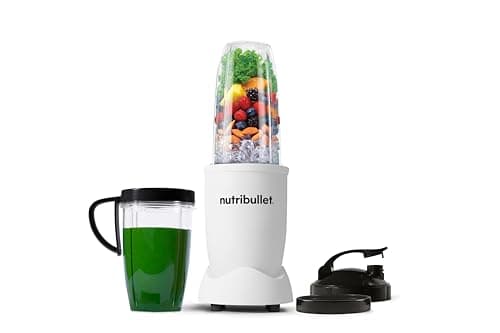
Product image from the Amazon listing.
Our verdict
The NutriBullet Pro is the personal blender to buy if you want a daily smoothie without buying a $400 Vitamix. It's genuinely powerful enough, it takes almost no counter space, and it cleans up in seconds — the trifecta that turns 'I should make smoothies' into an actual habit.
The short version
The NutriBullet Pro is the personal blender that became a category standard for a reason: 900 watts of motor power is enough to handle frozen fruit, ice, nuts and leafy greens, and the twist-on cup means you blend and drink from the same container. Small footprint, three-piece cleanup, and priced at a fraction of full-size high-performance blenders. If you make one smoothie a day rather than a family batch, this is the buy.
Pros & cons
Pros
- 900W motor handles frozen fruit and ice
- Blend and drink from the same cup
- Small footprint — fits under most cabinets
- Dishwasher-safe cups and lids
- Cheaper than full-size Vitamix or Blendtec
- Included to-go lid — smoothie on the road
Cons
- Loud like all personal blenders
- Not for hot soups or big-batch blending
- Blade seal needs replacement every year or two
Why people love it
Fill the cup
Load ingredients directly into the tall or short blending cup — no separate pitcher to wash.
Twist and blend
Screw the blade base onto the cup, flip it onto the motor and press down to blend — about 30 seconds for a smoothie.
Drink from the cup
Unscrew the base, twist on the drinking lid, and take your smoothie straight from the same cup. Three dishwasher-safe parts to clean.
Who it's for
- Daily smoothie drinkers
- Small apartments and dorms
- Protein shake mixing
- People without counter space for a Vitamix
Is the NutriBullet Pro worth it over a cheap blender?
A $25 department-store blender will technically blend a smoothie, so it's fair to ask why the NutriBullet Pro costs three times that. The answer is that the design is optimized for exactly one thing you do every day: blend a single serving of smoothie in the same cup you drink from. Cheap countertop blenders make you build a smoothie in a big pitcher, blend it, pour it into a glass, and then wash the pitcher — three items every morning. The NutriBullet workflow is fill-cup, twist-blade, blend, swap-lid, drink, rinse. One cup, 30 seconds of active work.
There's also a real power difference. A $25 blender's 250-400W motor will bog down on frozen fruit, ice or a fibrous kale stem — you end up doing 20-second bursts and shaking the blender, and you get an inconsistent grainy result. The Pro's 900W motor handles all of that in a single 30-second run and leaves smoothies genuinely smooth. For anyone actually making smoothies daily, the workflow and consistency are the value, not the raw wattage number.
NutriBullet Pro vs Ninja Blast vs Vitamix: personal blender lineup
The three names that come up when people shop personal blenders are the NutriBullet Pro (mains-powered, small counter footprint), the Ninja Blast (cordless, USB-C rechargeable, take-anywhere), and the full-size Vitamix (countertop workhorse). The NutriBullet Pro is the sweet spot for anyone who wants daily smoothies at home — cheapest, most powerful of the small blenders, dishwasher safe. The Ninja Blast trades power and cup size for portability: bring it to the gym or the office. The Vitamix is the whole-kitchen upgrade for people who also make soups, nut butters and frozen desserts.
Realistic recommendation: if you drink one smoothie a day at home, get the NutriBullet Pro. If you're often making smoothies at work or the gym, get a Ninja Blast in addition to (not instead of) a countertop blender. If your kitchen genuinely does a lot of blending work beyond smoothies — think meal prep, batch soup, homemade nut butter — spend the money on a Vitamix. Most households only need the NutriBullet Pro.
How to make a better smoothie in a NutriBullet (technique and recipes)
Load order matters. Put liquid at the bottom (against the blades when you flip the cup), then leafy greens, then softer fruit, then frozen fruit and ice on top. This gives the blades something to grip immediately and pulls the frozen ingredients down into the vortex. Filling the cup no higher than the max line — usually about two-thirds of the way — leaves room for ingredients to circulate and gives you a smoother blend.
Ratios are the difference between a milkshake and a spoonable bowl. A good baseline smoothie is 1 cup liquid (milk, plant milk or juice), 1 frozen banana, 1 cup frozen fruit, a handful of greens, plus optional protein powder or nut butter. Blend 30-45 seconds — longer for a smoother texture, shorter if you like a bit of chunk. If it's too thick, add liquid; if too thin, add a spoonful of Greek yogurt or oats. Cleanup right away: as soon as you finish drinking, rinse the cup under running water — dried smoothie residue is much harder to clean 20 minutes later.
See NutriBullet Pro on Amazon
Check the latest price, photos and buyer reviews on Amazon.
Check Price on Amazon →Sold and shipped by AmazonFrequently asked questions
NutriBullet Pro vs Vitamix vs Blendtec: which should I buy?
Different tools. NutriBullet Pro is a ~$80 personal blender for daily single-serve smoothies and protein shakes. Vitamix and Blendtec are $400+ full-size blenders that make hot soups, nut butters, dough, sorbet from frozen fruit, and do it more powerfully and longer without straining. If you make one smoothie a day, NutriBullet is the right tool at the right price. If you're doing serious daily cooking and blending, Vitamix earns the upgrade.
NutriBullet Pro vs standard NutriBullet 600W: is the extra power worth it?
Yes for most people. The 600W original handles soft fruit and yogurt fine but struggles with heavy frozen fruit, ice and fibrous greens like kale. The Pro's 900W chews through frozen berries, ice cubes and hard vegetables without stalling. If your smoothies are 'banana and yogurt' you don't need the Pro; if they're 'frozen strawberries, spinach, ice and nut butter' the Pro is worth the modest step-up.
Can it crush ice?
Yes, but it's not a snowcone machine — it can chop ice into small chunks for a slushy consistency in a smoothie context (with other ingredients around it), and it handles frozen fruit and frozen banana chunks easily. For crushing plain ice cubes with no liquid, you'll want to add a splash of water and pulse in bursts.
Are the cups and blades dishwasher safe?
The plastic cups, drinking lids and gaskets are all top-rack dishwasher safe. The blade assembly should be rinsed by hand — running the blades through repeated dishwasher cycles dulls them and can damage the seal over time. A quick rinse of the blade base under warm running water takes 15 seconds.
How long does the blade last, and can I replace it?
With daily use, the blade assembly typically lasts 1-2 years before the seal starts to weep or the blades dull. NutriBullet sells replacement blades for around $15 on Amazon, so you don't need to buy a whole new unit when the blade wears out. The motor base itself usually keeps running fine for many years.
Is it too loud for early mornings in an apartment?
Realistically yes — like all personal blenders, it's noticeably loud for 30-60 seconds while blending. It's not louder than a Vitamix or a coffee grinder, but it's not something to run at 5:30 a.m. with roommates or thin walls. Blending the night before and refrigerating is a common workaround for early-morning smoothie drinkers.
As an Amazon Associate, TopCrate earns from qualifying purchases at no extra cost to you. Product image, price, availability and ratings are shown on Amazon and are subject to change.