TRENDING ON AMAZON
Mr. Clean Magic Eraser Cleaning Pads Review: Is It Worth It?
The melamine foam sponge that lifts scuffs off walls, soap scum off tile, and grime off appliances — with just water.
Quick answer: The Magic Eraser is one of the highest-value cleaning products you can own — a few dollars for a multi-pack that handles jobs no spray cleaner can touch. Every household should have a pack in the cleaning cupboard, and every landlord and cleaner should buy them in bulk. Pair it with a [Scrub Daddy sponge](/reviews/scrub-daddy) for everyday dish and counter cleanup — the two cover almost every kitchen and bathroom stain between them.
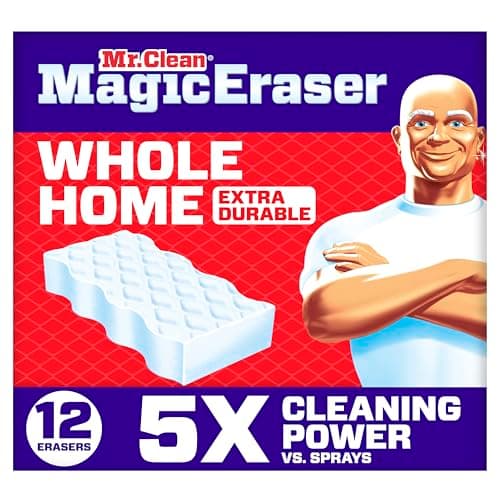
Product image from the Amazon listing.
Our verdict
The Magic Eraser is one of the highest-value cleaning products you can own — a few dollars for a multi-pack that handles jobs no spray cleaner can touch. Every household should have a pack in the cleaning cupboard, and every landlord and cleaner should buy them in bulk. Pair it with a [Scrub Daddy sponge](/reviews/scrub-daddy) for everyday dish and counter cleanup — the two cover almost every kitchen and bathroom stain between them.
The short version
The Magic Eraser is one of those household products that quietly changed how people clean. It's a melamine foam pad — activated with plain water, no chemicals — that acts like an incredibly fine sandpaper on scuffs, soap scum, crayon marks, sneaker scuffs on floors, and dozens of other 'stuck on' messes that resist regular cleaners. It's cheap, disposable and does jobs that normal sponges and cleaning sprays flatly can't.
Pros & cons
Pros
- Lifts scuffs, soap scum and grime with just water
- No chemicals, no rinsing residue
- Works on walls, tile, appliances, sneakers, cars
- Cheap — a few dollars for a multi-pack
- No learning curve
- Handles jobs no spray cleaner can
Cons
- Wears down fast — single-use for tough jobs
- Can scratch delicate glossy surfaces
- Not safe on all finishes (test first)
Why people love it
Add water
Wet the pad and squeeze out excess — plain water activates the melamine foam. No spray cleaner or scrub product needed.
Rub gently
Light pressure over the stain — melamine acts like ultra-fine sandpaper, lifting stuck-on marks without needing detergent.
Wipe and toss
Wipe residue with a damp cloth, and toss the eraser when it wears down (usually one heavy job or a few light jobs per pad).
Who it's for
- Landlords and renters restoring walls
- Parents with crayon and marker marks
- Bathroom deep-cleaners
- Sneaker and shoe restoration
How does a Magic Eraser actually work? (It's not magic)
The Magic Eraser is made of melamine foam — a specific type of foam made from a resin called melamine formaldehyde, cured into a rigid open-cell structure with microscopic hard edges. Under a microscope, the foam looks like an incredibly fine mesh of tiny hard walls. When you rub it wet against a stained surface, those microscopic hard edges act like super-fine sandpaper, mechanically lifting stains that a soft sponge can't touch. It's not a chemical reaction — the foam itself is chemically inert against most household residues.
This is why it works on 'stuck on' stains but not on wet spills. Melamine foam is best against residues that are physically bonded to a surface — scuff marks (rubber transferred from a shoe onto a wall), crayon (wax pressed into paint), soap scum (mineral buildup on tile). It doesn't do anything special against liquid messes, grease that hasn't dried, or dust — those are better handled by conventional cleaners and cloths. The trade-off of its abrasive mechanism is that it can also abrade delicate finishes, which is why you test on hidden spots first.
When to use a Magic Eraser (and when to reach for something else)
Reach for a Magic Eraser when you have: stuck-on marks (scuffs on walls, crayon, marker, adhesive residue), mineral deposits (soap scum, hard water stains on tile and glass shower doors), baked-on kitchen residue (stovetop grease, coffee stains in mugs), sneaker and shoe restoration, and 'grimy plastic' cleanup (kitchen appliances, patio furniture). These are the jobs where conventional spray cleaners flat-out fail, and where the Magic Eraser is genuinely the best tool. Landlords use them to restore walls between tenants; parents use them constantly; car detailers use them on wheels.
Reach for something else when: you have a spray/wet spill (paper towel or cloth), grease or oil that hasn't set (dish soap and a sponge), delicate high-gloss finishes (microfiber and finish-appropriate cleaner), or cleaning that requires broad surface coverage (spray cleaners are far more efficient for wiping down large areas). The Magic Eraser is a spot-treatment tool for specific stuck-on messes, not a general-purpose cleaner. Use it for what it's best at and use conventional cleaners for everything else, and you'll get the most value from both.
Magic Eraser hacks and cleaning tips that actually work
Reset scuffed sneakers: on white leather or rubber soles, a slightly damp Magic Eraser lifts months of scuffs and yellowing in seconds. Skip on suede, mesh or delicate fabric uppers. On rubber toe caps of Converse and Vans, this is the single best cleaning method — nothing else works as well. Also great on white leather bags, boots and belts (test hidden spot first).
Restore grimy plastic on kitchen appliances: the yellow/brown film that builds up on stovetop knobs, fridge handles, and microwave interiors from grease and airborne kitchen dust wipes off in one pass. Bathroom tile grout: run a wet Magic Eraser along grout lines to lift years of soap scum in minutes. Car interior plastics: dashboard, console and door plastics that resist regular cleaner clean up quickly with a Magic Eraser (test first — some rubberized coatings can be affected). Removing sticker residue from glass or plastic: better than Goo Gone for most cases. Coffee stains in ceramic mugs: gets them white again.
See Mr. Clean Magic Eraser on Amazon
Check the latest price, photos and buyer reviews on Amazon.
Check Price on Amazon →Sold and shipped by AmazonFrequently asked questions
What can you clean with a Magic Eraser?
Painted walls (scuffs, crayon, marker), bathroom tile (soap scum, mildew, hard water stains), sneaker soles and canvas uppers, kitchen appliances (baked-on grease on stovetops, refrigerator handles), floors (heel scuffs, dried spills), computer keyboards, plastic patio furniture, car wheels and bumpers, coffee mugs (stubborn coffee/tea stains), and grout lines. Basically anywhere you have 'stuck on' residue that spray cleaner won't lift, the Magic Eraser will.
What can't you clean with a Magic Eraser? What surfaces damage?
Do NOT use on: high-gloss finishes (car paint, glossy furniture, granite countertops with high polish — melamine dulls them over time), stainless steel (leaves micro-scratches on brushed finishes), non-stick pan coatings (destroys the coating), your skin (can cause chemical-burn-like irritation on prolonged contact), or any painted surface where you're not sure the paint will hold. Rule of thumb: if the finish is delicate or high-gloss and hard to replace, test on a hidden spot first.
Are Magic Erasers safe? Are they toxic?
Yes safe when used correctly, no toxicity concerns for household use. Melamine foam is not itself toxic — it's the same material used in acoustic panels and insulation. It works mechanically (like fine sandpaper), not chemically. Two safety notes: don't use it on your skin (the microscopic abrasion is irritating), and keep them out of reach of children who might chew on them. When used to clean surfaces, there's no chemical residue and nothing off-gassing.
Magic Eraser vs generic melamine foam sponges: is there a difference?
The active ingredient is identical — melamine foam is melamine foam, whether it says Mr. Clean or an Amazon Basics brand. Generic melamine sponges from Amazon (search 'melamine foam pads') are typically 1/3 to 1/2 the price of name-brand Mr. Clean Magic Erasers and work identically. The name-brand version sometimes has slightly denser foam that lasts a bit longer, but the difference is marginal. If you're a bulk user (landlord, cleaner, restaurant), generic melamine sponges are the smart buy. For occasional home use, either works.
Do they work on car wheels and rims?
Yes — one of the best uses. A Magic Eraser lifts brake dust, road grime and stuck-on tire residue from wheels, especially inside the spokes where a brush can't reach. Wet the eraser, rub gently, rinse. Skip on paint (car paint is glossy and can be dulled by melamine). For plastic wheel wells, painted plastic bumpers, and matte plastic trim, the Magic Eraser is a shortcut car detailers use routinely.
How many uses do you get from one pad?
Varies wildly by task. One heavy job (deep-cleaning a shower or removing a big wall scuff) can use up an entire pad. Light jobs (a few crayon marks, wiping a stovetop) can get 2-4 uses. Buy multi-packs — they're consumable, and trying to stretch a worn-down pad wastes far more effort than the pad costs to replace.
As an Amazon Associate, TopCrate earns from qualifying purchases at no extra cost to you. Product image, price, availability and ratings are shown on Amazon and are subject to change.