TRENDING ON AMAZON
Blackstone 22" Tabletop Gas Griddle Review: Is It Worth It?
A flat-top gas griddle for pancakes, smash burgers, fajitas and hibachi-style dinners — outdoor cooking with a huge, even hot surface.
Quick answer: The Blackstone flat-top is the outdoor cooker that gets used the most. Smash burgers, breakfast, hibachi and fajitas — all better than the same food off a grill. The 22-inch tabletop is the easiest first griddle to buy.
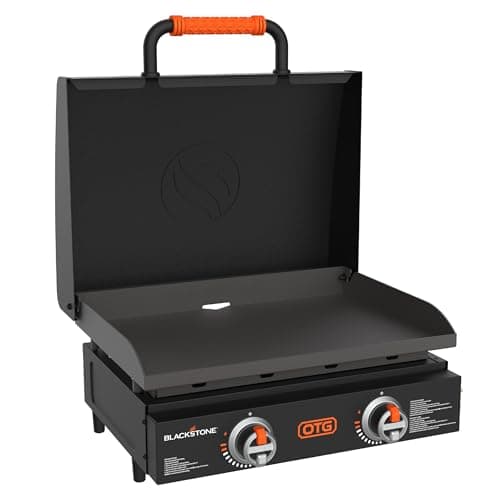
Product image from the Amazon listing.
Our verdict
The Blackstone flat-top is the outdoor cooker that gets used the most. Smash burgers, breakfast, hibachi and fajitas — all better than the same food off a grill. The 22-inch tabletop is the easiest first griddle to buy.
The short version
The Blackstone flat-top griddle is the reason your feed is full of smash-burger and diner-breakfast videos. A big rolled-steel surface heats fast, gives you real high-heat sear, and cooks breakfast, fajitas, smash burgers and hibachi-style veggies at the same time. The 22-inch tabletop version is the sweet spot — big enough to cook for a family, small enough to store on a shelf.
Pros & cons
Pros
- Huge cooking surface for the price
- High, even heat for real sear on smash burgers
- Cooks breakfast, dinner and sides all at once
- Portable — runs on standard 1-lb propane or a hose to a 20-lb tank
- Easy to clean once seasoned
- Great value versus a full-size Blackstone or gas grill
Cons
- Steel top needs seasoning and rust management
- Uses a lot of counter/tabletop space
- Not great for foods that need a lid to trap heat
Why people love it
Season the steel top
Coat it in oil and burn it in a few times so the surface turns black and slick — that's your nonstick.
Preheat and cook
Two H-burners heat the steel evenly, so you can sear a burger on one side while veggies cook on the other.
Scrape, wipe, oil
When you're done, scrape residue into the grease cup, wipe the top, and give it a thin coat of oil to protect it.
Who it's for
- Backyard cooks who love smash burgers and breakfast
- Tailgaters and campers
- Small patios and apartments without room for a full grill
- Big-family breakfasts and hibachi nights
Blackstone griddle vs gas grill: which should you actually buy?
A traditional gas grill and a Blackstone griddle look similar but solve different problems. A grill's grates are made for whole cuts of protein — steaks, chicken thighs, whole fish — where you want grate marks, dripping fat and smoke flavor. It's less useful for anything small or wet: eggs slip through, diced onions fall between the bars, and a proper smash burger is impossible on grates. A Blackstone flips those trade-offs. The flat steel top gives you edge-to-edge contact heat, so smash burgers get real crust, breakfast is easy, and fajita veggies don't disappear into the flames.
If you can only own one, the answer depends on how you cook. Steaks, ribs, chicken and traditional BBQ favor a grill. Breakfast, burgers, hibachi, tacos and diner-style dinners favor a Blackstone. Many people who buy a Blackstone find their gas grill sits unused for months — the flat top is simply more versatile for weeknight family cooking, and the fajita, breakfast and smash-burger content on social media isn't wrong about that. If you host cookouts often and mostly cook whole cuts, keep the grill. If you cook varied family meals outside, the Blackstone earns its space fast.
How to season and care for a Blackstone flat top (without the rust drama)
Seasoning intimidates first-time owners, but it's the same idea as a cast-iron skillet, just on a bigger surface. Start by scrubbing the raw steel with hot soapy water once to remove factory oil, dry it completely, then wipe on an extremely thin coat of high-smoke-point oil — the trick is 'wipe it on then wipe it off,' so almost nothing looks left. Turn all burners to high and let the top smoke until it stops. Repeat that thin-coat-and-burn cycle three or four times and the surface will turn a deep, slick black. That's your nonstick.
The daily care habit is what actually keeps a Blackstone from rusting. After each cook, scrape debris into the grease cup while the top is still hot, wipe it down with paper towels and a splash of water if needed, then coat it with a very thin layer of oil before it cools. Cover the griddle when it's stored outside — even a mild rainy night on unsealed steel can start surface rust. If rust does appear, don't panic: scrub it off with a Blackstone stone or steel wool, wash with hot water, dry and re-season. The top is meant to be maintained, not babied.
The best recipes to cook on a Blackstone (and how to get them right)
Three techniques unlock most of what makes a Blackstone worth owning. Smash burgers: form 2-3oz balls of 80/20 ground chuck, drop them onto the ripping-hot steel, then smash flat with a stiff spatula for 30 seconds until the edges lace. Season aggressively, flip once, add cheese and toasted brioche. The crust you get on flat steel is impossible on grates. Diner breakfast: run a warm zone for pancakes on one side and a hotter zone for bacon and hash browns on the other, then finish eggs in the last minute — the whole family eats at the same time.
Hibachi-style dinners are the sneaky third genre. Cube chicken, shrimp or steak, dice onions, mushrooms, zucchini and carrots, and cook everything simultaneously in separate piles with soy sauce, garlic butter and a squeeze of lemon at the end. A pack of yakisoba noodles or fried rice fills the last zone. It's the meal that convinces people the Blackstone was worth the counter space, and it's ready in under 15 minutes once the top is hot. Keep a squeeze bottle of oil, a spatula, a scraper and a bench-scraper handy — those four tools handle 95% of griddle cooking.
See Blackstone Griddle on Amazon
Check the latest price, photos and buyer reviews on Amazon.
Check Price on Amazon →Sold and shipped by AmazonFrequently asked questions
How do I season a Blackstone griddle?
Clean the surface, dry it, then apply a very thin coat of high-smoke-point oil (flaxseed, canola or Blackstone's seasoning oil) and burn the burners on high until the top smokes and blackens. Repeat 3-4 times before your first cook.
Does it rust?
It can if you leave it wet or store it outside without a cover. After each cook, scrape, wipe with paper towels and add a thin oil coat. A cover keeps rain and moisture off between uses.
What can I cook on it?
Smash burgers, pancakes, bacon, eggs, hash browns, fajitas, steaks, hibachi veggies, quesadillas, grilled cheese, stir-fries — anything you'd cook on a big cast-iron skillet.
Can I use it indoors?
No — it's a gas appliance and needs to be used outdoors in a well-ventilated space.
Blackstone 22" vs 28" vs 36": which size should I buy?
The 22" tabletop is the sweet spot for 1-4 people and easy to store. The 28" gains real family capacity and a stand with wheels. The 36" is a party rig — four burners, four independent zones, and enough surface to cook for 8+. If you're new to griddling or space-constrained, start with the 22". If you host cookouts, the 28" or 36" pays off fast.
Can I use butter and oil like a normal skillet, or do I need special products?
Regular high-smoke-point oils (canola, avocado, vegetable) work great for daily cooking. Butter is fine mid-cook for flavor. For seasoning maintenance, stick to oils that polymerize well — flaxseed, canola or Blackstone's own conditioner — rather than olive oil, which stays sticky.
As an Amazon Associate, TopCrate earns from qualifying purchases at no extra cost to you. Product image, price, availability and ratings are shown on Amazon and are subject to change.