TRENDING ON AMAZON
Beautyblender Original Makeup Sponge Review: Is It Worth It?
The pink egg-shaped foam sponge that changed how foundation gets applied: damp it, bounce it, and watch foundation melt into airbrushed skin.
Quick answer: Beautyblender is the original makeup sponge for a reason — the foam, the shape and the technique together do something no brush can replicate. For liquid foundation, concealer and cream blush, it's still the gold standard.
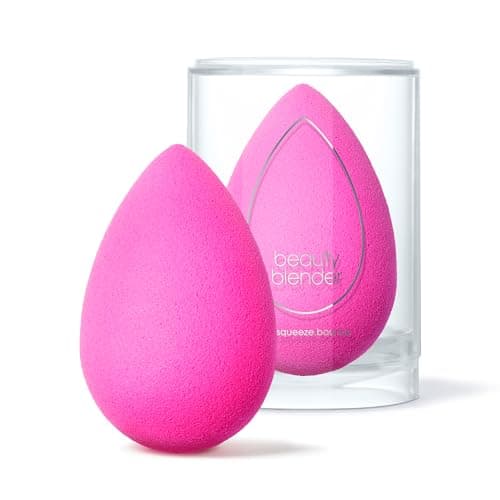
Product image from the Amazon listing.
Our verdict
Beautyblender is the original makeup sponge for a reason — the foam, the shape and the technique together do something no brush can replicate. For liquid foundation, concealer and cream blush, it's still the gold standard.
The short version
Beautyblender invented the makeup sponge category and quietly still wins on the things that matter: the foam is dense and seamless (no chunks, no ripping), it doubles in size when damp without losing its bounce, and the tapered tip and rounded bottom let you blend the entire face with one tool. The technique is the magic — dampen, squeeze, bounce — and foundation, concealer and cream blush meld into your skin instead of sitting on top. Knockoffs are cheaper; none feel quite the same.
Pros & cons
Pros
- Original dense foam — knockoffs feel spongy or ragged
- Doubles in size when damp for streak-free blending
- Tapered tip + rounded base = whole face with one tool
- Works with liquid foundation, concealer, cream blush
- Doesn't soak up product like brushes can
- Lasts 3-6 months with proper care
Cons
- Needs replacing every few months
- Must be cleaned regularly or it stains
- Higher price than generic dupes
Why people love it
Wet it
Run it under water until it doubles in size, then squeeze out the excess — it should be damp, not dripping.
Bounce, don't drag
Dot foundation on your face, then bounce the rounded base across larger areas and the tapered tip into corners (eyes, sides of nose).
Clean after each use
A quick rinse with soap after each face keeps the foam fresh and prevents bacteria. Deep clean weekly with the Blendercleanser.
Who it's for
- Liquid and cream foundation wearers
- Anyone fighting cakey, streaky finishes
- People with textured or maturing skin
- Concealer-and-cream-blush minimalists
Why a damp sponge gives that airbrushed finish
The Beautyblender effect comes from one counterintuitive trick: water. A dry sponge soaks foundation deep into its foam and drags it across the skin streakily; a damp sponge is already saturated with water, so it can't absorb the product. Instead, it pushes the foundation into the skin in a fine, even layer — the bouncing motion lays product down without dragging it, which is the whole secret to a seamless finish.
The dense, edgeless foam is the other half. Cheap sponges have visible pores and rough edges that leave a stippled texture; the Beautyblender's proprietary foam is uniform all the way through, so even the edges blend cleanly. That's why on textured skin — where every line, pore and patch can be exaggerated by a brush — a damp sponge often delivers a softer, more skin-like result than any brush will.
How to actually use it: technique that makes the tool worth it
The single most important thing to get right is the moisture level. Run the sponge under running water until it has doubled in size — about 30 seconds — and then squeeze it hard several times into a towel. It should feel damp and bouncy, not wet. Too dry and it streaks; too wet and it dilutes the product. After a few mornings you'll feel the right squeeze instantly.
Application is bouncing, never dragging. Dot a bit of foundation on the cheeks, forehead, nose and chin, then press the rounded base of the sponge into your skin with quick stippling motions for cheeks and forehead, and use the tapered tip for the sides of the nose, around the eyes, and along the jawline. Build coverage in thin layers rather than trying to cover everything in one pass. Cream blush and cream contour applied on top of a sponge-blended base will blend seamlessly with the same technique.
Cleaning, replacing, and getting the most out of it
A Beautyblender is a tool, not a disposable. With proper care it lasts three to six months, and the difference between three and six is almost entirely how you clean it. After every face, rinse it under running water with a drop of gentle soap or a dedicated sponge cleanser, squeezing until the water runs clear. That alone prevents bacterial buildup and the worst foundation stains.
Once a week, give it a deeper clean — the Blendercleanser solid is the brand's pick, but any gentle bar or liquid cleanser works. Press the sponge into the bar, lather, rinse, repeat until the foam is uniformly its original pink again. Air-dry it on a clean surface; never microwave it (this trend went around and it scorches the foam and ruins the bounce). Replace it when you see tears, persistent staining, or the foam stops bouncing back — and never share it. Used right, one Beautyblender is the cheapest real upgrade to a foundation routine you'll find.
See Beautyblender on Amazon
Check the latest price, photos and buyer reviews on Amazon.
Check Price on Amazon →Sold and shipped by AmazonFrequently asked questions
How is Beautyblender different from a regular sponge?
It's made from a proprietary dense, edgeless foam that doesn't have the open holes a regular sponge does — that's why it leaves a seamless finish instead of a stippled texture. It also expands dramatically when damp, which is what gives the airbrushed effect.
Wet or dry — how should I use it?
Always damp. Dry sponges absorb most of your foundation and leave a streaky, uneven finish. Wet the sponge until it doubles in size, then squeeze hard to remove water — that's the sweet spot.
How often should I replace it?
Every 3-6 months with regular use. When you see tears, persistent stains that won't wash out, or it stops bouncing back to shape, it's time.
How do you clean a Beautyblender?
Daily: rinse under water with a drop of gentle soap, squeeze repeatedly until the water runs clear. Weekly: deep clean with the Blendercleanser or any sponge-safe cleanser. Always air-dry, never microwave (the foam can scorch).
Does Beautyblender work with powder?
It's designed primarily for liquid and cream products — that's where it shines. For pressed or loose powder, a brush or a dedicated powder puff works better.
Beautyblender vs. cheaper dupes — is it actually worth it?
For most people who use it daily, yes — the foam is denser and lasts longer than most knockoffs, and the rounded base/tapered tip geometry is the part that's hard to copy well. If you only do makeup occasionally, a cheap silicone-foam dupe will do; if it's a daily tool, the original is the right buy.
As an Amazon Associate, TopCrate earns from qualifying purchases at no extra cost to you. Product image, price, availability and ratings are shown on Amazon and are subject to change.
More reviews you might like
SKINCARE
Celimax Vita-A Retinal Shot Review: Best K-Beauty Retinal for Sensitive Skin?
SPORTS
Body Glide Original Review: The Anti-Chafe Balm That Actually Works
SKINCARE
Foreo Luna Mini 3 Review: Is the Silicone Cleansing Brush Worth It?
SKINCARE