TRENDING ON AMAZON
Anova Culinary Precision Cooker sous vide Review: Is It Worth It?
Steakhouse-level, edge-to-edge doneness at home — clip it to any pot, set the temperature, and cook proteins impossible to overcook.
Quick answer: The Anova is the easiest way to get restaurant-perfect steak, chicken and salmon at home. If you cook proteins regularly and hate guessing doneness, it earns its shelf space fast.
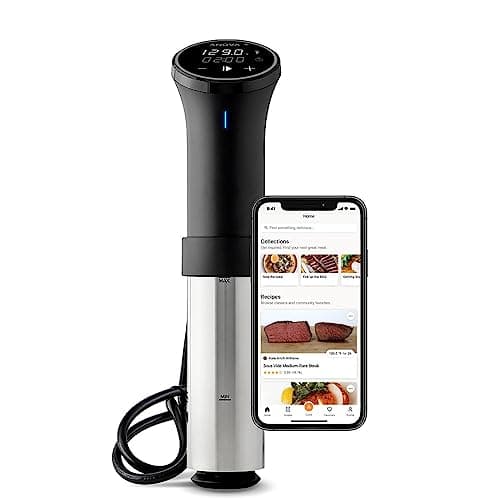
Product image from the Amazon listing.
Our verdict
The Anova is the easiest way to get restaurant-perfect steak, chicken and salmon at home. If you cook proteins regularly and hate guessing doneness, it earns its shelf space fast.
The short version
The Anova is the sous vide immersion circulator that made restaurant-technique cooking accessible at home. Clip it onto any pot of water, set a temperature and timer, drop your sealed food in, and pull it out cooked exactly to that temperature edge to edge. It's the fastest way to nail medium-rare steak, tender chicken and buttery salmon consistently, with almost no active cooking time.
Pros & cons
Pros
- Cooks proteins to an exact, repeatable doneness
- Impossible to overcook — food holds at target temp
- Hands-off — walk away for hours if you want
- Works with any pot you already own
- Compact enough to store in a drawer
- Great for meal prep and party cooking
Cons
- Needs a hot sear at the end for crust
- Ziploc bag or vacuum sealer required
- Long cook times for tough cuts (worth it, but plan ahead)
Why people love it
Clip it to a pot
Fill a pot with water, clip the Anova to the side and set the temperature and time in the app or on the dial.
Bag and drop
Season the food, seal it in a zip-top or vacuum bag, and lower it into the water bath.
Sear and serve
Pull it out at the timer, pat dry, and blast a fast crust in a rippingly hot pan or with a torch.
Who it's for
- Home cooks who want steakhouse steak
- Meal preppers cooking chicken breasts in bulk
- Anyone nervous about undercooked pork or chicken
- Dinner parties where you can't babysit the stove
Is sous vide worth it at home? The honest case for and against
Sous vide sounds fancier than it is. The technique is simply cooking food in a temperature-controlled water bath — the water is set to your target doneness, and the food, sealed in a bag, comes out cooked to exactly that temperature edge to edge. The magic isn't the water; it's the precision. A medium-rare steak done sous vide is medium rare from crust to crust, with no grey overcooked band. Chicken breast comes out juicy at a temperature that would horrify anyone used to 165°F pan cooking. And once you learn the basic time-and-temperature charts, expensive cuts become foolproof.
The honest downside is convenience. Sous vide is slow — a steak needs 45 minutes to an hour, tough cuts want 24 to 48 hours. You still need to sear to get crust, and you need to seal the food in a bag. If you cook mostly stir-fries, pastas or quick weeknight dinners, sous vide won't change your life. If you cook proteins often, care about consistency, or feed a group where timing matters, an Anova pays off almost immediately. It's especially useful for people who don't trust themselves to nail meat by touch or thermometer — the guesswork goes away.
How to sous vide steak (step by step, no guesswork)
Fill a pot deep enough for the Anova's minimum water line, clip it to the side, and set the temperature: 129°F for medium rare, 133°F for medium, 137°F for medium well. Set a timer of 45 minutes to an hour for a 1-inch steak, up to two hours for a thicker cut. Season the steak with salt and pepper, drop it in a zip-top bag, and lower it into the water using the water-displacement method — the water pressure pushes the air out, and you seal above the water line. Drop the sealed bag in. That's the entire cook.
At the timer, pull the steak out, cut open the bag, pat the surface bone-dry with paper towels (crucial for crust), and drop it into a screaming-hot cast-iron pan with a little neutral oil. Sear each side 30-45 seconds, plus the fat cap, and let it rest just long enough to slice. Because the interior is already at the exact doneness, resting is short — a minute or two — and you don't lose juices. The result is a perfectly pink edge-to-edge steak with a deep crust, and it's genuinely hard to mess up once you've done it once.
Sous vide meal prep, party cooking and time-saving tricks
Sous vide's superpower for busy weeks is bulk meal prep. Cook 6-8 seasoned chicken breasts in the same bath, chill in an ice bath, and refrigerate sealed — you have the base for salads, wraps and grain bowls all week, and the texture is dramatically better than reheated pan-cooked chicken. Same idea for hard-boiled eggs (75 minutes at 170°F yields perfect jammy yolks), taco meat, chili base and shredded pork.
For dinner parties, the Anova is even more useful. Sous vide the steaks or salmon early in the day, hold them at temperature until guests arrive, then sear at the last minute. Everyone gets restaurant-perfect doneness with no juggling doneness times on a hot grill. Set-and-forget vegetables — carrots, beets, potatoes — hold beautifully in the same bath if you plan the temperatures. Finish with a fast pan sear, an herb butter or a splash of vinaigrette, and it's a genuinely restaurant-caliber meal you cooked without ever standing at the stove.
See Anova Precision Cooker on Amazon
Check the latest price, photos and buyer reviews on Amazon.
Check Price on Amazon →Sold and shipped by AmazonFrequently asked questions
Do I need a special vacuum sealer?
No — sturdy zip-top freezer bags work fine using the water displacement method. A vacuum sealer is nicer for meal prep or long cooks, but it's optional.
How does it not overcook the food?
The water is set to the exact final temperature you want. The food can never get hotter than the water, so it holds at that doneness without drying out.
Do I still need to sear?
For proteins that need crust — steak, chicken, pork chops — yes. A very hot cast-iron pan for 30-45 seconds per side, or a torch, does the job in under a minute.
Is it safe for chicken at 140°F?
Yes — food safety is a function of time AND temperature, and holding chicken at a lower temperature for long enough (about an hour or so, depending on temp) achieves the same pasteurization as flashing it to 165°F. The Anova app has verified time-temp charts.
Anova Precision Cooker vs Joule vs Instant Pot Sous Vide: which is best?
The Anova Precision Cooker is the most versatile: full dial control on the unit itself plus an app, works with any pot, and easy to store. The Breville Joule is smaller and app-only, which is elegant but frustrating if you don't want to open an app to change temperature. Instant Pot's sous vide function works, but you're stuck using an Instant Pot pot and results are less precise. The Anova is the safest first sous vide.
What can I actually cook with sous vide?
Steaks (every doneness), chicken breast that stays juicy, pork chops without drying out, salmon and other fish, eggs (jammy yolks perfect every time), carrots and root vegetables intensely flavored in their own juices, and yes, even cocktails and infused oils. It's most magical for lean proteins that are easy to overcook conventionally.
As an Amazon Associate, TopCrate earns from qualifying purchases at no extra cost to you. Product image, price, availability and ratings are shown on Amazon and are subject to change.