HANDS-ON REVIEW
Aerless Compression Packing Bags Review: Is It Worth It?
Compression bags with a built-in one-way valve — squeeze the air out of your clothes and pack up to 60% more in the same suitcase, no vacuum needed.
Quick answer: Yes — Aerless is worth it if you fly with sweaters, take carry-on-only winter trips, or hate checked-bag fees. It attacks the real problem with packed luggage — trapped air — and solves it with a one-way valve instead of a vacuum, so bulky trips shrink to carry-on size and dirty laundry travels sealed. Respect the weight limit and the zipper, and one avoided bag fee covers the purchase.
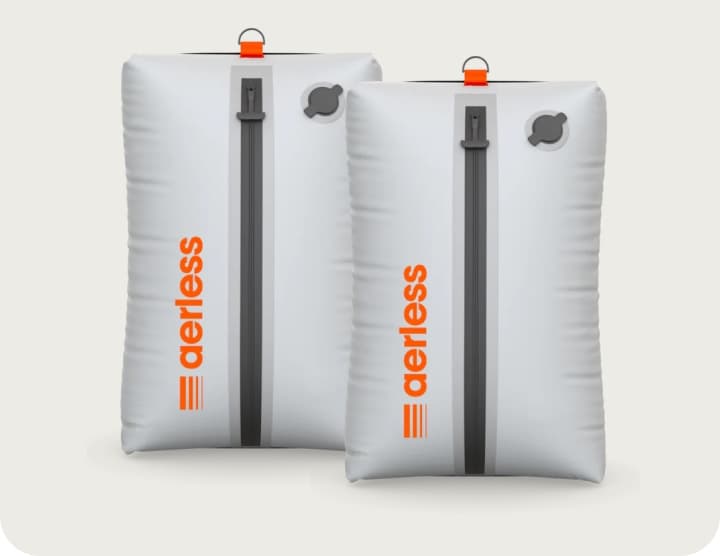
Aerless bags compress clothing loads down to carry-on size. Photo: Aerless
Our verdict
Yes — Aerless is worth it if you fly with sweaters, take carry-on-only winter trips, or hate checked-bag fees. It attacks the real problem with packed luggage — trapped air — and solves it with a one-way valve instead of a vacuum, so bulky trips shrink to carry-on size and dirty laundry travels sealed. Respect the weight limit and the zipper, and one avoided bag fee covers the purchase.
The short version
Every trip ends the same way: sitting on the suitcase. Aerless fixes the actual problem — your clothes are mostly air. Load a bag, zip it shut, and press: the one-way valve lets air out and none back in, shrinking a pile of clothing to a fraction of its bulk. The brand's claim is packing up to 60% more in any bag (they market it as 3X more packing efficiency), with no vacuum cleaner or pump required. Checked-bag fees, meet your enemy.
Pros & cons
Pros
- Compresses clothes dramatically — pack up to 60% more
- One-way valve system: press the air out by hand, no vacuum
- Turns checked-bag trips into carry-on trips
- Keeps dirty laundry sealed away from clean clothes
- Durable zip construction built for repeated trips
- Often pays for itself in one avoided baggage fee
Cons
- Compression saves space, not weight — scales still apply
- Wrinkle-prone fabrics come out needing a hang or steam
- Overstuffed cases strain zippers — compress sensibly
How it works
Load and zip
Fill the bag with clothes — rolled or folded — and close the airtight zip seal completely.
Press the air out
Kneel or press on the bag: the one-way valve vents the trapped air and locks it out, no vacuum or pump involved.
Pack the difference
The flattened bag drops into your suitcase at a fraction of the bulk — repeat, and a checked-bag wardrobe fits in a carry-on.
Who it's for
- Carry-on-only travelers who refuse checked-bag fees
- Families compressing four wardrobes into two suitcases
- Winter travelers wrangling sweaters and jackets
- Anyone who returns with souvenirs and no space
The physics of the packed suitcase (your clothes are mostly air)
A folded sweater is a thin sheet of wool holding a large volume of trapped air — which is wonderful for warmth and terrible for luggage. By volume, a typical packed clothing pile is more air than fabric, and that's the entire opportunity: remove the air and the fabric that remains is startlingly small. That's why compression bags routinely halve a clothing stack where clever folding barely dents it.
Aerless's one-way valve is what makes the trick practical. Old-school vacuum bags needed a vacuum cleaner — useless in a hotel room. Here, body weight does the pumping: press, the valve exhales, and its one-way design means the bag can't re-inflate in transit. The 'up to 60% more packed' claim tracks exactly with how much of your pile was air to begin with — bulky knits compress spectacularly, dense denim less so.
Compression bags vs packing cubes — different jobs
Packing cubes organize; they barely compress. Their job is finding things: shirts in one cube, socks in another, a tidy suitcase. Compression bags do the opposite job: brute-force volume reduction, at their best on the bulky items — sweaters, jackets, jeans — that laugh at a cube's gentle squeeze.
Seasoned packers run both systems: cubes for the daily-access layer, an Aerless bag for the bulk layer (outerwear, extra layers, and — the underrated trick — the dirty-laundry bag that shrinks as the trip goes on and seals smells away from clean clothes). If you must pick one system for a cold-weather or long trip, compression moves far more volume.
Compressing without wrecking your clothes (or your zipper)
Technique matters a little. Fold flat rather than balling clothes up — flat layers compress more evenly and emerge less creased. Expect linen and dress shirts to want a hang or a hotel-steam regardless; knits, tees, fleece and denim come out basically fine. Leave a little air-path clear around the valve as you press so it vents smoothly.
Two honest cautions: airlines weigh bags, and compression lets you pack more weight into less space — a carry-on full of compressed winter clothes can still bust a weight limit. And don't compress to the absolute maximum then force the suitcase shut on top of it; the bags are built for repeat trips, but every zipper in this story lives longer at 90% effort.
Frequently asked questions
Do I need a vacuum cleaner or pump for Aerless bags?
No — that's the whole point of the one-way valve. Load the bag, close the airtight zip, then kneel or press on it with your hands or body weight; the valve exhales the trapped air and clicks shut so nothing seeps back in. It works the same in a hotel room, a hostel or the back of a car as it does at home — which is exactly why traditional vacuum bags never caught on for travel and Aerless has.
How much more can I actually pack with Aerless?
Aerless markets up to 60% more in the same bag (3X packing efficiency). Real-world results depend on the fabric: bulky knits, fleece and jackets can drop to a third of their loose volume, so a winter carry-on that would otherwise overflow the sizer typically fits with room to spare. Dense fabrics like jeans and dress shirts compress less because they hold less trapped air to start with — expect a modest 15–25% reduction on those, and pair the bags with packing cubes on top for the daily-access layer.
Will my clothes come out wrinkled?
Wrinkle-resistant fabrics (knits, tees, fleece, denim) come out fine. Crisp cottons and linen will want a hang or a quick steam — same as they would from any tightly packed case.
Do the bags stay compressed in transit?
Yes — the valve is one-way, so air can't seep back in, and the zip seal is airtight. The bag arrives as flat as you packed it.
Does compressing reduce weight?
No — same clothes, same weight, less volume. Watch airline weight limits, especially when compression tempts you to bring more.
Are they reusable?
Yes — they're built with durable zips and valves for trip after trip. They also double as sealed dirty-laundry bags on the way home, which keeps smells off your clean clothes.
Aerless vs Ziploc Space Bag vs packing cubes: which system for which trip?
Ziploc Space Bag is the drugstore equivalent — same physics, thinner plastic, and every Ziploc traveler eventually reports a valve failure or a burst seam mid-trip because the film isn't built for repeat compression. Aerless uses heavier travel-grade film with a reinforced valve and zip, which is why it survives suitcase after suitcase. Packing cubes are a different category entirely: they organize (shirts here, socks there) but barely compress, so a cube-only setup still ends with you sitting on the lid for winter clothes. Our Aerless vs packing cubes comparison walks the mechanism difference (valve compression vs. mechanical cube zipper), the Eagle Creek Pack-It price anchors, and the layered setup most seasoned travelers actually run. For a carry-on-only winter trip or any flight with checked-bag fees you'd like to skip, Aerless does the compression work no cube can.
When you buy through links on this page, TopCrate may earn an affiliate commission at no extra cost to you. Capacity claims reflect the manufacturer's testing; results vary by fabric. Prices accurate as of publish time.