HEAD TO HEAD
Zivolife vs Spirulina and Chlorella: How This Microalgae Differs, Price and Which to Choose (2026)
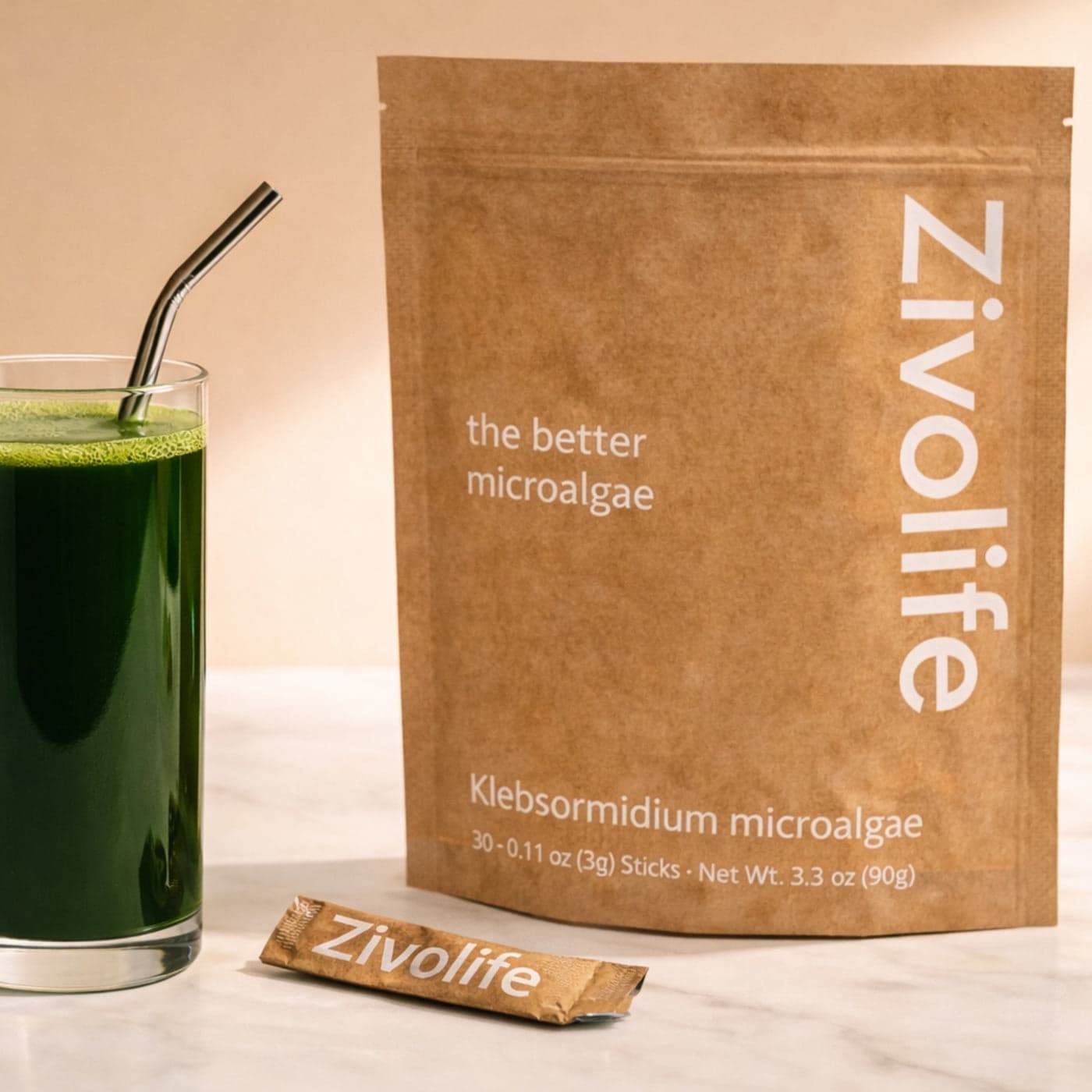
Zivolife is one patented green microalga, Klebsormidium flaccidum ZL01, in 3 g stick packs. Spirulina is a cyanobacterium and chlorella a different green alga, both sold for decades as powders and tablets. We compare the organisms, nutrition, research, format and price, and say where spirulina is the better pick.
Zivolife vs spirulina is not a contest between two versions of the same thing: Zivolife is a different organism, a green microalga called Klebsormidium flaccidum var. ZL01, while spirulina is a cyanobacterium (once called blue-green algae) and chlorella is another single-celled green alga. Spirulina and chlorella have far more history and research behind them and are widely available; Zivolife's case rests on a new species, one ingredient and a stick-pack format.
We compared Zivolife's product page and policies at zivo.life with public reference information on spirulina and chlorella. Below is what each one is, what they contain, the state of the research, and who should pick which. For our verdict on Zivolife itself, read our Zivolife review.
Zivolife vs spirulina vs chlorella at a glance
Zivolife is a whole plant food made from one microalga, Klebsormidium flaccidum var. ZL01, a strain its developer, ZIVO Bioscience, describes as patented. It is grown in Peru and sold in pouches of 30 stick packs of 3 g each, for $69 a month on subscription or $99 one-time.
Spirulina is the dried biomass of cyanobacteria, traditionally the species Arthrospira platensis, A. fusiformis and A. maxima. Chlorella is a genus of about 13 species of single-celled green algae. Both are sold in tubs of powder and as tablets by many companies.
The quick answer: pick spirulina or chlorella if you want the most-studied option and the widest choice of formats; pick Zivolife if you want a different single-species green in pre-measured sticks, and you are comfortable that the research on it is newer.
Three different organisms
This is the main thing to understand. Spirulina is not technically an alga at all but a cyanobacterium, a photosynthetic bacterium. Chlorella is a true green alga made of tiny spherical cells about 2 to 10 micrometers across. Zivolife's Klebsormidium flaccidum is a green alga that the brand describes as sitting at the evolutionary bridge between water algae and land plants.
Zivolife's own product page makes the same distinction: "Spirulina is a cyanobacterium, and chlorella is a different green microalgae." So switching from spirulina to Zivolife is not a like-for-like swap. You are choosing a different food with a different nutrient profile.
Nutrition compared
Spirulina is best known for protein. Dried spirulina is roughly 57% protein, 24% carbohydrate and 8% fat by weight, and is rich in B vitamins such as riboflavin and thiamine, plus iron, manganese and magnesium. One caveat matters for vegans: spirulina contains pseudovitamin B12, which is inactive in humans, so it is not a reliable B12 source. Early tests on chlorella reported dried cells at about 50% protein, and some strains are rich in polyunsaturated fats.
Zivolife lists complete plant protein with all nine essential amino acids, beta-glucan fiber, vitamins A, E and K, iron, calcium, potassium, carotenoids, essential fatty acids and polyphenols. The brand also claims it contains three times more prebiotic beta-glucan fiber than spirulina; that is the brand's figure, and we have not seen an independent comparison. Keep the serving size in mind: one Zivolife stick is 3 g, so it is a nutrient-dense add-on, not a protein shake.
Digestibility, purity and safety
Chlorella's tough cell walls mean people cannot digest it in its natural state, which is why chlorella products are processed to break the walls. Spirulina has its own well-known safety issues: the spirulina itself does not make microcystin toxins, but contaminating blue-green algae can, and lead, mercury and arsenic contamination has been reported in some commercial samples. People with phenylketonuria are advised to avoid spirulina because it contains phenylalanine.
Zivolife's answer is a single-source supply: it is cultivated at one aquaculture facility in the foothills of the Peruvian Andes, and the brand says every lot is tested by Eurofins, with cGMP and HACCP certification marks on the pack. Whatever you choose, buy from a seller that publishes lab testing. And because Zivolife lists vitamin K, and spirulina may interact with drugs affecting blood clotting, check with your doctor first if you take a blood thinner.
What the research says about each
Spirulina and chlorella have decades of research, and the results are modest. The US National Institutes of Health says evidence is insufficient to recommend spirulina for any human condition, and the American Cancer Society says studies do not support chlorella's effectiveness against cancer in humans. They are foods with a nutrient profile, not proven remedies.
Zivolife's evidence is younger. There is published research on Klebsormidium flaccidum and its compounds at the plant and strain level, but no clinical trials on the finished Zivolife product that we found. The brand frames its benefits as support for digestion, energy and immune function, and its page carries the FDA disclaimer that these statements have not been evaluated by the Food and Drug Administration. Our guide to whether Zivolife is legit covers the company, its claims and its reviews in more detail.
How to take Zivolife vs spirulina, and how they taste
Zivolife is built around one daily habit: tear one 3 g stick and stir it into water, juice, a smoothie or your protein shake. The brand's product description says 8 to 12 oz of liquid and the page's how-to section says 12 to 16 oz, so use more water if you find the taste strong. It can go in at any time of day, and the brand also says you can add it to food. Because each stick is one serving, there is no measuring and no guessing at the dose.
Spirulina and chlorella give you more ways to take them. Tablets and capsules skip the taste entirely, while loose powder lets you choose your own serving and blend it into smoothies. That flexibility is a genuine point in their favor if you dislike green drinks.
On taste, expect a green, earthy drink from any of the three. Zivolife buyers on the brand's review page describe the flavor as "definitely earthy" and one said it "smells a little bit fishy", which is typical of algae foods. Mixing it into a fruit smoothie or a flavored shake is the easiest way to soften it, and the brand suggests exactly that.
Price and format: sticks vs tubs and tablets
Zivolife costs $69 a month on Subscribe & Save, about $2.30 a day, or $99 for a one-time pouch, with free shipping on subscriptions and a 30-day money-back guarantee on first orders that comes with conditions. Spirulina and chlorella are sold by many brands as bulk powders and tablets, so you can shop around on price and pick capsules if you dislike the taste.
Zivolife's advantage is the format: each 3 g stick is sealed and pre-measured, there is nothing to scoop, and a pouch fits in a desk drawer or travel bag. Its drawback is the cost for 30 small servings and the earthy taste some buyers mention. Our Zivolife review goes through the subscription terms and whether the price is worth it.
Which should you choose?
Zivolife's own page aims it at busy professionals, frequent travelers, people who train regularly and anyone who wants single-ingredient nutrition that fits in a pocket. That matches what the format does well: a pouch at your desk or in a gym bag means you do not need a tub, scoop or blender.
Spirulina and chlorella suit people who already know they like algae foods, want to choose their own dose or prefer swallowing tablets, and want to compare many brands. If you are new to all three, the simplest test is the one that costs least to stop: try a single pouch or a small tub, take it daily for a few weeks, and keep whichever you actually finish.
Choose spirulina if you want the longest track record, the most brands and formats to choose from, and you are happy to buy from a brand that publishes contaminant testing. Choose chlorella if you specifically want a green alga with a long history and do not mind processed, broken-cell powder or tablets.
Choose Zivolife if you want something different from both: one patented species, one ingredient, traceable sourcing and stick packs you will actually remember to take. It is the most convenient of the three and the least studied. Disclosure: TopCrate earns a commission only if you buy Zivolife through our link; we earn nothing on spirulina or chlorella. For the full verdict, read our Zivolife review, and see is Zivolife legit for the guarantee's fine print.
Read our full Zivolife review
What's in a stick, how to take it, subscription value and who Zivolife suits.
Read our full Zivolife review →Frequently asked questions
Is Zivolife the same as spirulina?
No. Spirulina is a cyanobacterium (blue-green algae). Zivolife is a different organism, the green microalga Klebsormidium flaccidum var. ZL01.
Is Zivolife better than spirulina?
It depends on what you want. Spirulina and chlorella have far more research and are sold by many brands in many formats. Zivolife offers a different single species, traceable single-source growing and pre-measured 3 g sticks.
What is the difference between Zivolife and chlorella?
Both are green algae, but they are different species. Chlorella is single-celled with tough cell walls that must be broken to digest it; Zivolife is Klebsormidium flaccidum, sold as a whole-plant powder in stick packs.
Does Zivolife have more fiber than spirulina?
Zivolife says it has three times more prebiotic beta-glucan fiber than spirulina. That is the brand's claim; we have not seen an independent comparison.
Can I take Zivolife and spirulina together?
Nothing on Zivolife's page says not to, but both are nutrient-dense, and Zivolife lists vitamin K. If you take medication, especially a blood thinner, ask your doctor first.
How much does Zivolife cost compared with spirulina?
Zivolife is $69 a month on subscription or $99 one-time for 30 sticks. Spirulina is sold by many brands in bulk powders and tablets at a wide range of prices, so you can compare per-gram costs before you buy.
TopCrate is reader-supported. When you buy through links on our site we may earn an affiliate commission, at no extra cost to you. Content is for general information and isn't a substitute for professional advice.