COMPARISON
Paingone Plus vs Hempvana Rocket: Click-and-Go TENS Pen vs 9-Setting Pocket Pen — Which Drug-Free Pain Relief Pen Wins? (2026)
Paingone Plus and Hempvana Rocket are the two most-searched pocket TENS pens, and they take opposite design approaches for opposite users. One is a self-powered click-and-go pen with a 60-second session format and a stated 1,000 clicks per unit. The other is a battery-powered pocket TENS stick with nine intensity settings and three head attachments at a much lower sticker. Here's how they compare on stimulation, session flow, price and value — and which one actually fits how you'd use it.
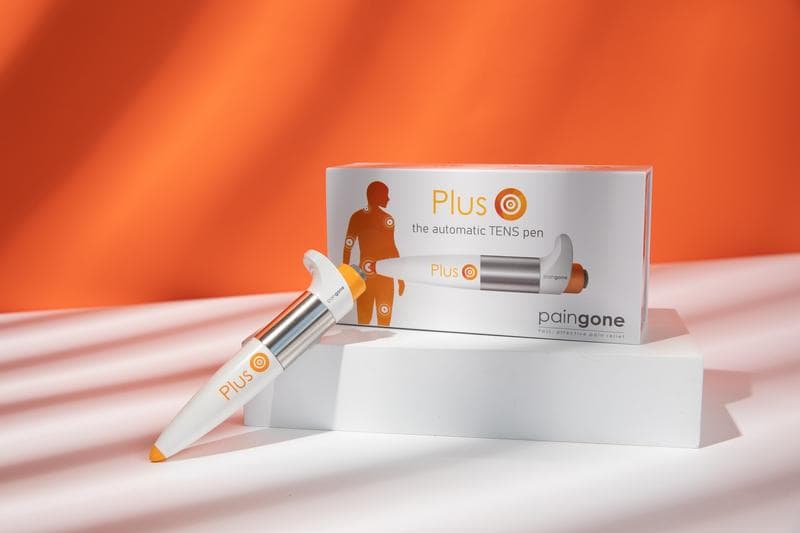
Paingone Plus and Hempvana Rocket are the two most-searched pocket-sized TENS pens, and they compete for the same buyer: someone with everyday joint, muscle or nerve aches — a wrist, a knee, a shoulder, a lower back — who'd rather not reach for another painkiller and doesn't want to deal with a pad-and-cable TENS unit every time. What they aren't is the same product. Paingone Plus is a self-powered click-and-go TENS pen from Revitive (the UK-based electrotherapy brand) that fires a concentrated TENS impulse at a single point each time you click, in 60-second sessions, with a stated 1,000 clicks per unit and no batteries or charging ever, sold direct at $59.99 to $89.95 depending on tier. Hempvana Rocket is a battery-powered pocket TENS stick from Hempvana (the As-Seen-On-TV brand owned by BulbHead) with nine adjustable intensity settings and three interchangeable head attachments for different body areas, sold at $19.99 on sale (regular $59.99).
So the right choice depends on how you'd actually use the device and what you value. If you want the simplest possible on-demand pain pen — click, pulse, done, no settings to dial in and no batteries to replace — Paingone Plus's self-powered click-and-go format is the honest pick, and the stated 1,000 clicks per unit cover years of occasional use. If what you want is a lower sticker with more adjustability — nine intensity levels, three head attachments for different body contours, a battery-powered pocket stick — Hempvana Rocket is engineered for that experience. This guide covers who makes each one, how the two session formats differ, what a 60-second session feels like on each, the real cost math over a year of use, and which one wins for the specific types of pain you're probably trying to manage.
One important note before we start: both devices are legitimate TENS products marketed for everyday pain management, not treatment for a medical condition. Neither is a substitute for proper medical evaluation of chronic pain, nerve damage, or a specific injury — and both carry the same core TENS contraindications (pacemakers, implanted electronics, pregnancy, and broken skin over the application site). If your pain is severe, chronic, or getting worse, see a doctor first. If your pain is the everyday-ache category these pens are built for, both are defensible tools. Our full Paingone Plus review covers the Paingone experience in depth.
Paingone Plus vs Hempvana Rocket at a glance
What each one is: Paingone Plus is a self-powered TENS pen with a metal tip you press onto the sore spot. Each click of the pen's button fires a concentrated electrical impulse into the tissue beneath the tip, in 60-second sessions you can repeat as often as you need. There are no batteries to replace and no cable to charge; the unit is rated for roughly 1,000 clicks of use. The design is deliberately minimal — one button, one tip, no settings. Hempvana Rocket is a battery-powered pocket TENS stick about the size of a slim marker, with nine adjustable intensity settings on a side-mounted control and three interchangeable head attachments (typically a point tip, a wide-contact tip and a textured tip) designed for different body contours and pain types. Sessions are user-timed rather than fixed at 60 seconds, with a built-in auto-off safety timer at a longer duration.
Price: Paingone Plus is $59.99 to $89.95 depending on tier and promotion on the brand's direct funnel, with a stated 60-day money-back guarantee from shipping and a 2-year manufacturer warranty against defects. Hempvana Rocket is $19.99 on common sale pricing (regular MSRP $59.99) through Hempvana's own site and third-party retailers, with standard-retail return and warranty terms that vary by seller.
Power source: Paingone Plus is self-powered — no batteries, no charging, no cable. The unit powers each click from an internal mechanism rated for roughly 1,000 clicks of total use. Hempvana Rocket is battery-powered with user-replaceable button cells (typically supplied with the unit), with ongoing battery replacement as the running cost over the life of the device.
Session format: Paingone Plus is bounded at 60 seconds per click with a fixed intensity level — press tip to skin, click, hold for the auto-timed pulse, lift off. Hempvana Rocket is user-timed with user-set intensity from level 1 (barely-there tingle) to level 9 (firm pulse), designed for sessions of a few minutes at a chosen level, with the auto-off timer catching extended runs.
FDA posture: Both devices are marketed as FDA-cleared TENS pens for over-the-counter pain management. That's a different FDA classification from a condition-specific medical clearance — TENS devices as a category have been FDA-cleared for decades for the broad OTC pain-management indication, and both Paingone Plus and Hempvana Rocket fit under that general umbrella. Neither is a treatment or cure for the underlying cause of pain.
What Paingone Plus actually is
Paingone Plus is a self-powered pocket TENS pen designed around one specific design idea: make targeted drug-free pain relief as frictionless as reaching for a painkiller. The pen is a thin cylinder with a metal tip at one end and a single button at the other. You press the metal tip firmly onto the sore spot — wrist, knuckle, elbow, knee, shoulder, lower back, anywhere surface muscle or joint pain is concentrated — and click the button. Each click fires a concentrated TENS impulse into the tissue beneath the tip, in an automatic 60-second session that ends on its own, delivering a scaling tingle-to-pulse sensation at a fixed intensity.
The self-powered design is the whole value proposition. There are no batteries to replace, no USB cable to charge, no settings to dial in — you take the pen out of the drawer, click it against the sore spot, and put it away. The brand rates each unit for roughly 1,000 clicks of use, which at 2-4 sessions per day covers close to a year of consistent use; at the lower-frequency occasional-ache use case, the pen can last several years before the mechanism is exhausted. The device ships with a 60-day money-back guarantee from shipping date (longer than typical direct-to-consumer windows) and a stated 2-year manufacturer warranty against defects.
The trade-offs are the mirror image of the simplicity. There's no intensity control — the pulse is at a fixed level the manufacturer calibrated for the broad consumer-pain use case, which most users describe as a comfortable tingle-to-firm-pulse, but a vocal minority on Amazon and the brand's own reviews describe as a 'wasp sting' or 'tiny needles' at the moment of click. The 60-second bounded session is a specific format — if you want to run a longer sustained TENS session over an area, Paingone Plus isn't the tool; you'd want a pad-based unit or a device with user-timed sessions. The single-point tip means each click treats one spot, not a wide area; for a broad lower-back zone, you'd click multiple times around the periphery of the ache. Our full Paingone Plus review walks the daily-use experience in more depth.
What Hempvana Rocket actually is
Hempvana Rocket is a battery-powered pocket TENS stick from Hempvana, the As-Seen-On-TV brand owned by BulbHead that also sells copper-infused pain-relief creams, braces and compression wraps under the Hempvana label. The Rocket is the brand's electrotherapy entry — about the size of a slim marker, with a textured grip, a side-mounted intensity control from level 1 to level 9, and three interchangeable head attachments included in the box (typically a point tip for pinpoint spots, a wide-contact tip for larger surface areas, and a textured or multi-point tip for broader massage-like coverage).
The design decisions trace back to the adjustability-at-a-low-sticker positioning. The nine intensity levels let you tune the pulse to the specific body area and pain type — level 2-3 for a sensitive wrist, level 6-8 for a broader lower-back zone, up to level 9 for the dullest aches on larger muscle groups. The three head attachments extend the device's reach: the wide-contact tip is a meaningfully better fit for a shoulder blade or lower back than a single-point tip would be, and the textured tip gives a different sensation profile. Sessions are user-timed; you hold the device against the skin and let the pulse run until you lift it off or hit the built-in auto-off safety timer at a longer-session duration.
The trade-offs are the mirror image of the adjustability. The device is battery-powered, which means ongoing replacement — button cells typically last several months of regular use, and the cost is modest but real. The pocket-stick form factor is slightly bulkier than Paingone's slim pen, though both fit easily in a bag or desk drawer. And the As-Seen-On-TV brand positioning means Hempvana Rocket is sold heavily through third-party retailers rather than exclusively through a brand funnel, which is good for availability and sometimes-aggressive pricing but means warranty and return terms vary by seller rather than being standardized through a single brand channel.
Session flow and sensation: what the daily routine actually feels like
Paingone Plus session: find the specific tender spot, press the metal tip firmly to the skin, click the button, hold the pen in place for the 60-second auto-timed pulse, lift off at the end-of-session cue. The sensation at the moment of click is a sharp onset — the pulse at a fixed intensity engages immediately, scaling into a comfortable tingle for most users and (per the honest minority reports) a sharper 'wasp-sting' feel for sensitive users on sensitive body areas. Most users adapt to the sensation within 2-3 sessions and describe it as firm but tolerable; the brand's protocol is to start with a single click at the softest edge of the ache rather than diving straight into the center.
Hempvana Rocket session: pick a head attachment appropriate for the body area (point tip for pinpoint, wide-contact for a shoulder or lower back, textured for broader coverage), set the intensity dial to level 1 or 2, press the device head to the skin, and gradually ramp intensity up until you feel a comfortable scaling tingle. Hold the device in place for a few minutes of session time, moving slightly around the periphery of the ache if desired, until you lift off or the auto-off safety timer catches a longer run. The ramp-up-from-low design is the whole value of the nine-intensity-level approach — you find the right level for the specific body area and the specific pain, rather than committing to a fixed level the way Paingone Plus's design does.
The practical difference in daily use is bigger than the minute count suggests. Paingone Plus's design optimizes for frictionless on-demand: a 60-second bounded session you reach for the moment an ache starts, no setup, no settings. Hempvana Rocket's design optimizes for calibrated adjustability: a longer session you dial in to the specific body area, with the head-attachment and intensity-level flexibility to tune the experience. Both approaches work; the fit-to-your-life question is whether you'd rather have the simpler on-demand tool or the more adjustable one at a lower sticker.
Price, battery and the real cost math
Sticker prices tell most of the story, but ongoing costs matter too. Paingone Plus over a year: $59.99 to $89.95 on the direct funnel depending on tier, no batteries, no charging, no consumables — the only recurring cost is the eventual end of the 1,000-click rated life, after which the unit is replaced. At 2-4 sessions per day, the 1,000 clicks cover roughly a year of consistent use; at the occasional-ache use case, the pen can last several years before replacement.
Hempvana Rocket over a year: $19.99 on common sale pricing (regular MSRP $59.99), plus modest ongoing battery costs for button-cell replacements at 2-4 sessions per day. At typical use, battery replacements might run $5-$15 per year depending on how often you use the device. The three head attachments are included in the box and don't need replacement at a typical use cadence.
The honest cost framing: at common Hempvana Rocket sale pricing of $19.99, the pocket-stick is one-third to one-quarter of Paingone Plus's direct-funnel sticker, and the one-year total-cost-of-ownership gap is roughly $40-$70 in Hempvana Rocket's favor on sticker-plus-batteries math. What the gap costs you: the self-powered no-batteries convenience, the stated 2-year manufacturer warranty, the 60-day money-back guarantee from the Paingone brand funnel, and the specific brand pedigree of Revitive's electrotherapy line. What the gap buys you with Hempvana Rocket: the nine intensity levels, the three head attachments, the lower initial outlay. For most buyers trying a pocket TENS pen for the first time, Hempvana Rocket's lower sticker is a defensible way to find out whether a TENS pen even helps your specific pain pattern; for buyers who already know a pocket TENS pen helps them and want the longer warranty and no-batteries format, Paingone Plus's math is defensible.
Which pains each pen handles best
The pain-type question is where the choice between these two often settles. Paingone Plus is engineered around pinpoint single-point targeting — the metal tip concentrates the TENS impulse at a specific spot, so the device is strongest on localized aches you can point to with a finger: a wrist joint, a knuckle, an elbow point, a specific tender spot on the knee, a tight knot in the shoulder, a focused point of lower-back ache. The 60-second bounded session format fits the on-demand use case: you feel a flare-up starting, you click it a couple of times, you go on with your day.
Hempvana Rocket is engineered around broader coverage via the three head attachments — the wide-contact tip is a meaningfully better fit for a larger surface area like a shoulder blade, a broader lower-back zone, or a longer stretch along a quadriceps or calf. The nine intensity levels let you tune the pulse for a sensitive body area (ramp slowly from level 1-2 on a wrist) versus a dense muscle group (level 6-9 on a lower back), which Paingone's fixed-intensity design doesn't. The user-timed session format fits a longer, more sustained use case: a few minutes of coverage along an area, not just a 60-second pinpoint pulse.
Where neither pen is the right tool: deep nerve pain from a compressed disc or sciatica (surface TENS doesn't reliably reach pain generators that deep); acute injury with swelling, bruising or a specific trauma mechanism (that's RICE and a doctor, not a TENS pen); wrapping tension headaches across the forehead and temples (TENS pens target muscle and joint, not the vascular-and-muscle mix driving a headache — a cold wrap like the TheraICE headache hat handles that better). And neither is a substitute for proper medical evaluation of chronic or worsening pain — if the ache is getting worse, is new in a way you can't explain, or has lasted longer than a reasonable self-care window, see a doctor first.
Which one should you buy?
Choose Paingone Plus if frictionless on-demand matters to you — the specific value of a self-powered click-and-go pen you keep in a drawer or a bag and reach for the moment an ache starts, with no settings to dial in and no batteries to remember. It's also the honest pick if a single-point targeting format fits the pain pattern you're trying to manage (pinpoint tender spots rather than broader zones), if the 60-day money-back guarantee and 2-year manufacturer warranty from Revitive's direct funnel matter to you, and if the stated 1,000-click rated life covers your realistic use cadence. Our full Paingone Plus review covers the daily use in depth.
Choose Hempvana Rocket if calibrated adjustability at a lower sticker matters to you — the specific value of nine intensity levels and three head attachments to tune the device to the specific body area and pain type, at an initial outlay roughly one-third of Paingone's direct-funnel sticker. It's also the pick if a broader-coverage head attachment fits the pain pattern you're trying to manage (shoulder blade, lower back, longer stretches along a muscle group), if a user-timed session format fits your use habits better than a 60-second bounded one, and if a battery-powered pocket stick with ongoing cell replacements doesn't put you off.
Choose neither if the pain is severe, chronic, worsening, or located in a way that suggests nerve compression or a specific injury — that's a doctor's call, not a pocket TENS pen's. Both devices are legitimate drug-free tools for the everyday-ache use case they're built for, and both are honest alternatives to a daily painkiller habit for the surface muscle and joint aches that make up most of the use case. Neither is a treatment or cure for the underlying cause of pain. If what you want is a wear-and-forget drug-free patch rather than a pocket pen, our Kailo review covers that alternative — a nanotech pain patch you place on the sore spot and leave on, with no current, no heat and no battery.
Our verdict
For the biggest slice of pocket-TENS-pen buyers — someone with everyday wrist, knee, shoulder or lower-back aches who wants a drug-free on-demand tool to reach for the moment the ache starts — Paingone Plus is our pick. The self-powered click-and-go format is the simplest possible version of the use case, the 1,000-click rated life covers years of occasional use without a battery or charging cable, and the brand funnel's 60-day money-back guarantee and 2-year manufacturer warranty are longer and more standardized than Hempvana Rocket's retail-channel coverage. The $59.99-$89.95 sticker range is higher than Hempvana's common sale pricing, but the total-cost-of-ownership gap narrows across years of use once battery costs enter the Hempvana side of the math.
For the buyer who specifically wants more adjustability at a lower initial outlay — nine intensity levels to tune the pulse to the specific body area, three head attachments for different pain patterns, and a lower sticker that makes trying a pocket TENS pen a lower-risk experiment — Hempvana Rocket is the honest pick. The $19.99 sale sticker is the lowest-friction way to find out whether a pocket TENS pen helps your specific pain pattern at all, and the adjustability is a legitimate advantage over Paingone's fixed-intensity design for buyers whose pain pattern varies by body area and sensitivity.
Whichever you pick, treat the first week as the calibration window: a few sessions a day at the sore spot(s) you're trying to manage, with the honest expectation that a pocket TENS pen manages the pain rather than curing the cause. If the pain is getting worse, is new in a way you can't explain, or hasn't responded to a reasonable self-care window, see a doctor — a TENS pen is a drug-free tool alongside proper medical evaluation, not instead of one.
Read our full Paingone Plus review
Our verdict on the $59.99 self-powered click-and-go TENS pen from Revitive — what a 60-second session actually feels like at the sore spot, how the stated 1,000-click life really covers daily use, and whether the no-batteries no-charging format is the right drug-free pain tool for the specific aches you're trying to manage.
Read our full Paingone Plus review →Frequently asked questions
Is Paingone Plus or Hempvana Rocket FDA-cleared?
Both are marketed as FDA-cleared TENS devices for over-the-counter pain management, which is the broad OTC indication the FDA has cleared TENS devices for as a category for decades. That's a different FDA classification from a condition-specific medical clearance; neither device is cleared as a treatment or cure for a specific medical condition. Both are drug-free tools for everyday pain management, not substitutes for medical evaluation of chronic or worsening pain.
Does Paingone Plus really last 1,000 clicks with no batteries?
Yes — Paingone Plus is a self-powered device rated by the manufacturer for roughly 1,000 clicks of use before the internal mechanism is exhausted and the unit is replaced. There are no user-serviceable batteries and no charging cable. At 2-4 clicks per day the 1,000 clicks cover close to a year of consistent use; at the lower-frequency occasional-ache use case, the pen can last several years before replacement. Hempvana Rocket is the opposite design — battery-powered with user-replaceable button cells and ongoing modest replacement costs.
Does Hempvana Rocket come with the three head attachments?
Yes — the three interchangeable head attachments (typically a point tip for pinpoint spots, a wide-contact tip for larger surface areas, and a textured or multi-point tip for broader coverage) are included in the box with the device. They swap on and off the business end of the stick to fit different body contours and pain types. The nine intensity levels combined with the three head attachments are the whole adjustability case for Hempvana Rocket versus Paingone Plus's fixed-intensity single-tip design.
Which one hurts less?
They're not strictly comparable because Hempvana Rocket is adjustable from level 1 to 9 and Paingone Plus is fixed at the manufacturer's calibrated level. At its lowest intensity, Hempvana Rocket is a barely-there tingle, well below Paingone Plus's fixed-pulse sensation. At comparable higher intensities, both produce a firm pulse described by most users as tingly-to-tapping and by a vocal minority as sharper (Paingone's fixed-level 'wasp sting' reports and Hempvana Rocket's level-8-9 'too strong' reports). If sensitivity is a concern, Hempvana Rocket's ability to start at level 1-2 and ramp up is a real advantage.
Can I use either one every day?
Yes — both devices are designed for daily use, with the TENS category well-established as a drug-free pain-management tool at a few sessions per day. Paingone Plus's 60-second bounded session format works well for a few targeted clicks through the day; Hempvana Rocket's user-timed sessions work well for longer coverage sessions a few times per day. The brand's stated protocols on both put reasonable upper limits on session count — don't run either device for an hour straight on the same spot — but normal everyday use is within design.
Who shouldn't use either device?
Both devices carry the same core TENS contraindications: don't use with a pacemaker, implanted defibrillator or other implanted electronics; don't use during pregnancy without medical clearance; don't use over broken, irritated or infected skin; don't use over the front of the throat or the eyes; and don't use with an active seizure disorder without a clinician's approval. Buyers with any medical condition that affects pain perception, nerve function or electrical sensitivity should speak to their doctor before starting either device. Neither is a substitute for medical evaluation of chronic, severe, or worsening pain.
TopCrate is reader-supported. When you buy through links on our site we may earn an affiliate commission, at no extra cost to you. Content is for general information and isn't a substitute for professional advice.