HEAD TO HEAD
MyoGlow vs Solawave: Arm Sculpting Device vs Red Light Face Wand (2026)
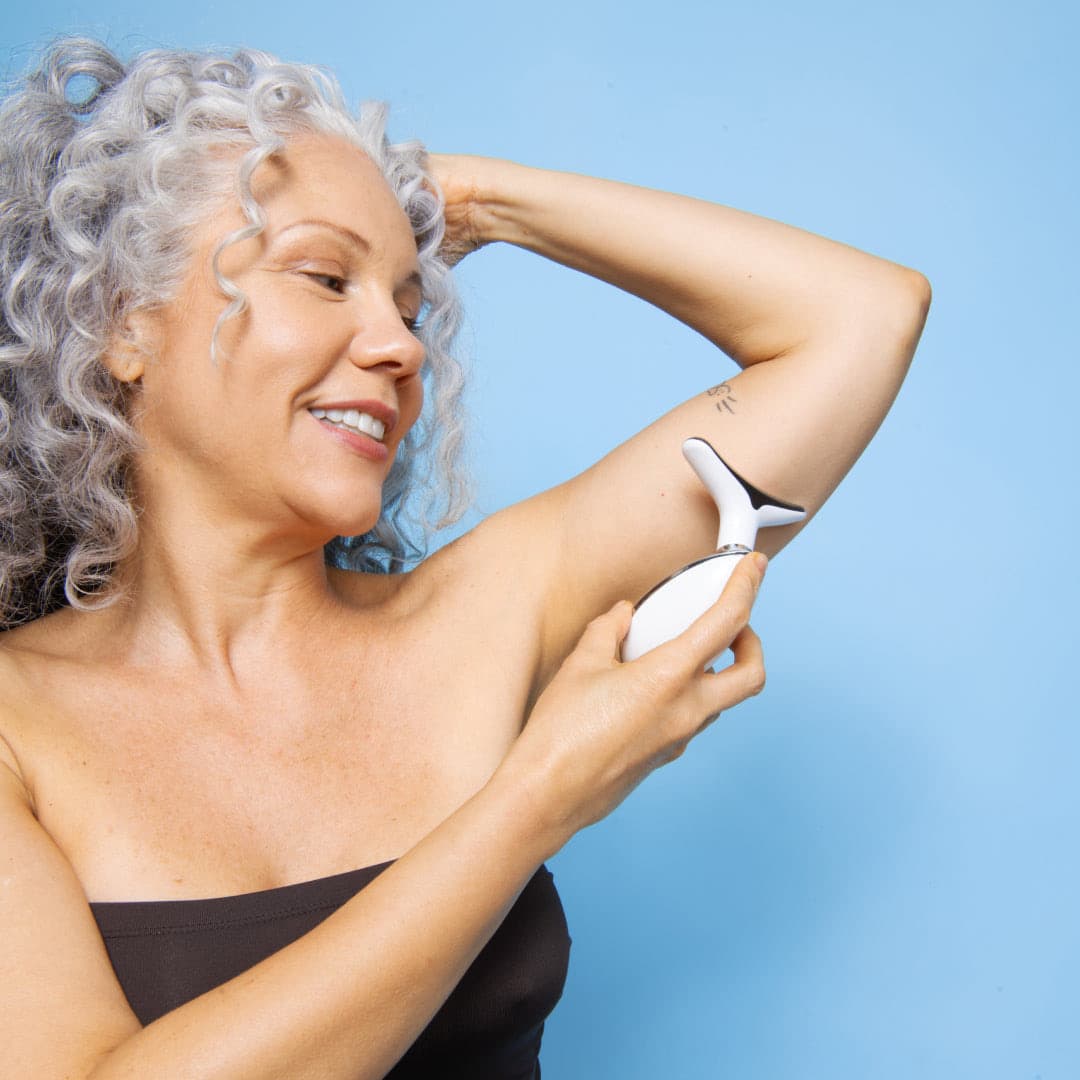
MyoGlow is a $79 LED, warmth and sonic massage device built for the upper arms; the Solawave 4-in-1 wand is a $169 red light face wand from a better-known brand. We compare what each does, price, routine, guarantee and the fine print, and say plainly where Solawave is the better buy.
MyoGlow vs Solawave comes down to where you want to use it: MyoGlow is built and sold for the skin on your upper arms, at a lower entry price, while the Solawave 4-in-1 Skincare Wand is a face wand from a more established brand with a cash-back guarantee. Both are cosmetic at-home devices that pair red light with warmth, massage and a serum step, so the choice is less about technology and more about body area, budget and how much you care about the refund terms.
Below we compare the two head to head using each brand's own pages: what is inside, how long a session takes, what you pay, what happens if you change your mind and who each one suits. For the full device breakdown, see our MyoGlow review, and for the checkout fine print, read is MyoGlow legit.
MyoGlow vs Solawave at a glance
MyoGlow is a handheld device from My Derma Dream with a curved head shaped to glide over the arm. Its sales page lists four features: LED light in red, blue and amber, electroporation to help a serum absorb, thermal warmth and sonic massage. Sessions run 5 to 10 minutes a day. Our review recorded the arm offer at $79 with a one-month supply of No-Tox arm serum, $127 with three months and $214 with six.
The Solawave 4-in-1 Skincare Wand (the Radiant Renewal wand) is listed at $169 on Solawave's own site, or $189 as a kit with its Activating Serum. Solawave lists four features too: red light, galvanic current, therapeutic warmth and facial massage, and its FAQ gives 630nm as the red wavelength its red light devices use. The brand's routine is about 3 minutes per area. So on paper the two devices are close cousins. The real differences are the target area, the price and the guarantee.
Arms vs face: what each MyoGlow and Solawave device is built for
This is the biggest difference. MyoGlow's sales page is written entirely around the upper arms: crepey texture, puffiness and the look of loose skin, with a routine of upward strokes over each arm after a shower. My Derma Dream also runs separate MyoGlow sales pages aimed at the face and neck and at other body areas, but the arm version is the one our review covers.
Solawave's wand is a face tool. The before-and-after examples on Solawave's site show the eyes, forehead, cheeks and nose, and we did not find an arm-specific product anywhere in its range. Its 2-in-1 Skincare Mini, listed at $119, is tagged for face and body, and a Neck & Chest Pro Mask is listed at $349. If your goal is your arms, MyoGlow is the only one of the two built for the job. If your goal is your face, Solawave's wand is designed for it and MyoGlow's arm head is not.
MyoGlow vs Solawave price: what you actually pay
MyoGlow is the cheaper way in. The sales page we read advertised up to 60 percent off, free shipping and a free pack of strawberry collagen peptide gummies (described as a $19 value) with the best-value bundle, but listed no dollar prices in its text, so check the cart. Our review's pricing of $79 includes a month of serum, which matters because both brands recommend using their device with a serum.
Solawave's wand is $169 on its own, or $189 with the Activating Serum on Solawave's site. That makes MyoGlow's entry bundle less than half the price of the Solawave wand by itself. One more cost to watch on the MyoGlow side: the sales page promotes an optional Unlimited Skin Care Membership at $49 a month after a 14-day free trial. The page says you can pause, skip or cancel, but untick it at checkout if you did not choose it. Buying through our link does not change your price.
The guarantee: where Solawave wins
Be fair to Solawave here, because this is its strongest point. Solawave's site lists a 60-day money-back guarantee and a one-year warranty. MyoGlow's sales page promises a 90-day satisfaction guarantee and says to "Try It Risk-Free For 90 Days", but the terms underneath say you return the device in its original packaging within 90 days of purchase for a full store credit, minus shipping and handling. The page adds that the company may offer a device swap or a free alternative serum instead.
So MyoGlow gives you longer to decide, but the remedy is store credit rather than cash. MyoGlow also carries a one-year warranty against defects, matching Solawave's. If a cash refund is a must for you, Solawave's terms are the safer bet. If you are confident you will use the device, MyoGlow's lower price outweighs the weaker refund. Either way, keep the box until you have decided.
Daily routine: 5 to 10 minutes vs 3 minutes per area
MyoGlow's routine, per its sales page: shower, apply an activator serum, turn the device on, choose a mode and sweep it over each arm in upward motions for 5 to 10 minutes a day. The page says it is about as loud as an electric toothbrush and that you feel warmth or a gentle tingle. Remove jewelry and piercings first, and never submerge it or use it in the bath or shower; the head can be wiped clean. In the box: the device, a USB power cord, a user manual and a storage box.
Solawave describes a 3-minute treatment per area. For a whole face that adds up to a similar few minutes as MyoGlow's arm routine. The practical point is the same for both: at-home devices only work if you keep using them, so pick the one whose routine you will actually do most days.
Does MyoGlow or Solawave work better?
Neither brand has published independent, head-to-head results for these two devices, and we have not run our own trial, so we can not tell you one gives a bigger change than the other. Red light is one of the better-discussed at-home beauty technologies, and both devices use it. MyoGlow's sales page cites research by "NASA, Harvard University, and more" without naming a study, and its lifting claims are the brand's own.
Set expectations the same way for both: a smoother, more hydrated, firmer look over weeks of consistent use alongside a serum. Neither removes fat, and neither replaces a clinic procedure. The deciding factors are the body area, the price and the guarantee, not a proven difference in results.
MyoGlow and Solawave are different companies
MyoGlow is sold by My Derma Dream, the same direct-to-consumer brand behind the Dr. Melasmin stick, with a published customer line (786-442-2626). Solawave is a separate company with its own store and product range. They are not affiliated, and reviews of one do not apply to the other.
Search results also blend MyoGlow with other devices that have similar names. Make sure the checkout says My Derma Dream and MyoGlow before you pay. If you are comparing several devices, our Solawave wand review and NuFACE Mini+ review cover the best-known face options, and NuFACE uses microcurrent, a different technology from either of these.
Who should buy MyoGlow, who should buy Solawave
Buy MyoGlow if your concern is the look of your upper arms, you want the lowest entry price with serum included, and you can live with a store-credit guarantee. Buy Solawave if your concern is your face, you value a longer-established brand, or you want a cash money-back guarantee. My Derma Dream says MyoGlow is not recommended for people with epilepsy, heart conditions, tumors or cancer, pacemakers, metal plates or pins, recent Botox or fillers, or during pregnancy, so check that list first.
TopCrate earns a commission only if you buy MyoGlow through our links; we do not earn on Solawave, and we say so once here so you can weigh this comparison. Our verdict on the arm device is in the MyoGlow review: a fairly priced, arm-focused routine with a guarantee you should read before ordering.
Read our full MyoGlow review
The modes, price tiers, guarantee fine print and our verdict.
Read our full MyoGlow review →Frequently asked questions
MyoGlow vs Solawave: which is better?
For arms, MyoGlow, because it is built and sold for the upper arms and costs less. For the face, Solawave's wand, which is designed for facial areas and has a 60-day money-back guarantee.
Is MyoGlow cheaper than Solawave?
Yes. Our review recorded MyoGlow at $79 with a month of serum, while Solawave's site lists its 4-in-1 wand at $169, or $189 with its Activating Serum.
Can I use Solawave on my arms?
Solawave's 4-in-1 wand is presented as a face tool, and we found no arm-specific Solawave product. Its 2-in-1 Skincare Mini is tagged for face and body.
Does MyoGlow have a money-back guarantee like Solawave?
MyoGlow has a 90-day guarantee, but the terms give store credit minus shipping and handling rather than cash. Solawave lists a 60-day money-back guarantee.
Is MyoGlow made by Solawave?
No. MyoGlow is sold by My Derma Dream. Solawave is a separate company, and the two are not affiliated.
How long does a MyoGlow session take compared with Solawave?
MyoGlow's sales page says 5 to 10 minutes a day on the arms. Solawave describes about 3 minutes per area on the face.
TopCrate is reader-supported. When you buy through links on our site we may earn an affiliate commission, at no extra cost to you. Content is for general information and isn't a substitute for professional advice.