COMPARISON
Laughland vs AuraGlow: Which LED Teeth Whitening Kit Is Better? (2026)
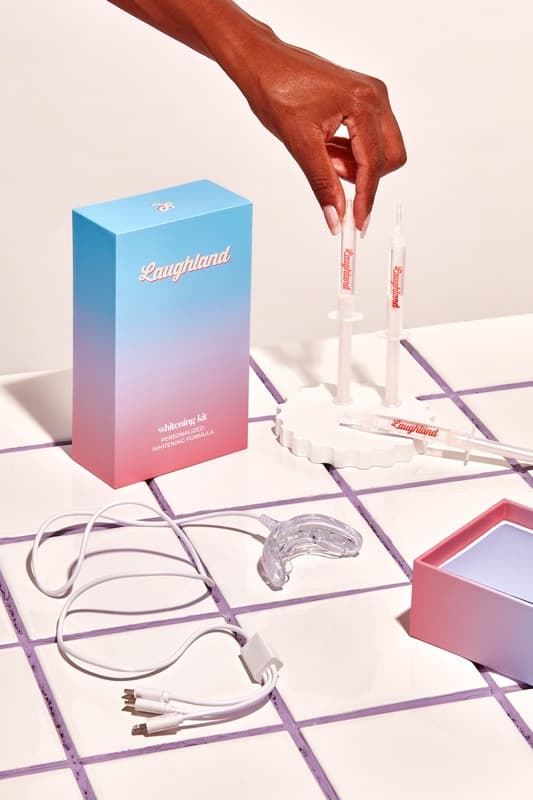
Two LED whitening kits, two different ideas. Laughland plugs into your phone for short sessions with a hydrogen-peroxide gel; AuraGlow is a rechargeable light with a carbamide-peroxide gel, more sessions and a longer guarantee. Here's how they compare.
Laughland is the better pick if you want short sessions and a gentler starting gel, and AuraGlow is the better pick if you want more sessions per kit, a cordless light and a longer money-back window. Both are at-home LED teeth whitening kits that pair a peroxide gel with a mouthpiece light, and both aim at the same buyer: someone with coffee, tea or wine stains who found strips messy or uncomfortable.
They are separate brands from separate companies, and they make different trade-offs. Laughland's mouthpiece plugs into your phone and runs sessions of under 15 minutes with a hydrogen-peroxide gel. AuraGlow's light is rechargeable, runs 30-minute sessions and uses a 35% carbamide-peroxide gel. This comparison uses the brands' own pages as we checked them on November 13, 2026, plus independent testing where we could find it.
Laughland vs AuraGlow at a glance
Gel: Laughland uses hydrogen peroxide with glycerin, aloe vera and other soothing ingredients; NewMouth reports its standard formula at 8% hydrogen peroxide. AuraGlow uses a 35% carbamide peroxide gel made in the USA. Carbamide peroxide breaks down into hydrogen peroxide more slowly, which is why the two numbers aren't directly comparable.
Light and power: Laughland's LED mouthpiece has a cord that plugs into your phone, with USB-C, Lightning and Micro-USB adapters in the box. AuraGlow's LED light is rechargeable, comes with a storage and charging case, and turns itself off after 30 minutes.
Sessions: Laughland says each kit has six sessions of under 15 minutes. AuraGlow says each kit has 20 sessions of 30 minutes, with daily use for 7 to 14 days.
Price: Laughland is $39.99 for one kit, $69.99 for two and $119.99 for four on its offer page. AuraGlow's kit was $60 on auraglow.com when we checked.
Guarantee: Laughland lists a 30-day satisfaction guarantee. AuraGlow lists a 60-day money-back guarantee, says it covers return shipping, and adds a 2-year warranty for defects.
The gels: hydrogen vs carbamide peroxide
Both kits whiten with peroxide, which is the chemistry dentists use too. The difference is the form and how long it sits on your teeth. Laughland's gel is hydrogen peroxide, which works quickly, and the brand pairs it with short sessions and ingredients such as glycerin and aloe vera that it says help with comfort. Its page calls the formula "8:16" and pitches it at people whose teeth are sometimes sensitive.
AuraGlow's 35% carbamide peroxide releases its hydrogen peroxide more gradually, which suits a longer 30-minute session. AuraGlow publishes its full ingredient list (glycerin, urea peroxide, propylene glycol, xylitol, carbomer, peppermint oil, triethanolamine and water) and says the gel is made in the USA.
In plain terms, neither gel is "stronger" in a way that guarantees a better result. Your starting shade, the kind of stains you have and how consistently you use the kit matter more than the label.
Session time and the daily routine
This is where the two feel most different. A Laughland session takes under 15 minutes: brush, dry your teeth, add gel, plug the mouthpiece into your phone and wait. The catch is that you're tethered to your phone for those minutes.
AuraGlow asks for 30 minutes a day, but the light is cordless. You tap the logo to start, wear it, and it shuts off on its own. Afterward it goes back in its charging case, which also keeps it clean between sessions. theSkimm's writer noted that Laughland doesn't come with a case for the mouthpiece, so AuraGlow wins on storage.
If your evenings are busy, Laughland's shorter sessions are easier to fit in. If you'd rather not be tied to your phone, AuraGlow's cordless light is the better fit.
Results and the claims behind them
Both brands make bold claims. Laughland says "7+ shades whiter in 6 days," and a "100% success rate" in clinical trials, without showing the study details on its page. AuraGlow says it whitens "up to 10 shades in 7 days" and cites its own seven-day study of 27 adults, which it says produced an average improvement of 7.11 shades. Brand-run studies are a starting point, not proof, and individual results vary for both.
Independent testing is thinner. NewMouth tested Laughland's 8% formula and recorded an average of about two shade steps on a dental shade guide by day 6, with low sensitivity scores. Fortune's testing team named AuraGlow its best overall kit, partly for the LED light and the charging case. Neither result tells you exactly what will happen to your teeth, but both suggest real, visible change on surface stains.
Sensitivity: which is gentler?
Laughland's whole pitch is comfort: a lower-strength hydrogen-peroxide gel, short sessions and soothing ingredients. NewMouth's testers reported low sensitivity, with mild sensitivity most common on days two and three. AuraGlow says participants in its gel study felt no irritation or sensitivity, while also noting that a small share of people feel some sensitivity with any whitening product.
For most people, how you use the kit matters as much as which one you buy. Use a thin line of gel, keep it off your gums, follow the session time, and take a day off if your teeth feel tender. If you already have sensitive teeth, cavities, receding gums or recent dental work, check with your dentist before using either kit. Neither kit changes the color of crowns, veneers or fillings.
Price, value and guarantees
Laughland is cheaper to start with: $39.99 for one kit on its offer page, against $60 for AuraGlow on its own store. But AuraGlow's kit holds 20 sessions to Laughland's six, so AuraGlow works out to about $3 a session against roughly $5 to $6.67 a session for Laughland, depending on the bundle. Shipping also differs: the Laughland order data we saw listed $6.99 shipping on a single kit and free shipping on bundles, while AuraGlow listed free shipping.
AuraGlow also wins on the guarantee. Its page offers 60 days for a full refund, says it will cover return shipping, and adds a 2-year warranty for defects. Laughland lists a 30-day satisfaction guarantee. If you're unsure whether whitening will suit you, the longer window is a real advantage.
One more thing to know about Laughland: the brand's own trial offers have been subscriptions with monthly refills. The one-time bundles on the GiddyUp offer page didn't show a subscription option when we checked. Our is Laughland legit guide covers the billing complaints and how to avoid them.
Which one should you buy?
Choose Laughland if you want the shortest sessions, a gel positioned for sensitive teeth, a lower upfront price and a mouthpiece that never needs charging. It suits people who quit strips because of discomfort and want a quick evening habit. Read our full Laughland review for the details.
Choose AuraGlow if you want more sessions per kit, a lower cost per session, a cordless light with a case and a 60-day guarantee. It's the better value if you plan to use the kit for a full two-week course or keep up touch-ups. Our AuraGlow review covers it in depth.
If peroxide doesn't agree with your teeth at all, a brush-on powder like the one in our Purely White Deluxe review is a gentler, slower route. For the wider field, see our best teeth whitening guide.
A note on how we earn: TopCrate earns a commission on purchases through some of our links, including Laughland, and that doesn't change where we say AuraGlow is the better buy.
Our verdict
Laughland vs AuraGlow comes down to time versus value. Laughland gets you through each session in under 15 minutes with a gentler-positioned gel and no charging, at a lower starting price. AuraGlow gives you more than three times as many sessions per kit, a cordless light with a case, and a longer guarantee. Both can give the look of whiter teeth on everyday surface stains, and both work best on healthy teeth after a quick check with your dentist.
Read our full Laughland review
How the phone-powered Laughland kit works, who it suits and how the one-, two- and four-kit bundles compare.
Read our full Laughland review →Frequently asked questions
Is Laughland better than AuraGlow?
It depends on what you value. Laughland has shorter sessions (under 15 minutes), a phone-powered mouthpiece and a lower starting price of $39.99. AuraGlow has 20 sessions per kit instead of six, a rechargeable cordless light with a case and a 60-day guarantee. Laughland suits busy, sensitivity-prone users; AuraGlow is better value per session.
Are Laughland and AuraGlow the same company?
No. They're separate brands from different companies. Laughland sells through getlaughland.com and its own store; AuraGlow sells through auraglow.com. They just make similar LED whitening kits.
Which is gentler on sensitive teeth, Laughland or AuraGlow?
Laughland is positioned as the gentler option, with an 8% hydrogen-peroxide formula (per NewMouth's testing) and short sessions. AuraGlow says its gel caused no sensitivity in its own study. Either can cause temporary sensitivity in some people, so use a thin line of gel and ask your dentist first if your teeth are already sensitive.
How long does each session take with Laughland vs AuraGlow?
Laughland says its sessions take under 15 minutes. AuraGlow recommends 30 minutes a day, and its light switches off automatically after 30 minutes.
Which LED whitening kit is cheaper per session?
AuraGlow. At $60 for 20 sessions it's about $3 a session. Laughland's kits have six sessions each, which works out to about $6.67 a session for one kit and about $5.00 a session in the four-kit bundle.
Do Laughland and AuraGlow whiten crowns or veneers?
No. Both only change the look of natural enamel. Crowns, veneers, bonding and fillings keep their original shade, so ask your dentist about matching if you have visible dental work. See our Laughland review for more on who the kit suits.
TopCrate is reader-supported. When you buy through links on our site we may earn an affiliate commission, at no extra cost to you. Content is for general information and isn't a substitute for professional advice.