PATIO & YARD
Do Bug Zappers Actually Work on Mosquitoes? (The Honest Answer, With Physics)
The reputation is mixed for a reason — old plug-in zappers earned it. Modern UV-lure zappers work for a specific job, and don't work for a different one people usually confuse it with. Here's how to tell them apart before you spend $40.
Ask a random group of people whether bug zappers work on mosquitoes and you'll get an argument. Half will tell you they're miracles that cleared their patio; the other half will forward you an old university study showing that a plug-in blacklight zapper killed 13,000 insects over a summer, of which fewer than 50 were mosquitoes. Both experiences are real — they're just measuring different products doing different jobs. If you're deciding whether to spend $30-50 on a modern rechargeable zapper for your patio or campsite, this piece is the version of the question with the physics attached, and the honest verdict for both cases.
The short version: a modern UV-lure bug zapper works well for a specific job (clearing a small zone of light-seeking flying insects — moths, gnats, midges, some mosquitoes — around where you're actually sitting) and works badly for a different job (de-mosquito-ing a whole yard or acting as a substitute for repellent on skin). Almost every internet argument about zappers is really the first group and the second group talking past each other. If you buy one expecting the first job, you'll be happy; expect the second and you won't be. The rest of this piece explains why, and how to pick the right unit if the first job is what you want.
The physics: what UV light actually attracts (and what it doesn't)
Bug zappers work by exploiting a specific behavior called positive phototaxis — many flying insects navigate toward light sources, especially light with ultraviolet wavelengths, because in nature UV correlates with open sky and useful navigation cues. A UV lamp is a very concentrated fake sky, and the wave of moths, midges, and gnats that swarm a UV lure at dusk is real biology — those are the species whose flight behavior is UV-attracted, and the zapper is genuinely intercepting them. This is the mechanism you'd expect the marketing to hinge on, and for those species, it works exactly as advertised.
The complication is that mosquitoes — the species that actually bites you — are only weakly UV-attracted. What they're strongly attracted to is CO2 (the plume you exhale), skin volatiles (lactic acid, ammonia, and other compounds mixed into your sweat), and body heat. That's how a mosquito finds a person in the dark: it flies toward a warm CO2-emitting mass. A UV zapper is neither warm nor exhaling, so mosquitoes at close range don't preferentially fly at it — they fly at you. Which is why the classic 'zapper caught 13,000 bugs, only 50 mosquitoes' study wasn't a defect of the product; it was the physics being honest. The zapper was doing its job; that job just wasn't mosquito removal.
So do modern rechargeable zappers help with mosquitoes at all?
Yes, but only in a specific and honest way. There's a subset of mosquito species that will fly to UV in dark conditions (the Aedes and Culex ranges vary here), and in a small enclosed-ish zone at dusk — a tent, a screened porch, a shed, a covered patio corner — a well-placed UV zapper does meaningfully reduce the mosquito population in that specific volume by catching the ones that would otherwise reach you plus the moths and midges that make dusk unpleasant on their own. It is not clearing your yard. It is clearing a bubble around the unit that includes some mosquitoes as part of a broader kill population.
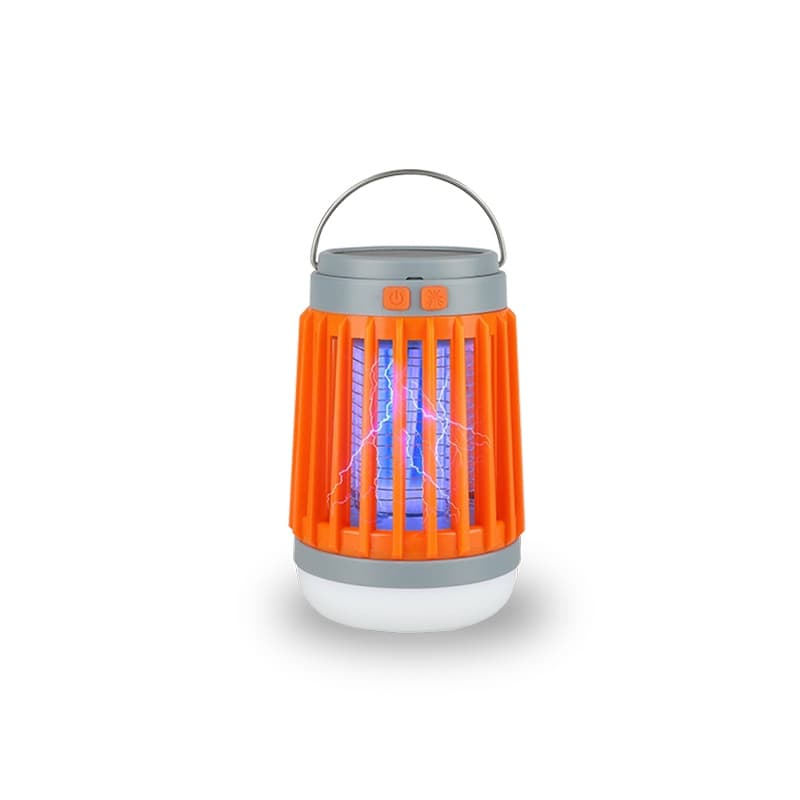
The two rules that make this real: put the zapper away from the people you're protecting, in the darker spot, so it draws bugs toward itself rather than toward you; and use it in a semi-enclosed environment where a small volume actually means something. A UV zapper on an open half-acre lawn with a floodlit house behind it is competing with a much brighter local sky and doing nothing useful; the same zapper on a covered patio, in a tent, or on a bleacher next to a picnic table in a semi-shaded area is doing the job it's designed for. The cordless format on modern units — the Keilini bug zapper lantern is a specific representative — is exactly the design match for this, because unlike the plug-in tower zappers of the 1990s, a cordless unit goes where the people are actually sitting, in the shaded spot, without a fifty-foot extension cord.
What zappers don't do (and what the alternatives do better)
Three claims you'll see attached to zappers that aren't true. First: 'clears your yard.' No consumer-scale device clears open acres of mosquitoes reliably; that's the job of propane CO2-lure systems in the hundreds of dollars (they work, they're expensive, and they smell like a barbecue), or professional yard-treatment fogging (short-lived and expensive per application). A $40 zapper protects a zone the size of a picnic blanket, not a lawn. Second: 'replaces bug spray.' No it doesn't. A DEET or picaridin spray on your skin is a totally different intervention that works by making you undetectable to the mosquito's chemistry senses; a zapper is a kill trap that operates on the wrong ones. Spray plus zapper is a stack; zapper alone won't cover you.
Third: 'works well indoors as a lighting-plus-bug device.' Sort of. A UV zapper does work in a dark bedroom, a cabin, or an RV, and the lantern mode on modern units makes it a legitimate secondary light source. But UV in an open living room lit by 3000K warm lightbulbs and a TV won't out-compete the ambient light and won't attract much of anything. Zappers are a dusk-and-dark tool. If your bug problem is the specific 6-11pm outdoor window at dusk, a cordless zapper on the shaded corner of the patio is a rational $40 purchase. If your problem is midday flies in the kitchen, a fly swatter is $2 and more effective.
How to pick a modern UV zapper (the specs and the buying rules)
The two things that separate a good modern zapper from a bad one are the light output on the UV band and the total-runtime battery capacity. A weak UV LED lures poorly, and a two-hour battery is annoying at a four-hour cookout. Look for a unit that rates its UV output honestly (many don't publish it; look at customer photos and reviews to gauge how strong the lure looks at dusk) and quotes 8+ hours of runtime on a full charge. Water resistance matters — IPX4 minimum, IPX6 preferred; you're using it in a wet outdoor environment. The dual lantern mode is a genuine bonus feature, not a gimmick — a lantern that also zaps bugs earns its place in the camp kit whether or not the specific weekend has mosquitoes.
Placement is more important than the unit. Place it about 15-25 feet from where you're actually sitting, in the darker part of the space, so the light differential draws bugs to it and away from you. Turn off nearby porch lights or dial them down to steal less of its thunder. Give it 30 minutes to establish (the first 30 minutes are always slow; the population that would have found you is now finding it), and expect a real but modest effect — not a mosquito-free bubble, but a noticeable reduction in bites over a full evening. Maintenance is minimal: brush out the grid every couple of weeks so accumulated insect bodies don't dampen the current, recharge weekly if you're using it a lot, store it dry in the off-season.
The realistic 'do I even want one' decision
You want a modern cordless UV zapper if: you spend real time on a patio, deck, screened porch, or in a tent at dusk in mosquito season; you'd rather not spray DEET on yourself and your kids constantly; you're OK with 'meaningful reduction in the zone I'm sitting in' as the outcome, not 'sterile air.' You especially want one if you camp or RV, because campsite bug problems are genuinely worse than backyard ones and a zapper in a tent porch is one of the best interventions per dollar in that setting. The lantern mode makes it non-useless the other 350 nights of the year, which quietly justifies the cost.
You don't want one if: your problem is an open yard you want fully de-bugged (that's a propane trap or a professional treatment); your problem is midday flies (fly swatter, screens); your problem is fleas, ticks, or ants (none of those are UV-attracted flying insects); or you were about to buy one instead of DEET/picaridin for skin, in which case buy the spray first and consider the zapper a complementary layer. For everyone else — the patio-sitters, tent-sleepers, cookout-hosters, backyard-birthday-throwers — the $30-50 tier that includes something like the Keilini rechargeable bug zapper is a rational, honestly-scoped purchase that does what it says on the tin for the specific job the physics supports. Which is more than the average summer gadget can honestly claim. Pair it with a decent outdoor speaker like the TikiTunes wireless patio speaker for the ambience side of the same evening, and the summer patio setup is essentially finished for under $100.
Read our Keilini bug zapper review
The chemical-free rechargeable UV lantern that clears a real zone of mosquitoes at dusk — patio, campsite, tent, cabin — and doubles as a legitimate camp lantern the rest of the year.
Read our Keilini bug zapper reviewFrequently asked questions
Do bug zappers actually work on mosquitoes?
Partly, and only in a specific way. UV bug zappers exploit positive phototaxis — many flying insects navigate toward UV light — and they excellently kill moths, gnats, and midges. Mosquitoes are only weakly UV-attracted; they navigate mainly by CO2, skin chemistry, and body heat. In a small semi-enclosed zone at dusk (tent, screened porch, covered patio corner), a UV zapper reliably reduces the mosquito population in that specific volume, but it isn't a whole-yard solution and it doesn't replace repellent on skin. Buy one to clear the zone you're actually sitting in; keep the repellent for coverage on your body.
Why did that old study say bug zappers didn't kill many mosquitoes?
The classic study you're remembering (University of Delaware / University of Notre Dame variants circulate) counted every insect killed by plug-in blacklight zappers over a summer — and it was true that mosquitoes were a small fraction of the total. That result reflects the physics accurately: UV zappers strongly attract moths, midges, and gnats, and only weakly attract mosquitoes. The study wasn't wrong; it was measuring 'total bugs killed' as if that answered 'is my patio less mosquito-y,' which is a different question. Modern cordless UV zappers with better placement in dusk-light conditions do meaningfully help with mosquitoes in the specific zone around the unit — just not with the raw kill numbers moths produce.
Where should I place a bug zapper for the best results?
About 15-25 feet from where you're actually sitting, in the darker part of the space, so its UV light draws bugs toward it and away from you. Turn down or off nearby porch lights that would compete with its glow. Semi-enclosed environments (a covered patio corner, a tent porch, a screened porch, a cabin porch) are its natural habitat; a zapper in the middle of an open half-acre lawn with a floodlit house behind it doesn't have enough light-contrast to work. Give it 30 minutes to establish before judging the effect.
Are bug zappers safe around kids and pets?
Yes, with normal placement precautions. The chemical-free operation is a genuine safety plus over DEET sprays for households with kids and pets — you're not putting anything on skin or into the air. The physical grid is electrified with a low-current pulse that can zap a curious finger uncomfortably, though it's not a serious safety hazard for a healthy adult. Standard placement: keep it up on a table or hanging from a hook rather than on the ground where small kids or dogs can grab it. Modern rechargeable units run at low voltages and shut off automatically if disassembled, but the general rule is to treat it like any small appliance around children.
How long does the battery last on a rechargeable bug zapper?
Modern cordless units in the $30-50 range typically deliver 6-10 hours of runtime per full charge, which covers most cookouts, tent nights, and camping weekends. Charging is USB, usually 3-4 hours from empty. The Keilini bug zapper lantern is one representative of the current tier. Battery life declines gradually over years like any lithium device; expect the unit to hold roughly 80% of original capacity after two years of regular seasonal use, which is still plenty for most outdoor sessions.
Bug zapper vs a citronella candle or DEET spray — what should I actually buy?
They solve different parts of the problem, so it's often 'all three' rather than 'pick one.' DEET or picaridin spray is applied to your skin and makes you undetectable to mosquito chemistry — the direct personal-protection layer. A citronella candle produces a small repellent area (roughly a small dinner table), pleasant scent, weak in a breeze; call it decorative-repellent. A UV zapper reduces the flying-insect population in a bigger zone (about a picnic-blanket volume) at dusk. For a serious patio evening: spray for personal protection, zapper for zone reduction, candles for ambience. Cheapest single choice that actually protects you: DEET spray. Cheapest single choice that improves the environment: zapper.
Do bug zappers work indoors?
In darker rooms, yes. Cabins, garages, cabins, campers, RVs, and dark bedrooms are all environments where a UV zapper has enough light-contrast to work as designed. In a well-lit living room competing with 3000K warm bulbs and a TV, the UV lure doesn't out-compete the ambient light and the zapper doesn't do much. Rule of thumb: if the space is dim enough that you'd want the lantern mode on for light, it's dim enough for the UV lure to work. If it's brightly lit for normal indoor evening use, a fly swatter and a screen are the better tools.
TopCrate is reader-supported. When you buy through links on our site we may earn an affiliate commission, at no extra cost to you. Content is for general information and isn't a substitute for professional advice.