COMPARISON
Derila vs EPABO Contour Pillow: Which $30-$50 Memory Foam Neck Pillow Is Right for You? (2026)
Derila and EPABO are the two most-searched sub-$50 contour memory foam pillows for neck pain in 2026, and they take opposite sides of a surprisingly specific trade-off. Derila is the $39.95 butterfly-wing design from Derila's own direct funnel, with a center head cradle and raised shoulder wings for side sleepers. EPABO is the ~$35-$42 Amazon staple with a classic rectangular contour, a dual-height ridge, and a 0.8-inch removable foam layer that lets you adjust the loft. Here's how they compare and which one fits your sleep position.
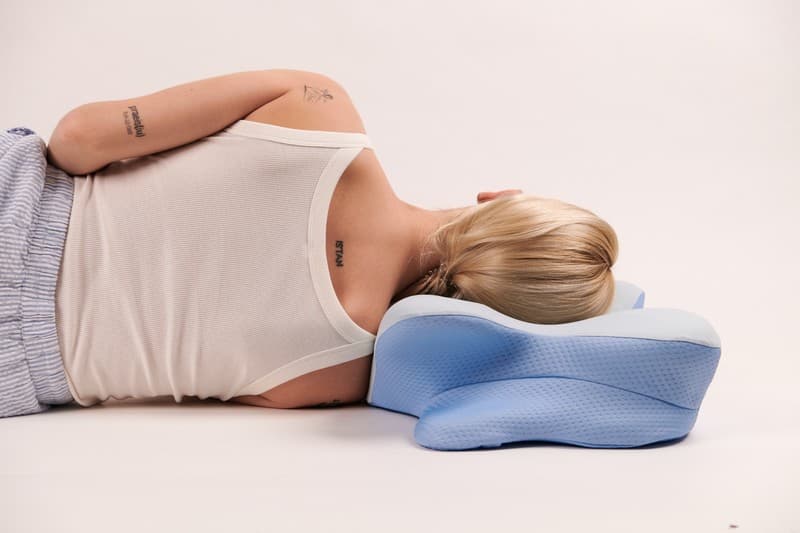
Derila and EPABO are the two sub-$50 contour memory foam pillows that keep showing up together in the "best pillow for neck pain" cluster, and the honest framing up top is that they solve the same neck-alignment problem with two different shapes. Derila is a $39.95 butterfly-wing contour pillow sold through Derila's own direct funnel at get-derila.com, with a center cradle that seats the head, a raised front ridge that fills the curve of the neck, and taller shoulder wings on each side that lift the head to shoulder-width height when you roll onto your side. EPABO is a ~$35-$42 (depending on size) classic rectangular contour cervical pillow sold mainly through Amazon, with a traditional dual-height neck-support ridge, a scooped head cradle, and a 0.8-inch removable bottom foam layer that lets you tune the overall loft to taste.
So the right pick isn't "which pillow is better" — both are legitimately good value in a category where premium contour brands charge $100-$200 for the same geometry. It's which one fits your sleep position, your mattress firmness and your tolerance for a one-size-fits-all contour vs an adjustable one. If you're a dedicated side sleeper or a combination sleeper who rotates positions through the night; if you want purpose-built shoulder wings so your head doesn't drop out of line when you roll; if you'd rather buy from a brand's own direct funnel with its own 30-day money-back guarantee and don't mind navigating the bundle-tier checkout; Derila is the honest pick. If you're mostly a back sleeper or a slim-shouldered side sleeper; if you want the loft to be adjustable so you can experiment with height; if you prefer the Amazon return-and-review safety net to a brand funnel; EPABO is the honest pick. We'll walk the shape differences, the loft math, the sleep-position fit, the real-world checkout and return terms on each, and the honest edge cases where neither pillow is the right answer.
A disclosure from us: TopCrate is a paid affiliate for Derila and earns a commission when readers buy through our links. It doesn't change the verdict on this page, and it doesn't push Derila into use cases EPABO handles better — the fit rules below keep EPABO in play for the specific sleep patterns it does better, especially the back-sleeper and height-tunable use cases. We don't carry an affiliate relationship with EPABO; we're comparing it because it's the Amazon-staple rival Derila buyers most often also look at, and the honest comparison matters more than the commission. Our full Derila review covers the daily-use experience in depth.
Derila vs EPABO at a glance
Derila: $39.95 standard price direct from the brand at get-derila.com, often promoted at a bundled multi-pack discount; a one-piece contour memory foam pillow in a butterfly-wing shape with a center head cradle, a raised front ridge that fills the curve of the neck, and taller shoulder wings on each side; one firmness, one height; roughly 50cm x 30cm; removable, machine-washable quilted cover; 30-day money-back guarantee on standard-price orders through the brand's own funnel. Published Trustpilot footprint runs tens of thousands of independent reviews. Shipping from a European warehouse to the US adds some delivery time versus a Prime shipment.
EPABO Contour Memory Foam Pillow: ~$35-$42 on Amazon depending on size (standard or queen) and firmness (soft or firm); a classic rectangular contour cervical pillow with a traditional dual-height neck-support ridge (a taller side and a shorter side) and a scooped head cradle in the middle; one 0.8-inch bottom foam layer is removable, giving you two loft options with the same pillow; standard-size cover is included, hypoallergenic, washable; typically ships Prime with Amazon's standard return window; Amazon's review footprint for the pillow runs into the tens of thousands.
The shape difference that drives the fit rule: Derila's shoulder wings add height on each side specifically so your head doesn't drop out of line when you roll onto your side — that's the butterfly design's reason to exist, and the design is best when the dominant sleep position is on-the-side or back-and-side-combination. EPABO's shape is a flat rectangle with a center dip, which fits a back sleeper's neck curve well and works for side sleepers who have slim shoulders or a soft mattress that compresses to meet the head, but can leave broader-shouldered side sleepers with their head dropped lower than their shoulder on firmer mattresses.
The loft difference that drives the comfort trade-off: Derila is one height — the brand's "Goldilocks" fixed-loft argument says the shape itself does the work and you shouldn't need to tune it. EPABO's removable 0.8-inch bottom layer gives you two height options from the same pillow (full-height for broader shoulders or a firmer mattress, lower-height for slimmer builds or softer mattresses), which is a legitimate feature for anyone who hasn't yet figured out their ideal pillow loft.
The purchase experience difference: Derila sells direct through its own funnel, which gives you the brand's stated 30-day money-back guarantee and a tracked-courier shipment from the brand's warehouse, with the standard direct-to-consumer-funnel caveats on the checkout (urgency banners, pre-selected shipping protection, bundle tiers that need a careful read before clicking pay). EPABO sells mainly through Amazon, which gives you Prime shipping and Amazon's standard return window, with the Amazon-ecosystem caveats on reviews (incentivized-review patterns, variant-pooling across sizes and firmness).
Why the sleep position you dominate picks the pillow
A pillow has exactly one job: hold your cervical spine in the same neutral line it has when you stand. The failure modes are specific. Too flat and the head tilts down out of line with the spine (you wake with the front of the neck stiff). Too thick and the head cranes up (you wake with the back of the neck stiff). Shoulder-width wrong on a side sleeper and the head drops below the shoulder (you wake with the whole neck torqued toward the mattress). The morning stiffness most people blame on "sleeping funny" is usually eight hours of a slightly wrong pillow geometry, repeated night after night.
A back sleeper's neutral position has a modest cervical curve that the pillow needs to fill — the back of the head sits in a shallow cradle, the neck rests in a slightly-raised ridge that fills the natural curve, and the overall loft is low-to-medium. Both Derila and EPABO handle this shape well, but EPABO's traditional rectangular contour with the dual-height ridge was designed around this exact position; back sleepers who've tried both often slightly prefer EPABO because the ridge is a clean, defined fill for the cervical curve rather than a wider contour that also has to accommodate side-sleeping.
A side sleeper's neutral position needs the pillow to raise the head to shoulder-width height so the cervical spine stays level with the thoracic spine — a side sleeper on a flat pillow effectively has their head tilted toward the mattress all night. Derila's butterfly-wing shape was engineered specifically for this geometry: when you roll onto your side, your head lands on the raised wing, which carries the correct shoulder-width height; the center cradle and front ridge stay available for back sleeping if you roll back in the night. Side sleepers broader at the shoulder, especially on a firmer mattress that doesn't compress to meet them, consistently prefer Derila over EPABO because the wings do the shoulder-width work the flat rectangle can't.
A combination sleeper rotates through all three positions a night, and the honest answer is: pick the pillow built for your dominant position and let the other positions be acceptable rather than optimal. If you spend most of the night on your back with occasional side rolls, EPABO works. If you spend most of the night on your side with occasional back rolls, Derila works. Stomach sleepers are the one group where neither contour pillow is the right choice — a tall contour forces the head up and crunches the lower back; stomach sleepers want a thin, soft pillow or no pillow at all, and the honest answer is to skip this comparison entirely if that's your dominant position.
The loft math: fixed-height contour vs adjustable contour
Derila's design argument is that contour pillows don't need loft adjustability because the shape itself does the work — the butterfly's wings carry the side-sleep height, the center cradle carries the back-sleep height, and both are built into a single fixed-loft pillow. The practical reality: this works perfectly if the brand's chosen loft happens to match your shoulder width, your head weight and your mattress firmness. Derila's loft is calibrated for roughly average adult proportions on a medium-firm mattress; buyers close to that profile often report an immediate night-one fit, and buyers substantially broader at the shoulder or substantially softer on the mattress sometimes find the pillow slightly too low or too high and have no way to tune it.
EPABO's design argument is the opposite: a 0.8-inch removable bottom foam layer gives you two height options from the same pillow, so you can experiment to find your correct loft. The practical reality: this gives EPABO a meaningful edge for buyers who haven't yet figured out their ideal pillow height — college-age sleepers in a growing body, buyers who switched to a new mattress with a different compression profile, and buyers whose shoulder width is at the far ends of the range. The removable layer isn't infinite adjustability (it's two options, not continuous), but two is a lot more than one when the fit is slightly off.
The honest value framing on loft: if you already know your ideal pillow height from a long history of using contour pillows (or if you buy mostly-average builds and medium-firm mattresses), Derila's fixed-loft design is fine and the shape does more work than the height tuning. If you don't know your ideal pillow height, or if your mattress or body is at the edges of the normal range, EPABO's adjustability is a legitimate hedge against buying the wrong loft and sending it back. For a first contour pillow, especially for a side sleeper with an unknown ideal loft, EPABO's adjustability lowers the risk of the trial-and-error that one-size-fits-all pillows force on you.
The direct-funnel checkout vs the Amazon checkout
Derila sells through its own direct funnel at get-derila.com. The checkout you see is standard direct-to-consumer-wellness-product e-commerce: single-unit pricing at ~$39.95, bundle tiers that offer two, three or four pillows at a per-unit discount, a shipping-protection add-on that is sometimes toggled on by default (and that you can toggle off before paying), countdown-timer banners that reflect current promotional pricing, and a tracked-courier shipment from the brand's warehouse. The stated 30-day money-back guarantee applies to standard-price orders bought through the brand's funnel; refund terms on deep-discount bundle tiers can be tighter (shorter window, final-sale language on the deepest discounts, buyer-pays return shipping on any return).
Public complaint patterns on Derila's checkout largely cluster around two issues: (a) buyers assume the discount is applied to a single pillow and don't notice they've selected a two-or-more-unit bundle until the total appears or an email arrives naming the quantity, and (b) the pre-selected shipping-protection add-on raises the total by a few dollars without an explicit opt-in moment the buyer registers. Neither is unique to Derila — nearly every direct-to-consumer wellness-product funnel does these — but both are real and both are the specific reasons the Derila customer-service team spends time processing partial-refund requests. The hygiene move: on the final-review step, read the full line-item list before clicking pay, confirm the quantity, uncheck the shipping-protection add-on if you don't want it, and screenshot the final price and the return terms tied to your specific tier.
EPABO sells through Amazon. The checkout is Amazon's standard flow: Prime-eligible shipping, Amazon's standard return window, Amazon customer service as the recourse rather than the brand, and the usual Amazon-review ecosystem to lean on. The specific caveats are the ones that apply to any Amazon-staple product: incentivized-review patterns on some clusters, variant-pooling that mixes the standard-size and queen-size reviews under a single star rating, and the usual "the one you're ordering may not be the one in the review photos" issue if the brand runs a slightly updated SKU in the same listing. The hygiene move: check that you're ordering the specific size and firmness you want (there are soft and firm variants), and read a representative sample of reviews specifically for your variant rather than the aggregate.
The honest framing: Derila's checkout needs a careful read-through to avoid the bundle-quantity and shipping-protection surprises, and the return process goes through the brand's own customer service rather than through Amazon. EPABO's checkout is simpler and the Amazon return path is easier for the first-pillow buyer who may want to send it back; the trade-off is you're buying through the Amazon ecosystem with the review-trust caveats that come with it. Neither is a scam; both are entirely-standard direct-to-consumer purchase flows. For a buyer who prizes the frictionless-return experience, EPABO's Amazon path is lower-stress. For a buyer who prefers the brand's own 30-day guarantee and warehouse ship, Derila's direct funnel is fine with the hygiene steps above.
Build quality, foam density and cover
Derila's foam is a medium-density viscoelastic memory foam that holds its shape through the night and doesn't collapse unevenly the way a softer memory foam would. In practice, buyers describe Derila as noticeably firmer than a plush down or down-alternative pillow — which is the point; a contour pillow that collapses isn't a contour pillow anymore — and the firmness is comparable to EPABO's "firm" variant more than to EPABO's "soft" variant. The quilted cover zips off and machine-washes; the foam core is spot-clean only, which is standard across the whole memory-foam category.
EPABO's foam is also medium-density memory foam, and EPABO's "firm" variant is close to Derila's firmness while EPABO's "soft" variant is noticeably more compressible — a legitimate option for sleepers who want a bit more head-sink into the cradle without losing the overall contour shape. The cover is a breathable rayon-polyester blend with a hypoallergenic treatment, zips off, and machine-washes. EPABO's foam retains a modest "new foam smell" out of the box that airs out over a few days, and Derila's foam retains a similar faint smell that airs out on the same timeline; neither is unusual for memory foam, both are consistent with brand-stated CertiPUR-US-equivalent certifications on the foam.
Durability: both pillows are expected to hold shape for 2-4 years of nightly use before the foam begins to lose the clean contour. Buyers who shower immediately before bed and don't bake the foam in direct sun get the longer end of that range; buyers who sweat heavily into the pillow or use it in a hot sunny room get the shorter end. The quilted/woven cover is the maintenance variable — both pillows benefit from washing the cover every few weeks rather than once a season.
Shipping, returns and the hidden fine print on each
Derila ships from a European warehouse (depending on the funnel region) with a tracked-courier delivery to US addresses in roughly 7-14 business days. The 30-day money-back guarantee is measured from the delivery date rather than the order date, which is important if you ordered to a vacation address or if the courier delays your package. Standard-price returns are processed through the brand's own customer-service team; the buyer typically pays return shipping, original shipping charges are non-refundable, and bundle-tier returns can have tighter restrictions depending on the specific tier's fine print (a four-pack ordered as a holiday-gift bundle may be tagged final-sale even if the single-unit variant isn't). The specific terms applicable to your order appear on the checkout page of the specific tier you're buying.
EPABO ships through Amazon with the Prime-eligible path on most variants. Amazon's standard return window (30 days from delivery, buyer pays return shipping on most variants, Amazon customer service handles the return rather than the brand) applies to EPABO. The practical difference: an EPABO return is a one-click request through your Amazon account; a Derila return is a customer-service exchange with the brand's team. Both are legitimate return paths; neither has an unusual complaint pattern beyond the standard direct-to-consumer baseline.
Where the fine print differs materially: Derila's funnel bundles usually include a Trustpilot-review pattern of "I thought I was ordering one pillow and got four" complaints that trace back to the bundle-tier selection step rather than to actual misleading pricing; the pricing is accurate at every step, but the default-selected tier is sometimes a two-or-four-pack rather than a single pillow and the buyer notices after the fact. EPABO's Amazon listings don't have that specific pattern (because Amazon's checkout defaults are per-SKU rather than per-tier), but they do have the usual Amazon-review-pooling issue where reviews across sizes and firmness get mixed under a single star rating.
Who buys which pillow and why
Derila's clearest wins: dedicated side sleepers and combination sleepers whose dominant position is side-and-back rotation; broader-shouldered sleepers whose heads drop out of alignment on a flat rectangular pillow; buyers who want the butterfly-wing shape specifically because it carries shoulder-width height into the side-sleep position; buyers who want to buy from a brand's own funnel with its own 30-day guarantee rather than from a marketplace; buyers who already know their ideal pillow loft and don't need adjustability.
EPABO's clearest wins: back sleepers whose cervical curve wants a defined dual-height ridge rather than a wider butterfly contour; slim-shouldered side sleepers or side sleepers on a soft mattress that already compresses to meet them; buyers who want the 0.8-inch adjustable loft to tune the pillow height to their specific build and mattress firmness; buyers who prefer Amazon's return-and-review ecosystem to a brand funnel; buyers whose first contour pillow this is and who want the hedge of adjustability in case the first guess is wrong.
Where neither pillow is the right pick: dedicated stomach sleepers (both contour pillows will crunch the lower back); buyers whose neck pain is a diagnosed condition (cervical radiculopathy, severe stenosis, post-surgical recovery) and whose next pillow should be a clinician's recommendation rather than a direct-to-consumer purchase; buyers who sleep extremely hot and want the cooling-gel-top layer that neither Derila nor EPABO offers (the gel-topped VelaSleep ergonomic cervical pillow is a legitimate alternative in roughly the same price band); buyers who want the brand-name premium-contour feel of a Tempur-Neck ($100+) and are willing to pay for it. Our full Derila review covers the daily-use experience in depth.
A quick disambiguation: Derila ERGO vs original Derila
Derila sells two sibling SKUs through its direct funnel: the original Derila memory foam pillow (the butterfly-wing design covered in our review, ~$39.95 standard price in the US funnel) and the Derila ERGO memory foam pillow (a slightly updated ergonomic variant with a redesigned neck ridge and a modestly higher loft, listed on a separate ergo-specific funnel at ~$44.95-$49.95). Both come from the same brand; both share the same return terms through the brand's funnels; both ship the same way. The practical difference is a modest geometry update rather than a totally different product, and the honest answer for most new buyers is that the original Derila covers the butterfly-contour use case well without the ERGO upcharge.
The reason to name this disambiguation: Bing and Google sometimes blend "Derila" and "Derila ERGO" into a single search cluster, and buyers occasionally land on the ergo-specific funnel while expecting the original pillow (and vice versa). If you've landed on the specific funnel offering ERGO at $44.95-$49.95, that is a real Derila SKU — just the updated one — and the return terms through the ERGO funnel are the same brand's. The original Derila is the funnel at get-derila.com/order and the one our review covers.
The honest decision rule
If your dominant sleep position is side-sleep or side-and-back combination, if you're broader at the shoulder, if you want purpose-built butterfly wings that carry shoulder-width height, and if you're comfortable buying through a brand's direct funnel with its own 30-day guarantee: Derila is the honest pick at ~$39.95. If your dominant position is back-sleep, if you're slim-shouldered or sleep on a softer mattress, if you want the 0.8-inch adjustable loft so you can tune the height to your build, or if you prefer Amazon's return-and-review ecosystem: EPABO is the honest pick at ~$35-$42. Neither is a scam; both are legitimate value picks in a category where premium brands charge triple for the same contour geometry.
If you've reached the end of this guide and still can't decide, the softest rule we can offer: start with Derila if you side-sleep (the wings matter), start with EPABO if you back-sleep or want adjustability. Give either pillow the five-to-seven-night adjustment week your neck muscles need to recalibrate from a flat pillow, and judge the fit from the second week of use rather than night one. If the first pillow doesn't work, both brands' return processes let you send it back and try the other; the dollars-at-risk are modest on either path. Our full Derila review covers the daily-use experience on Derila in depth, and we recommend the pillow for the specific side-sleeper-and-combination audience it was built for.
Read our full Derila review
Our verdict on the $39.95 butterfly-contour memory foam pillow with shoulder wings and a center head cradle — the specific side-sleeper and combination-sleeper use cases it was built for, the honest fine print on the direct-funnel checkout, and the five-to-seven-night adjustment week most buyers go through before judging the fit.
Read our full Derila review →Frequently asked questions
Derila vs EPABO — which contour pillow should I buy first?
Depends on your dominant sleep position. If you're mostly a side sleeper or a combination side-and-back sleeper (especially with broader shoulders or on a firmer mattress), Derila's butterfly-wing shape with purpose-built shoulder wings is the right first reach at ~$39.95 direct from the brand. If you're mostly a back sleeper or a slim-shouldered side sleeper, or if you want adjustable loft so you can tune the pillow to your build, EPABO's classic rectangular contour with a removable 0.8-inch bottom foam layer is the right first reach at ~$35-$42 on Amazon. Stomach sleepers should skip both and use a thin flat pillow or no pillow.
Is Derila the same thing as Derila ERGO?
Not quite — same brand, two SKUs. The original Derila memory foam pillow (~$39.95 standard price in the US funnel at get-derila.com/order) is the butterfly-wing design our review covers. The Derila ERGO memory foam pillow (~$44.95-$49.95 on a separate ergo-specific funnel at get-derila-ergo.com) is a slightly updated ergonomic variant with a redesigned neck ridge and modestly higher loft. Both are legitimate Derila products; both carry the brand's stated 30-day money-back guarantee on standard-price orders. For most new buyers, the original Derila covers the butterfly-contour use case without the ERGO upcharge.
Is EPABO really the same quality as Derila for less money?
Different quality, not better or worse — different shape. EPABO's medium-density memory foam is comparable to Derila's for firmness and durability; both are expected to hold shape for 2-4 years of nightly use. Both have hypoallergenic machine-washable covers. The real difference is geometric: EPABO's rectangular dual-height ridge is better engineered for back sleepers and slim-shouldered side sleepers, Derila's butterfly wings are better engineered for broader side sleepers who need shoulder-width height. The $5 price gap is modest and shouldn't be the deciding factor; sleep position should.
I'm a combination sleeper who rotates all night — which pillow wins?
The pillow built for your dominant position, not for the rotation itself. If you spend most of the night on your side with occasional back rolls, Derila's butterfly design carries the shoulder-width height into side-sleep without penalizing the back-sleep moments. If you spend most of the night on your back with occasional side rolls, EPABO's dual-height ridge fills the cervical curve cleanly without penalizing the side-sleep moments. Both pillows accommodate the opposite position acceptably; neither is a disaster when you roll into it, but each is clearly optimized for one dominant position over the other.
What about the Derila checkout — is it a scam?
No, it's a standard direct-to-consumer-wellness-product funnel. The pricing is accurate at every step and the stated 30-day money-back guarantee is honored on standard-price orders. The real friction is that the default-selected tier is sometimes a two-or-four-pack bundle at a per-unit discount rather than a single pillow, and the shipping-protection add-on is sometimes toggled on by default; buyers who don't notice at the final-review step occasionally end up with more pillows or a higher total than they expected. The hygiene move: read the full line-item list before clicking pay, confirm the quantity, uncheck shipping protection if you don't want it, and screenshot the return terms tied to your specific tier. Our full Derila review walks through this in depth.
Will either pillow actually fix my neck pain?
If your morning neck pain is caused by pillow geometry — a flat pillow that lets the head tilt out of alignment with the spine all night — then yes, a well-fit contour pillow (either Derila or EPABO, matched to your sleep position) will meaningfully reduce it, usually within a five-to-seven-night adjustment week. If your neck pain has a different source (diagnosed cervical issue, poor desk ergonomics, teeth-grinding tension, chronic stress-pattern muscle tightness) then a pillow is at best part of the solution; the upstream cause needs its own fix. New, worsening, radiating or paired-with-neurological-symptoms neck pain always warrants a clinician evaluation before any pillow purchase.
TopCrate is reader-supported. When you buy through links on our site we may earn an affiliate commission, at no extra cost to you. Content is for general information and isn't a substitute for professional advice.