COMPARISON
Anything Speaker vs JBL Go 4: Surface Vibration Speaker or Regular Mini Bluetooth Speaker? (2026)
The Anything Speaker turns a door, box or fridge into the speaker. The JBL Go 4 is a conventional, waterproof mini speaker with tuned sound. Here's how surface-transducer audio actually works, where each one wins, and which to buy.
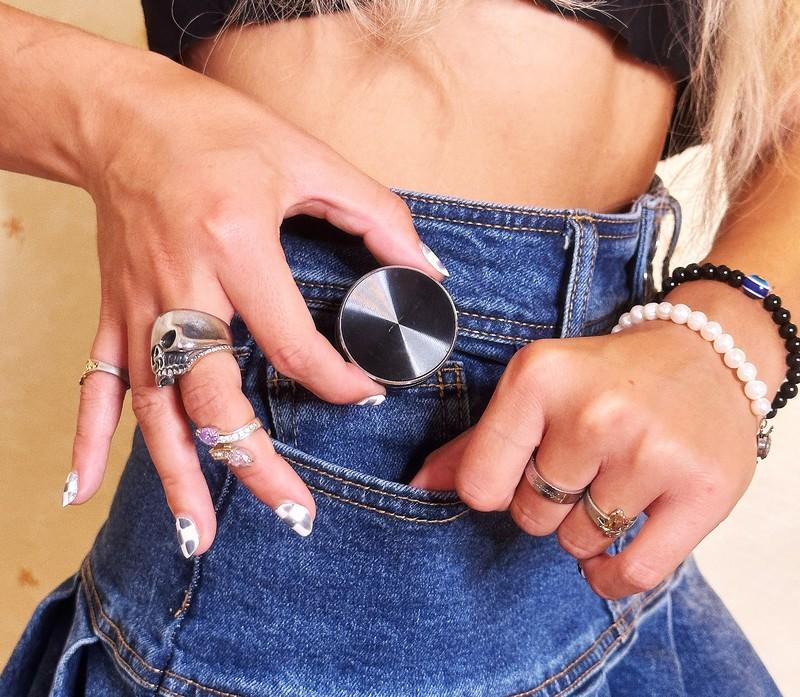
Anything Speaker vs JBL Go 4 comes down to one question: do you want a speaker that sounds the same everywhere, or one that borrows its sound from whatever you attach it to? The JBL Go 4 is a conventional mini Bluetooth speaker with its own driver, a waterproof body and up to 7 hours of playtime. The Anything Speaker is a 1.5-inch vibration puck that makes a table, cabinet, window or box do the work, which makes it smaller, stranger and far more surface-dependent.
Both cost roughly the same, so this isn't a budget decision. It's about what you'll use it for. Below we explain how surface-transducer sound works and where its limits are, compare the two on sound, battery, durability and portability, and say plainly where the JBL is the better buy.
How the Anything Speaker makes sound (and why the surface matters)
A normal speaker, like the one inside the JBL Go 4, has a cone or diaphragm built into a sealed box. The cone moves air, and the box is tuned so the sound comes out balanced. Everything about the sound is designed in the factory.
The Anything Speaker skips the cone. Inside is a small driver, usually called a surface exciter or transducer, that vibrates. When you attach it to something solid with its magnet, suction cup or adhesive pad, it passes those vibrations into the object, and the object becomes a large, improvised speaker panel. The brand calls this "bone conduction," which is the same idea used by headphones that vibrate your cheekbones; here the target is a door instead of your skull.
That design has a real upside. A cabinet door or a cardboard box has far more surface area than a tiny cone, so it can move more air and sound much bigger than the puck itself. It's why the Anything Speaker can be surprisingly loud in the right spot.
The honest limits of surface-transducer sound
The same physics creates the limits. Every surface has its own resonances, so some notes get boosted and others get swallowed. That's why the Anything Speaker sounds full on a hollow box, bright and thin on glass, and muffled on a stone countertop or a padded chair. You are, in effect, using an untuned speaker cabinet that changes every time you move it.
Bass is the hardest part. Low notes need a big panel that can flex freely; a small mug or a phone-sized object simply can't produce much low end. Dense, heavy surfaces resist the tiny driver, so the energy turns into a dull thud instead of sound. And contact matters more than most people expect: a puck that's sitting slightly crooked, or on a soft pad, loses most of its effect.
None of this makes the Anything Speaker bad. It makes it different. If you go in expecting a party trick that can sound genuinely big on the right surface, it delivers. If you expect identical, tuned sound wherever you put it, a conventional speaker is the better tool.
Anything Speaker vs JBL Go 4: specs side by side
Anything Speaker, per the official store: about 1.5 inches across, attaches with an included magnet, suction cups or adhesive pad, Bluetooth range of about 30 feet, up to 3 hours per charge (brand claim), and two units can pair for stereo. In November 2026 it was $39.95 for one, plus $5.99 shipping, with a 30-day money-back guarantee and a 1-year warranty.
JBL Go 4, per JBL's spec sheet and reviews: 4.2 W output, 90 Hz to 20 kHz frequency response, Bluetooth 5.3, IP67 dust- and waterproofing (it can survive a dunk in about a meter of water for 30 minutes), up to 7 hours of playtime plus about 2 more with JBL's Playtime Boost mode, and a weight of about 190 grams (0.42 lb). It supports Auracast, so it can link with other compatible JBL speakers. Its launch price was about $50 in the US, and it's often discounted.
On paper the JBL wins on battery, waterproofing and consistency. The Anything Speaker wins on size, mounting options and the fact that its loudest moments can come from a much bigger radiating surface than any palm-sized speaker has.
Sound quality: where each one wins
The JBL Go 4 wins on predictable sound. Its driver and enclosure are tuned together, so vocals, podcasts and music sound the same on a picnic blanket as on a kitchen counter. Bass is limited, as on any speaker this small, but it's always there in the same amount. For background music at a desk or a podcast in the bathroom, that consistency is worth a lot.
The Anything Speaker wins on surprise and on peak volume in the right spot. Stuck to a hollow-core door, a wooden wardrobe or an empty shipping box, it can fill a room in a way a palm-sized conventional speaker struggles to. It also does something the JBL can't: placed on an acoustic guitar body, it turns the instrument into a speaker, which the brand pitches as a tiny amp for playing along.
Where it loses: on dense or soft surfaces, and anywhere you need clean, controlled bass. If you mostly listen in one fixed spot and that spot is a granite countertop, the JBL will sound better there every time.
Battery, durability and water
The JBL Go 4 is the clear winner here. Up to 7 hours of playtime (plus Playtime Boost) beats the Anything Speaker's listed 3 hours, and an IP67 rating means you can take it to the pool, beach or shower without a second thought.
The Anything Speaker store suggests trying it on a shower door, but it doesn't list an IP water-resistance rating on its sales page. Until the brand publishes one, keep the puck outside the spray and away from standing water. The outside of a glass shower door, out of the water's path, is a sensible compromise.
On ruggedness, both are small and simple. The JBL has a fabric-and-rubber body built for being tossed in bags. The Anything Speaker's risk is less about drops and more about its mounting accessories: suction cups and adhesive pads wear out, which is why the five-pack bundle's free accessory kit is a small perk.
Portability and setup
Both fit in a pocket, but the Anything Speaker is genuinely tiny at about 1.5 inches, and it doesn't need a place to sit. You can stick it to a fridge, a window or the side of a cooler and leave the counter free. The JBL Go 4 has a loop strap and stands upright on any flat surface, but it needs that flat spot.
Setup is simple for both: pair once over Bluetooth and they reconnect. The difference is the minute you spend with the Anything Speaker finding a good surface every time you move rooms. Some people love that part; it's the reason we put the Anything Speaker in our white elephant gift guide. Others find it a chore after the novelty fades.
Stereo and multi-speaker setups
Both can scale up. Two Anything Speakers pair for stereo, and because each one can be attached to a different surface, you can spread them across a room for a wide sound. The store's three- and five-unit bundles bring the per-unit price down to about $33 and $30.
The JBL Go 4 links with other Auracast-capable JBL speakers, so you can build a bigger setup over time with models that sound consistent with each other. For a growing, predictable multi-room system, JBL's ecosystem is the better foundation. For a cheap, fun stereo pair that turns two cabinet doors into speakers, the Anything Speaker is more interesting.
Which should you buy?
Buy the JBL Go 4 if you want one reliable mini speaker for everyday listening, outdoor use or anything near water. It's the safer choice and it wins on battery life, waterproofing and consistent sound. If you want a bigger conventional speaker with real bass, see our JBL Charge 5 review.
Buy the Anything Speaker if you want the smallest possible speaker, like the idea of mounting sound on a fridge, window or instrument, or you're shopping for a gift that gets a reaction. It wins on size, mounting flexibility and peak loudness on the right surface. Read our full Anything Speaker review for our surface-by-surface notes, and if you're wondering about the company behind it, our guide is Anything Speaker legit? covers the guarantee, warranty and bundle pricing.
Plenty of people end up with both: a conventional speaker for the daily listen and an Anything Speaker for the moments when turning a cardboard box into a sound system is the whole point. TopCrate earns a commission on the Anything Speaker only, not on the JBL.
Read our full Anything Speaker review
Our surface-by-surface verdict, current price and who should pick it over a conventional speaker.
Read our full Anything Speaker review →Frequently asked questions
Is the Anything Speaker better than a JBL Go 4?
Not overall. The JBL Go 4 has more consistent sound, longer battery life (up to 7 hours) and IP67 waterproofing. The Anything Speaker is smaller, mounts on almost anything, and can sound bigger than the JBL on a resonant surface like a hollow door or a box. Pick based on how you'll use it.
How does the Anything Speaker work?
It's a surface transducer, sometimes called a bone conduction speaker. A small driver vibrates whatever hard object it's attached to, and that object radiates the sound. Hollow or thin surfaces sound loudest; dense or soft ones sound muffled.
Does the Anything Speaker have good bass?
Only on large, resonant surfaces. Bass needs a big panel that can flex, so a door, table or box helps, while small objects and dense stone give little low end. A conventional speaker gives more predictable bass.
Is the Anything Speaker waterproof?
The official store doesn't list a water-resistance rating, so treat it as not waterproof and keep it out of direct spray. The JBL Go 4 is IP67 rated if you need a speaker for the shower, pool or beach.
Anything Speaker vs JBL Go 4 battery life?
The Anything Speaker brand lists up to 3 hours per charge. JBL lists up to 7 hours for the Go 4, plus about 2 more hours using Playtime Boost. For all-day use, the JBL wins.
Can I pair two Anything Speakers for stereo?
Yes. Two Anything Speaker units can be linked for stereo sound, and you can attach each one to a different surface. The official store sells three- and five-unit bundles that lower the per-unit price.
TopCrate is reader-supported. When you buy through links on our site we may earn an affiliate commission, at no extra cost to you. Content is for general information and isn't a substitute for professional advice.