AIR FRYER 101
How to Cook Salmon in an Air Fryer: Exact Times, Temps, and Crispy Salmon Bites
Skin-on fillets at 400°F in under 10 minutes, cubed salmon bites that glaze like takeout, straight-from-frozen instructions — and the honest answer on what temperature done really is.
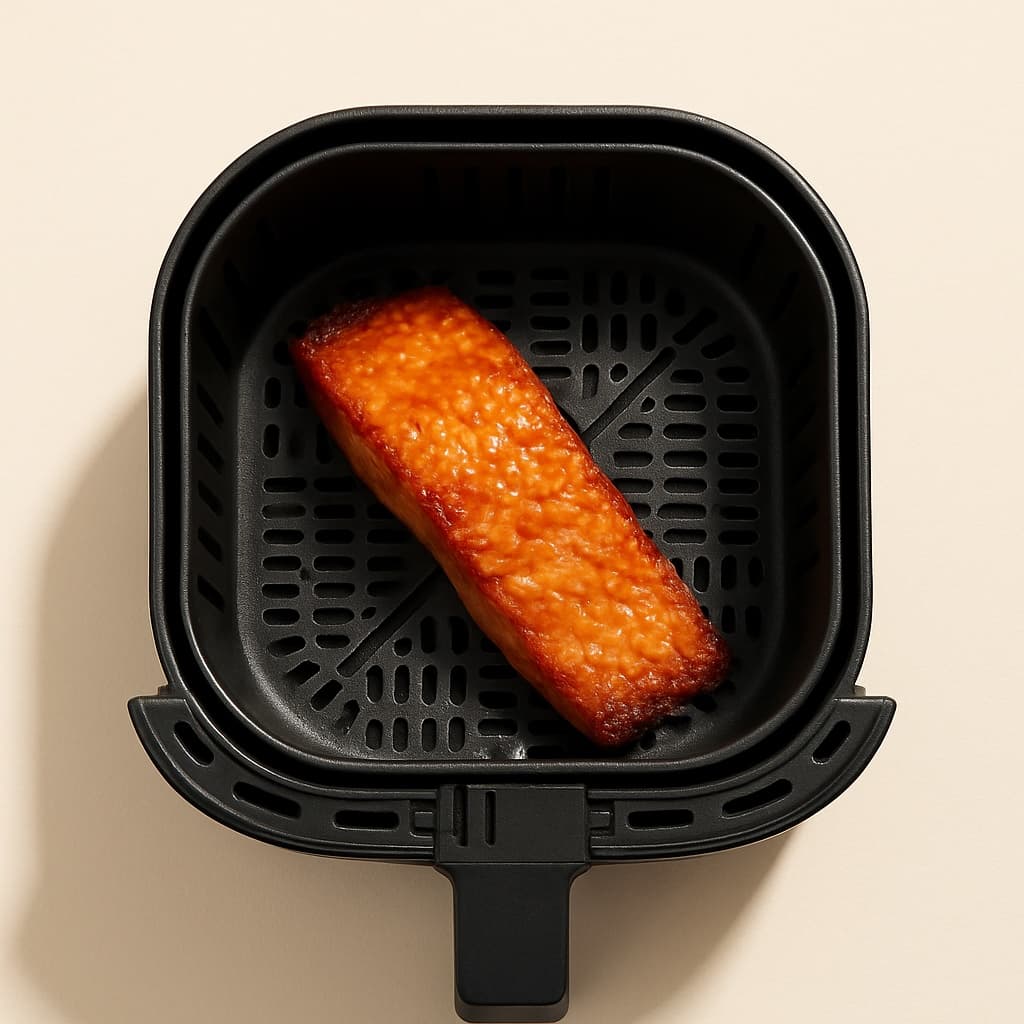
Salmon might be the single best thing you can put in an air fryer. The circulating heat crisps the edges and firms the surface in under 10 minutes while the middle stays silky — and the smell stays sealed in the drawer instead of drifting through your house for the rest of the night, which is more than any oven can promise.
This guide covers fillet prep, the exact time at 400°F by thickness, the doneness question the USDA and restaurant chefs answer differently, the cubed salmon-bites variation, and how to cook salmon straight from frozen without thawing.
Why the air fryer is the best way to cook salmon
Salmon punishes slow cooking — every extra minute in a barely-warm oven is moisture leaving the fish. An air fryer is a compact convection oven that reaches temperature in 3 minutes and blasts hot air at the fillet from every direction, so the outside browns and the edges crisp before the inside has time to dry out. A cook that takes 25 minutes in a full-size oven takes 8 in the basket.
It also solves the two things that keep people from cooking fish at home: the splatter of pan-searing and the lingering smell of oven-roasting. The drawer contains both. Salmon's natural fat does the rest — it is a far more forgiving fish than its reputation suggests, as long as you pull it at the right temperature.
Prep: skin-on vs. skinless, oil, and seasoning
Pat the fillets completely dry with paper towels — a wet surface steams instead of browning, and this one step does more for texture than any seasoning. Rub with a thin coat of oil, then season simply: salt, pepper, and garlic powder is the baseline, and a pinch of smoked paprika or brown sugar helps the surface caramelize.
Skin-on or skinless both work. Skin-on is the more forgiving play: cook it skin-side down and the skin acts as insulation between the delicate flesh and the hot basket, then peels off in one sheet after cooking if you don't want to eat it. Skinless fillets just need a lightly oiled basket so they release cleanly. Either way, leave space between fillets — a crowded basket steams the fish and kills the crisp edges.
How long to cook salmon in the air fryer at 400°F
Step 1 — Preheat the air fryer to 400°F for about 3 minutes. Step 2 — Pat the fillets dry, oil, and season. Step 3 — Place them skin-side down in a single layer with space between. Step 4 — Cook 7 to 10 minutes with no flipping — the air circulates on all sides, and flipping delicate fish mid-cook is how fillets fall apart. Step 5 — Check the thickest part with an instant-read thermometer. Step 6 — Rest 2 to 3 minutes before serving.
Time tracks thickness, not weight: a thin tail-end piece (about three-quarters of an inch) takes 6 to 7 minutes, a standard 1-inch center cut takes 8 to 9, and a thick 1.25-inch-plus fillet takes 10 to 11. Wattage varies between machines, so start checking a minute or two early the first time — salmon goes from perfect to dry fast.
When is salmon done? 125-130°F vs. the USDA's 145°F
Two honest answers. The USDA's official safe internal temperature for fish is 145°F, which gives you fully firm, opaque salmon — that's the by-the-book number, and the right call for anyone pregnant, elderly, or immune-compromised. Most chefs and serious recipes pull salmon at 125 to 130°F instead, when the center is just turning opaque and still moist; carryover cooking adds a few degrees as it rests. That's the restaurant-style medium most people picture when they picture good salmon. Know both numbers and pick yours deliberately.
Two visual cues back up the thermometer. Done salmon flakes when pressed with a fork but still looks slightly translucent at the very center. And if white beads are seeping from the fillet, that's albumen — a harmless protein pushed out by heat. A little is normal; a lot means the fish cooked too hot or too long, so pull it sooner next time.
Air fryer salmon bites
Salmon bites are the same fish with more crispy surface area, and they cook even faster. Step 1 — Cut a skinned fillet into 1-inch cubes. Step 2 — Toss with a teaspoon of oil, salt, garlic powder, and smoked paprika. Step 3 — Arrange in a single layer and air fry at 400°F for 6 to 8 minutes, tossing the basket once halfway. Step 4 — Glaze after cooking, not before: sugary sauces like hot honey or teriyaki scorch in the fryer, so toss the finished bites in the glaze in a bowl and serve.
The cubes' extra edges crisp beautifully, which is why salmon bites have taken over dinner feeds. They're built for rice bowls, tacos, and salads — and because they're done in 8 minutes, they've quietly become the fastest respectable protein in the house.
Frozen salmon, crowding, and what to cook next
Forgot to thaw? Cook frozen fillets at 390°F for 12 to 15 minutes total: run them plain for the first 5 minutes to thaw the surface, then brush with oil, season, and finish the cook. Seasoning slides straight off an ice glaze, which is why the two-stage approach matters. Frozen fillets cook unevenly, so probe a couple of spots — and this is the one case where cooking to the USDA's 145°F is the smart default, since judging carryover on a fillet that started frozen is guesswork.
Every time in this guide assumes a basket-style unit like the Ninja air fryer; oven-style models may need an extra minute or two. Make it a plate: air fryer french fries can go in while the salmon rests, and once you've mastered fish, chicken breast in the air fryer runs on the same pat-dry, high-heat, thermometer-out playbook.
Read our Ninja Air Fryer review
The basket that turns out 8-minute salmon — our full take on how it holds up.
Read our Ninja Air Fryer reviewFrequently asked questions
How long to cook salmon in air fryer at 400?
7 to 10 minutes, skin-side down, no flip: 6 to 7 minutes for thin tail pieces, 8 to 9 for a standard 1-inch center cut, and 10 to 11 for extra-thick fillets. Pull at 125-130°F for a moist, chef-style medium, or 145°F to follow USDA guidance.
What temperature should salmon be when it's done?
The USDA says 145°F for fully cooked fish. Most chefs pull salmon at 125-130°F at the thickest part and let carryover heat finish it during a short rest, which keeps the center moist. If anyone at the table is pregnant, elderly, or immune-compromised, cook to 145.
Do you flip salmon in the air fryer?
No. Hot air circulates on every side, so leave fillets skin-side down for the whole cook. Flipping is how delicate salmon falls apart in the basket.
Can you cook frozen salmon in the air fryer?
Yes, no thawing needed. Cook at 390°F for 12 to 15 minutes total — 5 minutes plain first, then oil and season once the surface has thawed. Cook frozen fillets to 145°F, checking a couple of spots since they heat unevenly.
How long do salmon bites take in the air fryer?
6 to 8 minutes at 400°F for 1-inch cubes, tossed once halfway. Add any sweet glaze like hot honey or teriyaki after cooking — sugar burns in the fryer.
Why is white stuff coming out of my salmon?
That's albumen, a harmless protein that gets pushed to the surface as salmon cooks. A little is normal; a lot means the fish is overcooking — lower the heat or shorten the time on the next batch.
TopCrate is reader-supported. When you buy through links on our site we may earn an affiliate commission, at no extra cost to you. Content is for general information and isn't a substitute for professional advice.